

₦100,000? In this economy?
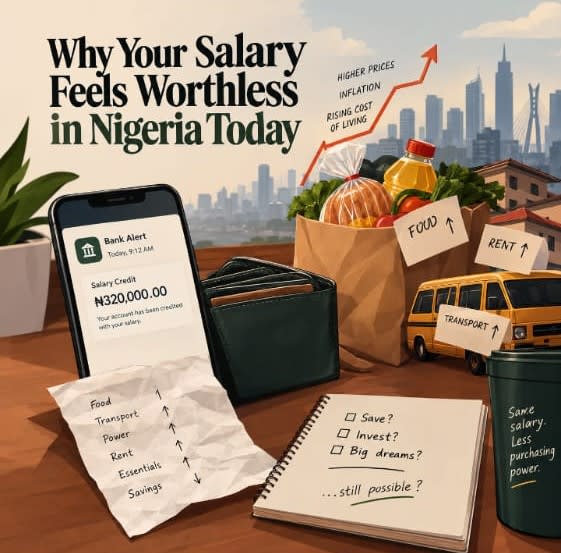
Not too long ago, having ₦100,000 in your account felt like a safety net. It could cover a significant portion of your monthly expenses, fund a small business idea, or even handle a few unexpected emergencies. Today, however, that same amount seems to disappear almost as quickly as it arrives.
With rising inflation, higher transportation costs, increasing food prices, and a steadily rising cost of living, many Nigerians are discovering that ₦100,000 doesn't stretch nearly as far as it used to. What once felt like a substantial amount of money now barely scratches the surface of many household expenses.
Wondering how far ₦100,000 can really go in Nigeria today? Here are five things ₦100,000 can barely buy in Nigeria today.
1. One Major Grocery Run for a Family
Walking into a supermarket or market with ₦100,000 today can be a humbling experience. A basket containing rice, vegetable oil, bread, noodles, eggs, beverages, toiletries, cleaning supplies, and other household essentials can easily consume most, if not all, of that amount. For larger households, it may not even be enough to cover groceries for an entire month.
Even the things people buy every day are getting more expensive, from food to toiletries and other household essentials. Food prices have risen significantly over the years, making it increasingly difficult for families to maintain the same consumption habits without increasing their budgets.
What is particularly frustrating is that many people are buying the same products they bought a few years ago but are spending considerably more money to do so.
2. ₦100,000 Won't Take You Far in the Housing Market
For many Nigerians living in major cities, ₦100,000 is no longer enough to secure decent accommodation, let alone pay annual rent. In cities like Lagos, Abuja, and Port Harcourt, rent prices have surged in recent years. Even in less expensive locations, tenants are often required to pay agency fees, legal fees, caution fees, service charges, and every other bill that mysteriously appears because you dared to want a roof over your head.
In some cases, ₦100,000 may not even cover the non-rent charges attached to getting a new apartment. Housing remains one of the biggest financial burdens for many Nigerians, and rising rental costs continue to consume a larger portion of household income. The reality is that the amount many people once considered serious money can barely make a dent in accommodation expenses today.
3. A Few Weeks of Transportation
Transportation has become one of the most expensive recurring expenses for everyday Nigerians. Whether you're commuting to work, operating a business, attending school, or simply moving around the city, transportation costs add up quickly.

For those who drive, fuel costs, vehicle maintenance, and repairs can consume significant amounts of money. Even public transport users are feeling the pressure of higher fares. Transportation is one of the few expenses most people cannot avoid or postpone. Unlike entertainment or luxury spending, getting from one place to another is a necessity that can't be avoided. As a result, ₦100,000 may cover only a few weeks of commuting for some people, depending on their location and commuting needs.
4. A New Smartphone
There was a time when ₦100,000 could comfortably buy a decent smartphone with enough features to meet everyday needs. Today, however, many quality smartphones cost much more.
While budget smartphones are still available, buyers often have to compromise on storage, camera quality, performance, or long-term durability. Mid-range and premium devices are now well beyond the reach of a ₦100,000 budget.
This highlights a broader economic reality: imported goods have become substantially more expensive, making technology upgrades increasingly difficult for the average Nigerian.
5. A Financial Emergency
Perhaps the biggest reality check is how quickly ₦100,000 can vanish during an emergency. A medical bill, urgent vehicle repair, family obligation, household appliance replacement, or unexpected travel requirement can wipe out that amount almost instantly.
Emergencies don't care about your budget. This is one reason financial experts stress the importance of emergency funds. What feels like a significant amount of money today may prove insufficient when faced with an unexpected expense.
In many cases, ₦100,000 serves as a temporary solution rather than a complete safety net. The strategies that worked years ago are no longer enough. Saving, budgeting, investing, and increasing income have become more important than ever.
If your salary hasn't increased but your expenses have doubled, you're effectively moving backwards financially, even if you're working just as hard.
Conclusion
₦100,000 is still money, but it's no longer the financial cushion many Nigerians once believed it to be. Rising prices have changed the value of money and forced households to rethink how they spend, save, and plan for the future.
The lesson is to adapt. In today's economy, financial stability depends as much on financial planning as it does on income.
Because in 2026 Nigeria, the question is no longer just how much you earn, but how far your money can take you.
Keep reading
Related Topics




Conversation
Comments (0)
Sign in to join the conversation or like this post.

Hep
Hep contributes reporting and analysis for NaijUp, covering the stories, markets, and business trends shaping Nigeria.
3
Stories
145
Reads
0
Likes
0
Comments