
Startup Funding in Nigeria: Grants, Loans and Programmes Entrepreneurs Should Know

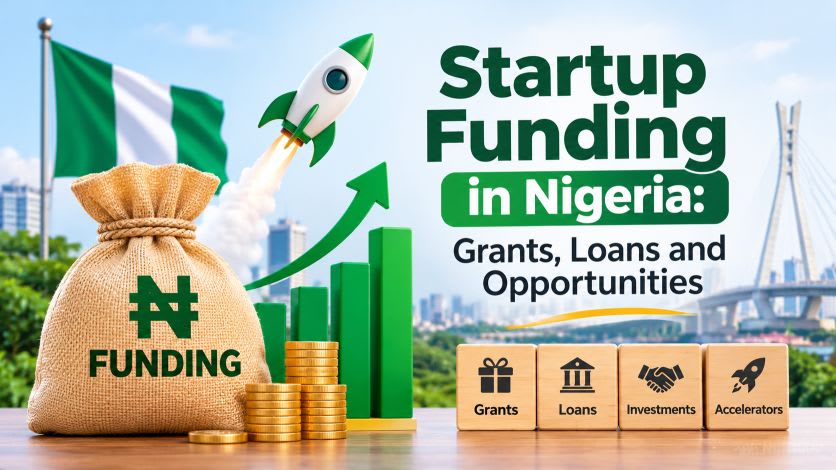
Starting or growing a business in Nigeria often requires more capital than founders can raise themselves. From technology startups to small businesses, access to funding remains one of the biggest challenges for entrepreneurs.
However, several government initiatives, private organisations and international programmes provide financial support to Nigerian businesses. Some offer grants that do not require repayment, while others provide loans, mentorship or investment.
Here are some funding opportunities Nigerian entrepreneurs should consider.
1. Bank of Industry (BOI) iDICE Programme
The Investment in Digital and Creative Enterprises (iDICE) programme supports businesses in Nigeria's technology and creative sectors. Its focus includes fintech, software development, digital services, gaming and other innovative businesses.
Through the programme, eligible businesses can access financing, including loans and investment opportunities.
Applications and programme information are available through the BOI iDICE portal.
2. Tony Elumelu Foundation Entrepreneurship Programme
The Tony Elumelu Foundation (TEF) supports African entrepreneurs through business training, mentorship and seed funding.
Selected entrepreneurs receive US$5,000 in non-refundable seed capital to develop their businesses. The programme is open to eligible entrepreneurs across Africa, including Nigerians.
The 2026 application cycle has closed, but entrepreneurs can monitor TEFConnect for the next application period.
3. Bet9ja Foundation ScaleUp Accelerator
The Bet9ja Foundation ScaleUp Accelerator supports Nigerian businesses through funding, mentorship and business development.
Its programme has offered selected businesses ₦3 million in grant funding, with an additional ₦2 million for the best pitch. Businesses in sectors such as transportation, technology, agriculture and logistics may find the programme relevant.
Entrepreneurs should check the foundation's website for the next application window: Bet9ja Foundation.
4. Nigeria Youth Investment Fund (NYIF)
The Nigeria Youth Investment Fund is designed to support young Nigerian entrepreneurs and youth-owned businesses.
It provides access to business financing for eligible applicants looking to establish or expand their businesses. Interested entrepreneurs should check the Bank of Industry for current application arrangements and eligibility requirements.
5. Nigeria Startup Act and Startup Investment Support
The Nigeria Startup Act provides a framework for supporting technology startups through incentives, investment opportunities and government-backed initiatives.
Eligible businesses can obtain a Startup Label, which may provide access to certain benefits, including funding opportunities, tax incentives and connections to investors.
Technology founders can visit the Nigeria Startup Portal to learn about registration and eligibility.
6. D-Prize Global Competition
D-Prize is an international funding competition for entrepreneurs developing solutions that help distribute proven interventions to address poverty.
Selected entrepreneurs can receive up to US$20,000 to launch or expand their initiatives. However, it is not a general business grant; applications must address the competition's specified development challenges.
More information is available at D-Prize.
What Do You Need Before Applying?
Although requirements differ between programmes, most funding organisations expect applicants to have some basic business documentation. These may include:
- CAC registration documents.
- A clear business plan and financial projections.
- Business bank statements.
- Evidence of customers, sales or business activity.
- A pitch deck explaining the business and its funding needs.
Entrepreneurs should also understand the difference between grants, loans and equity investments. Grants generally do not require repayment, loans must be repaid, while equity funding involves giving investors a share of the business.
Final Thoughts
Access to startup funding in Nigeria is not limited to bank loans. Government initiatives, private foundations and international organisations continue to create opportunities for entrepreneurs willing to build sustainable businesses.
Founders should regularly monitor official funding portals, prepare their business documents early and avoid agents who demand money in exchange for guaranteed grants.
The right funding programme can help a small business move beyond survival and build a foundation for long-term growth.
Found this useful? Share it
Help friends, family and colleagues stay informed on Nigerian finance.
Keep reading
Related Topics






Conversation
Comments (0)
Sign in to join the conversation or like this post.

Mujeeb Olagunju
I am a finance professional with a strong background in economics and financial technology.,My work centers on building systems that support payments, digital banking, and investment solutions in emerging markets.,I have experience with risk management, transaction monitoring, fraud prevention, and the design of scalable financial products tailored to both retail and institutional clients.,With over 8 years of industry experience, I combine financial insight with technical expertise to deliver solutions that balance compliance, security, and business growth.,My goal is to bridge the gap between finance and technology, creating platforms that expand access to modern financial services and strengthen trust in digital finance.
97
Stories
30958
Reads
0
Likes
0
Comments