
Nigeria's Major Electricity Projects: What to Expect Between 2026 and 2028

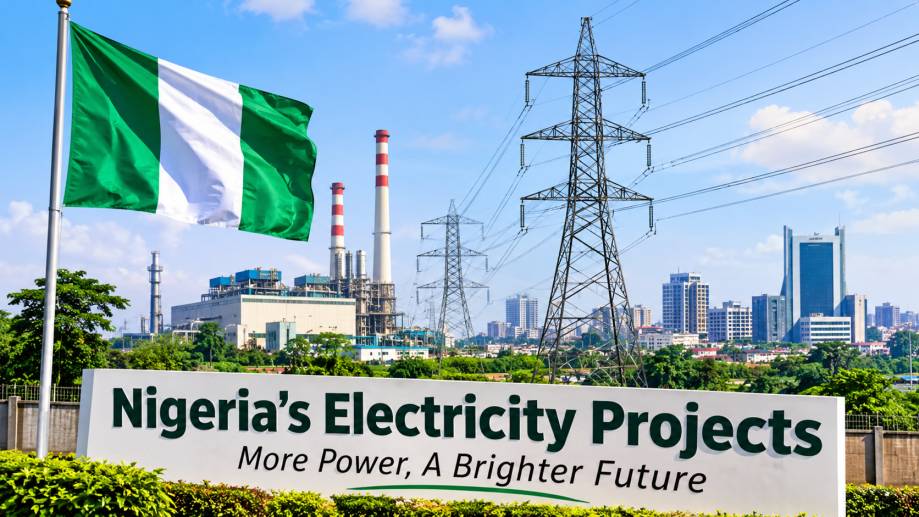
Nigeria's electricity sector is witnessing another wave of infrastructure investments, with the Federal Government, state governments and private companies pursuing projects to increase generation, strengthen transmission and improve electricity distribution.
The investments range from a proposed $2 billion transmission super grid to new gas-fired power plants and solar projects. But how much electricity will these projects actually deliver, and when should Nigerians expect them?
Here are some of the major developments.
1. East-West Super Grid – $2 Billion
One of the biggest proposed electricity infrastructure projects is the Federal Government's East-West Super Grid. The project is designed to expand Nigeria's transmission capacity to 19,000MW, connecting locations including Benin, Epe, Ilorin, Gwagwalada and Ikot-Ekpene.
Procurement has commenced, with an expected delivery period of 18–24 months, potentially taking completion into 2028.
The project will not generate electricity itself. Its purpose is to improve the movement of electricity from power stations to different parts of the country.
2. Siemens Presidential Power Initiative – 5,540MW
The partnership between Nigeria and Germany's Siemens Energy is another major attempt to address the country's transmission challenges.
The initiative targets an additional 5,540MW of transmission capacity by 2029. Its first phase includes five major substations in Abeokuta, Ibadan, Offa, Onitsha and Sokoto.
The first batch is expected to reach completion around the first quarter of 2027.
3. Abuja Independent Power Project – 1,600MW
The Federal Government is developing a 1,600MW gas-fired power plant in Abuja, with 265MW expected from its first phase.
The first phase was initially targeted for completion by December 2026. The project is expected to benefit Abuja and surrounding areas, with the wider development planned in phases.
4. Alaoji Power Plant – 570MW
Located in Abia State, the Alaoji combined-cycle power project is being developed by the Niger Delta Power Holding Company.
The 570MW expansion is expected to strengthen electricity generation in the South-East. However, the project has experienced delays, with October 2027 announced as its revised completion target.
5. Private-Sector Power Projects
Private investors are also becoming increasingly involved in electricity generation.
Some notable projects include:
- CCETC Ogua, Edo State: A 100MW independent power project targeting commissioning around December 2026 or early 2027.
- Sahara Power, Ogba, Lagos: A $12 million, 12MW gas-fired plant expected to be completed in the first quarter of 2027.
- Edo North: A proposed 200MW independent power project, although no firm commissioning date has been established.
These projects demonstrate how private companies and state governments can develop electricity solutions for specific communities and industrial areas.
6. Solar and Mini-grid Investments
Nigeria is also expanding electricity access through renewable energy.
The Rural Electrification Agency is implementing several projects, including:
- Yobe: Five solar installations with a combined capacity of 13.92MWp.
- Kebbi: A 3.5MW solar project targeting completion approximately eight months after its July 2026 commencement.
- Adamawa: 39 distributed mini-grid projects, comprising three interconnected and 36 isolated systems.
Unlike large national power stations, these projects are designed to provide electricity directly to communities that have limited access to the national grid.
7. Electricity Metering and Distribution Improvements
Increasing generation is only one part of Nigeria's electricity challenge. The distribution network must also be capable of delivering power to consumers.
The Presidential Metering Initiative aims to deploy five million electricity meters. More than 2.8 million customers had reportedly been metered under the programme by November 2026.
Additionally, the World Bank-backed $500 million Distribution Sector Recovery Programme is supporting improvements in metering, transformers, distribution infrastructure and revenue collection.
What These Projects Mean for Nigeria
Nigeria's electricity challenge goes beyond insufficient power generation. Gas supply, transmission constraints, ageing distribution infrastructure and the financial difficulties of electricity companies all contribute to unreliable supply.
A new power plant does not automatically mean more electricity for households. The electricity must also be transmitted and distributed efficiently.
If these projects are delivered as announced, they could improve electricity access, reduce businesses' dependence on generators, support manufacturing and attract new investment.
However, Nigeria's real success will not be measured by the megawatts announced in project documents. It will be measured by how much electricity actually reaches homes, factories and businesses.
Found this useful? Share it
Help friends, family and colleagues stay informed on Nigerian finance.
Keep reading
Related Topics
Conversation
Comments (0)
Sign in to join the conversation or like this post.

Mujeeb Olagunju
I am a finance professional with a strong background in economics and financial technology.,My work centers on building systems that support payments, digital banking, and investment solutions in emerging markets.,I have experience with risk management, transaction monitoring, fraud prevention, and the design of scalable financial products tailored to both retail and institutional clients.,With over 8 years of industry experience, I combine financial insight with technical expertise to deliver solutions that balance compliance, security, and business growth.,My goal is to bridge the gap between finance and technology, creating platforms that expand access to modern financial services and strengthen trust in digital finance.
94
Stories
30466
Reads
0
Likes
0
Comments