
Inflation Fell Again in October. Food Inflation Has Doubled Since January

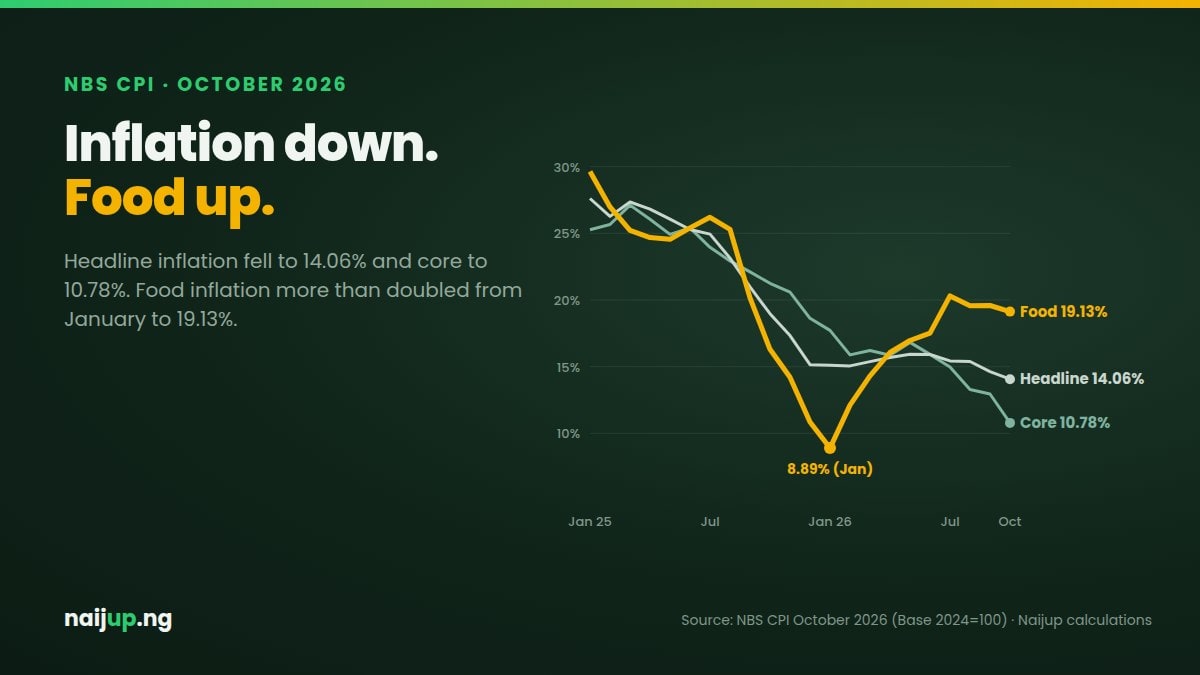
The NBS released October 2026 inflation numbers and the headline is good news again. Inflation dropped to 14.06%, from 14.63% in September. A year ago, October 2025, it was 18.97%.
Core inflation, which strips out farm produce and energy, fell even harder, from 12.95% to 10.78%. That's the lowest core reading in the NBS series, which goes back to January 2024 on the new base.
So why doesn't it feel like things are getting cheaper? Because of one line in the report: food inflation is 19.13%.
Food went the other way
Here's the part that gets lost. Food inflation didn't just stay high. It went up this year.
| Month | Headline | Food | Core |
|---|---|---|---|
| Oct 2025 | 18.97% | 16.30% | 21.25% |
| Jan 2026 | 15.10% | 8.89% | 17.72% |
| Apr 2026 | 15.69% | 16.06% | 15.86% |
| Jul 2026 | 15.43% | 20.31% | 14.97% |
| Sep 2026 | 14.63% | 19.59% | 12.95% |
| Oct 2026 | 14.06% | 19.13% | 10.78% |
In January, food inflation was 8.89%. Now it's 19.13%. More than double.
Over the same months, core inflation went from 17.72% to 10.78%. So prices of the things that aren't food or energy (clothes, furniture, phone services, insurance, etc.) are rising more slowly, while food is rising faster. The two lines crossed around April and have been moving apart since.
Food is now running at almost twice the core rate.
Why this matters more than the headline
Food has the biggest weight in the CPI. "Food and non-alcoholic beverages" is about 40% of the basket. And for a lot of households, especially low-income ones, the real share of income going to food is a lot higher than 40%.
So when someone says "inflation is 14%", that's an average over a basket that doesn't look like their own spending. If most of your money goes to food, your personal inflation rate is closer to 19% than to 14%.
The NBS's own contribution breakdown backs this up. Out of the 14.06% headline, food and non-alcoholic beverages contributed 5.63 percentage points, the single biggest chunk. Restaurants added another 1.82. Transport, 1.50.
There's a little bit of good news
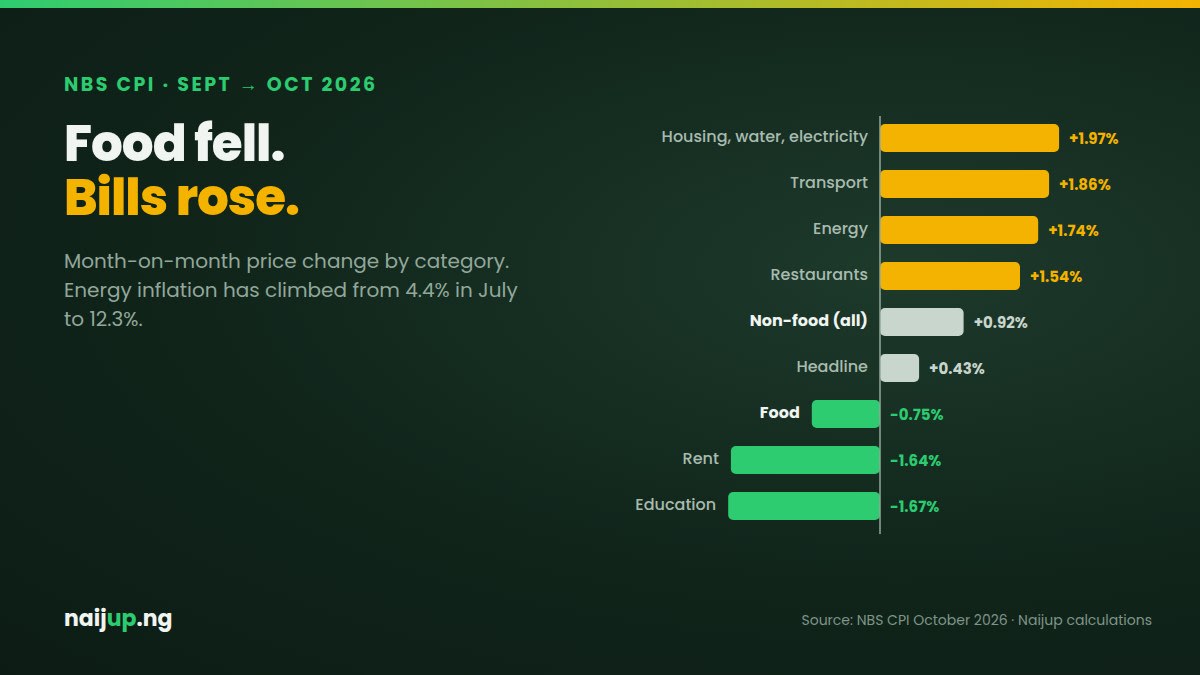
On a month-to-month basis, food prices actually fell 0.75% in October, after falling 1.55% in September. That's harvest season doing its job. The NBS mentions items like vegetable oil, sardines, frozen mackerel, croaker, local rice, catfish, palm oil and millet flour among the products driving the monthly food movement.
If food prices keep falling month on month for a few more months, the yearly rate will start coming down too. But we've seen this movie before. Food fell 6.02% in January, then jumped 4.69% in February and 4.17% in March.
Imported food vs Nigerian food
One more thing worth noting: imported food inflation was just 8.39% in October, while farm produce inflation was 18.38%. We covered this gap in more detail in September, and it's still there. A steadier naira has helped imported items. Local food is being pushed by other things: insecurity in farming areas, transport costs, storage losses.
What this means for you
• Don't plan your budget around the 14% headline. If food is most of your spending, use ~19% when you work out how much more you'll need next year.
• Buy in bulk during the harvest dip. October–December is usually the cheapest window for grains like rice, beans and millet. Storage is the challenge, but bulk buying with family or neighbours helps.
• Salary negotiations: the 14.06% figure is what HR will quote. The food number is the one to bring to the table.
Are food prices in your area going down after harvest, or not yet? Let us know in the comments.
Quick FAQ
What is Nigeria's inflation rate for October 2026?
14.06% year on year, according to the NBS, down from 14.63% in September 2026 and 18.97% in October 2025.
What is Nigeria's food inflation rate in October 2026?
19.13% year on year, up from 16.30% in October 2025. On a month-on-month basis, food prices fell 0.75%.
What is core inflation in Nigeria now?
10.78% in October 2026, down from 12.95% in September. Core inflation excludes farm produce and energy prices.
Why is food inflation higher than headline inflation?
Food prices have risen faster than most other items in 2026. Food inflation climbed from 8.89% in January to 19.13% in October, while core inflation fell.
Data source: National Bureau of Statistics, Consumer Price Index October 2026 (Base 2024 = 100), report and Table 2. Month-by-month rates for earlier months are Naijup calculations from the index values in the NBS spreadsheet and may differ slightly from figures in older NBS press releases due to rounding.
Found this useful? Share it
Help friends, family and colleagues stay informed on Nigerian finance.
Keep reading
Related Topics
Conversation
Comments (0)
Sign in to join the conversation or like this post.

Mujeeb Olagunju
I am a finance professional with a strong background in economics and financial technology.,My work centers on building systems that support payments, digital banking, and investment solutions in emerging markets.,I have experience with risk management, transaction monitoring, fraud prevention, and the design of scalable financial products tailored to both retail and institutional clients.,With over 8 years of industry experience, I combine financial insight with technical expertise to deliver solutions that balance compliance, security, and business growth.,My goal is to bridge the gap between finance and technology, creating platforms that expand access to modern financial services and strengthen trust in digital finance.
94
Stories
30466
Reads
0
Likes
0
Comments