
Nigeria, the U.S., and a $5.1bn Health Deal: What’s Really Going On?
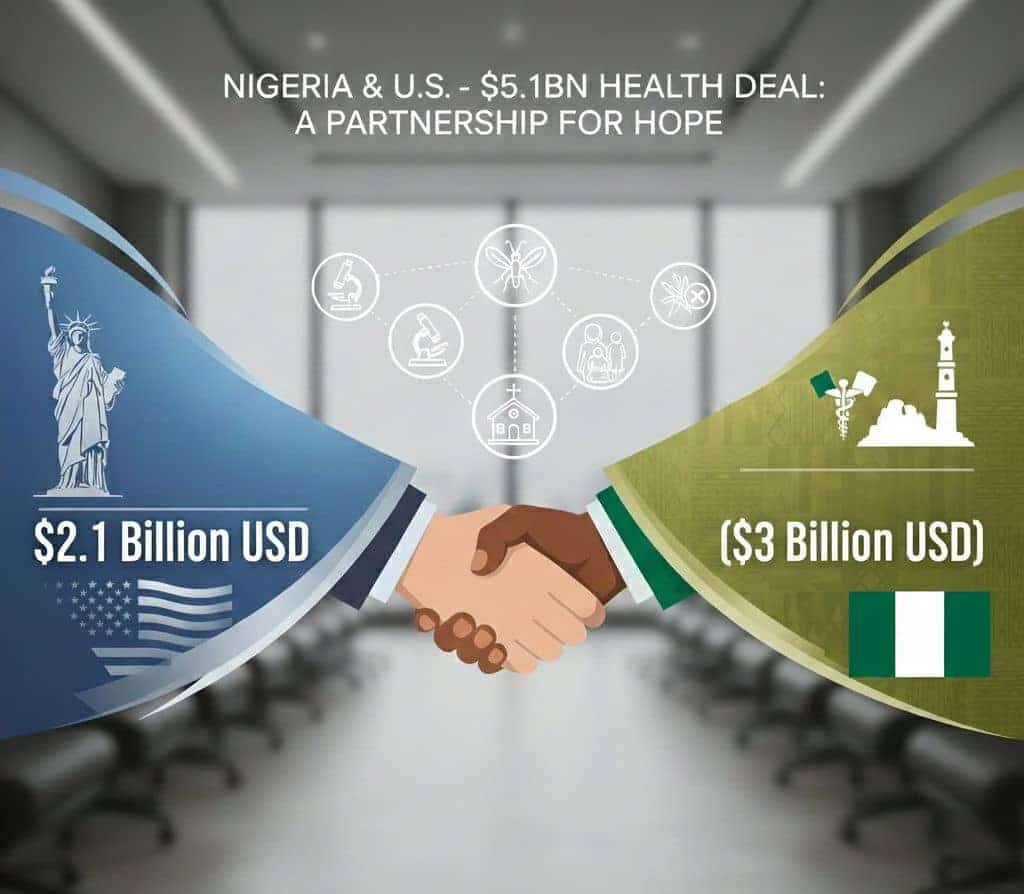
Nigeria and the United States have signed a five-year, $5.1 billion bilateral health cooperation agreement, marking what both governments describe as the largest co-investment under the America First Global Health Strategy so far.
On paper, it’s a big number. In reality, it touches everything from malaria and maternal mortality to diplomacy, security, and national accountability. So, what exactly is in the agreement and why should Nigerians care?
The Breakdown: Who’s Paying for What?
Under the Memorandum of Understanding (MoU), signed on December 19, 2025:
• The United States will provide $2.1 billion in health assistance.
• Nigeria will commit $3 billion in domestic health spending over the same five-year period.
According to the U.S. Mission in Nigeria, the deal supports resilient, self-reliant health systems while promoting shared responsibility. This isn’t traditional donor-recipient aid, it’s a “put your money where your mouth is” approach, with Nigeria stepping up financially and structurally.
What The Money Targets
The agreement prioritizes Nigeria’s biggest health challenges, including:
• HIV/AIDS, tuberculosis (TB), malaria, and polio
• Maternal and child health
• Disease surveillance and outbreak response
• Laboratory systems and health commodities
• Support for frontline healthcare workers
• Health data systems
Nigeria carries about 30% of the global malaria burden and ranks among the highest for maternal and child mortality worldwide (WHO data). This deal targets those metrics directly, not just conferences or policy papers.
The Faith-Based Healthcare Angle
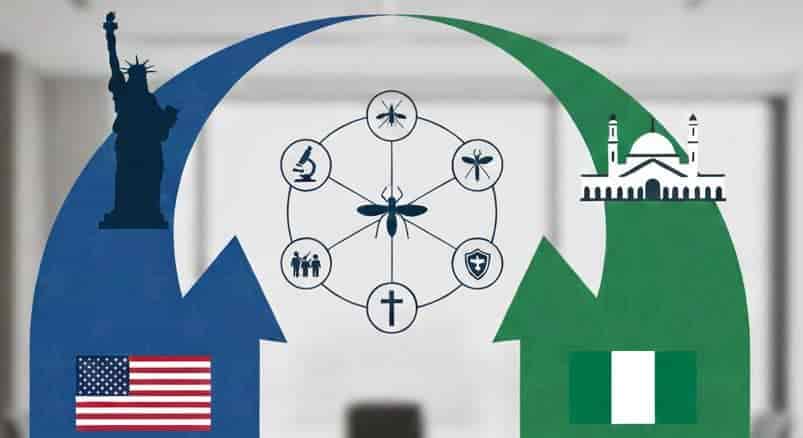
A standout feature is the strong emphasis on Christian faith-based providers. Per the U.S. Mission:
- Nigeria has over 900 faith-based clinics and hospitals.
- They serve more than 30% of the country’s 230 million people.
- Many operate where government facilities are limited or absent.
About $200 million strengthens these institutions, expands workforce capacity, and boosts integrated services for HIV, TB, malaria, and maternal health. The U.S. views them as “uniquely positioned” to complement public systems, a reality many Nigerians already understand, as a large portion of healthcare is delivered outside government-owned hospitals.
The Political Subtext
The U.S. Mission confirmed that the MoU was negotiated alongside Nigeria’s reforms aimed at prioritising the protection of Christian populations from extremist violence.
Key conditions:
1. The U.S. can pause or terminate funding if programs misalign with its interests.
2. Nigeria must show progress against religiously motivated violence.
It’s a health cooperation deal with diplomatic strings attached, no freebies.
FG: “Relations Stronger Than Ever”
Nigeria’s Minister of Information and National Orientation, Mohammed Idris, described the agreement as proof that Nigeria’s relationship with the U.S. is not weakening despite recent diplomatic tensions.
According to him, the misunderstanding between both countries was resolved through “firm and respectful engagement,” resulting in a strengthened partnership.
“This partnership will strengthen Nigeria’s healthcare system, save lives, and attract investment,” Idris said, adding that Nigeria is now a confident and strategic global partner, not a bystander.
He also linked the deal to Nigeria’s broader international push in 2025, including:
• Regaining its Category C seat on the International Maritime Organisation (IMO) Council after 14 years.
• Securing hosting rights for (Creative Africa Nexus) CANEX 2026 and (Intra-African Trade Fair) IATF 2027.
• Nigerians assuming senior roles in global institutions such as the WHO, ITU, and World Customs Organisation.
One thing is clear: Nigeria is actively trying to reposition itself, not sit quietly on the sidelines.
Bottom Line
Nigeria’s health sector struggles with funding gaps, infrastructure shortfalls, and a persistent brain drain. The government acknowledges these challenges but insists reforms are underway including increased investments in infrastructure, vaccines, human resources, and essential medicines under President Tinubu’s Renewed Hope Agenda.
This MoU won’t fix everything. But it does demand that Nigeria co-invest, co-own, and deliver accountability not just receive aid.
Now comes execution, that's where Nigeria’s real test always begins.
Keep reading
Related Topics



Conversation
Comments (0)
Sign in to join the conversation or like this post.