
Nigeria Now Owes ₦166.79 Trillion: What the Latest Debt Figures Really Mean
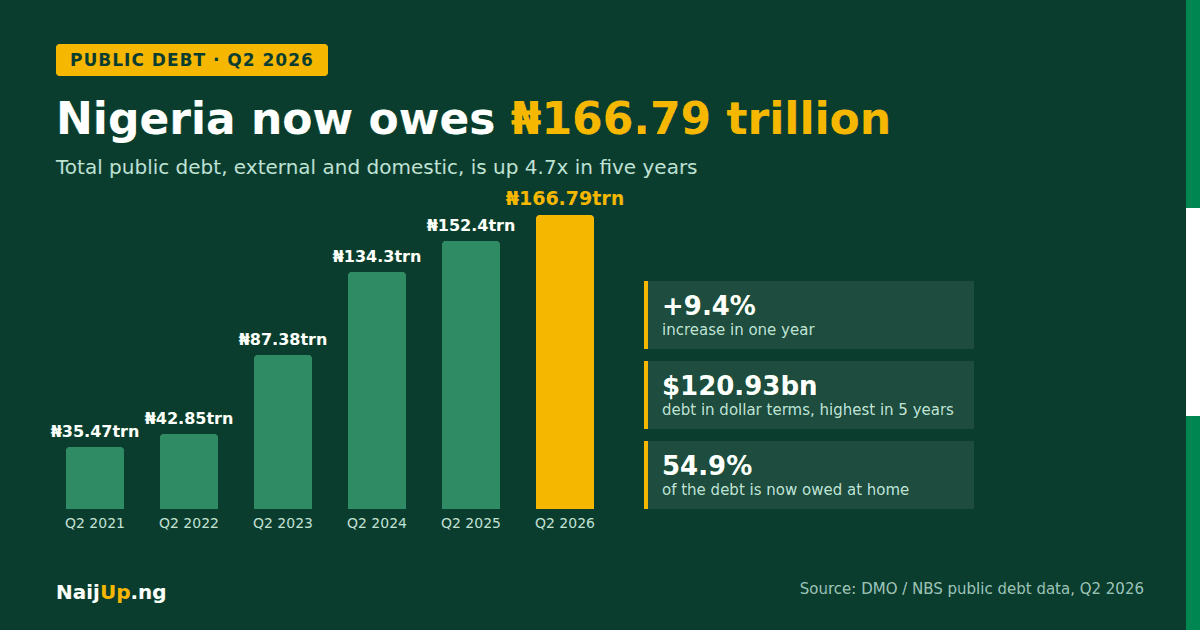
Nigeria's total public debt has risen to ₦166.79 trillion, or US$120.93 billion, as of the end of June 2026.
That is the latest figure from the Debt Management Office (DMO), published by the National Bureau of Statistics (NBS). It is up from ₦159.35 trillion in March 2026, which means Nigeria added about ₦7.44 trillion in just three months.
Most people have stopped paying attention to debt headlines because the numbers keep getting bigger. This one is worth a closer look, because it shows something different from the last few years. Before now, much of the growth in Nigeria's debt came from a weaker naira. This time the naira was stronger, and the debt still went up.
The three numbers that matter
1. Total public debt: ₦166.79 trillion
This covers all external and domestic debt owed by the Federal Government, the 36 states and the FCT.
• Quarter-on-quarter growth: 4.67% (from ₦159.35trn in Q1 2026)
• Year-on-year growth: 9.44% (from ₦152.40trn in Q2 2025)
• Five-year growth: 4.7 times (from ₦35.47trn in Q2 2021)
The 4.67% rise in Q2 2026 is the biggest quarterly increase since Q3 2024.
2. Debt in dollars: US$120.93 billion
In dollar terms, Nigeria's debt rose by US$21.27 billion in one year, from $99.66 billion in Q2 2025. That is a 21.3% increase, and it is the highest dollar figure in the five years of data in this report, beating the previous record of $114.95 billion set just one quarter earlier, in Q1 2026.
3. Share owed at home: 54.91%
• Domestic debt: ₦91.59 trillion (54.91%)
• External debt: ₦75.20 trillion, or $54.52 billion (45.09%)
Nigeria now owes more to lenders at home (banks, pension funds and investors in FGN bonds and Treasury bills) than to foreign lenders, and the gap has been widening for most of the past year.
Who Owes the Money? FGN vs States
The Federal Government owes most of it.
| Debt holder | Domestic debt | External debt | Share of total public debt |
| Federal Government (FGN) | ₦87.00 trillion | $47.69 billion (₦65.77trn) | 91.6% |
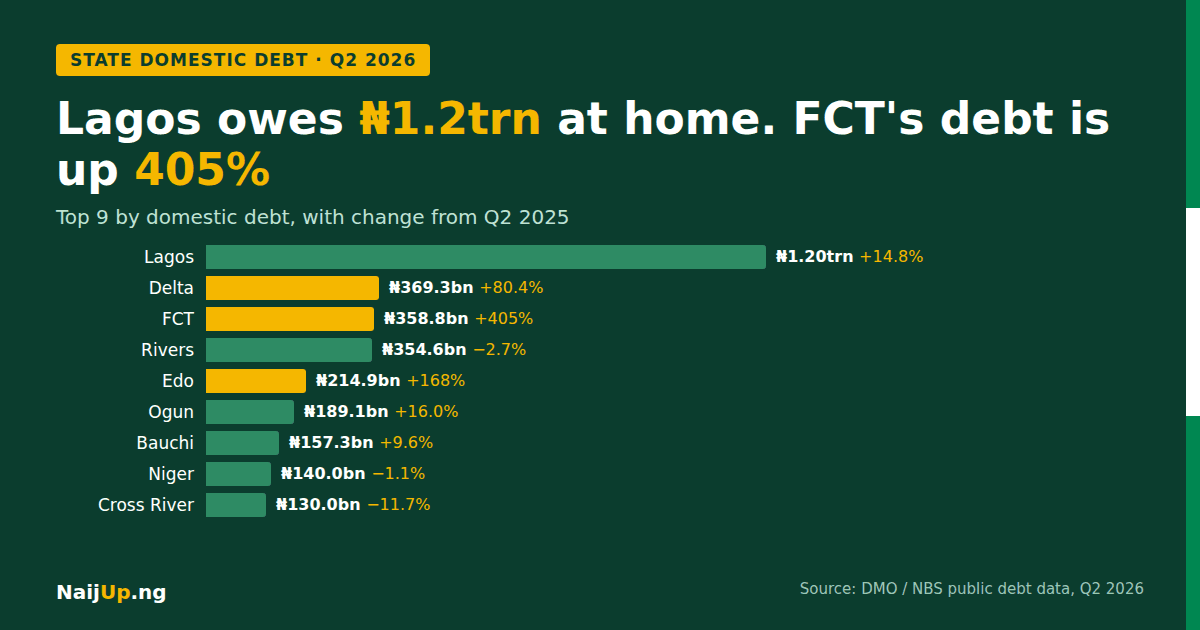
| 36 States & FCT | ₦4.59 trillion | $6.83 billion (₦9.42trn) | 8.4% |
| Total | ₦91.59 trillion | $54.52 billion (₦75.20trn) | 100% |
The states' part is small in total, but it is growing faster. Their external debt rose 42% in one year, from $4.81 billion to $6.83 billion, while FGN external debt rose 13.1% over the same period.
The Strange Part: The Naira Got Stronger, But the Debt Still Grew
For most Nigerians, the main explanation for rising debt has been simple: the naira lost value, so foreign debt became more expensive in naira terms.
That was true in 2023 and 2024. It is not what is happening now.
The DMO converts external debt to naira at the CBN official rate. Here is what that rate has done:
| Period | Exchange rate used (₦/$) | Total debt (₦) | Total debt ($) |
| Q2 2024 | ~₦1,470 | ₦134.30trn | $91.35bn |
| Q2 2025 | ~₦1,529 | ₦152.40trn | $99.66bn |
| Q1 2026 | ₦1,386.22 | ₦159.35trn | $114.95bn |
| Q2 2026 | ₦1,379.18 | ₦166.79trn | $120.93bn |
Between June 2025 and June 2026, the naira gained about 10% against the dollar. A stronger naira should make foreign debt look smaller in naira terms. Instead:
• External debt in dollars rose from $46.98bn to $54.52bn (+16.0%)
• Domestic debt rose from ₦80.55trn to ₦91.59trn (+13.7%)
So the latest increase comes mainly from new borrowing, not from exchange-rate changes.
How We Got Here: Five Years of Debt in One Table
The jump from ₦35 trillion to ₦166 trillion happened in a few big steps:
Q2 2023: from ₦49.85trn to ₦87.38trn (+75% in one quarter). The naira was devalued (the rate used moved from about ₦460 to ₦770 per dollar), and FGN domestic debt nearly doubled from ₦24.73trn to ₦48.31trn. That jump came mostly from the securitisation of the CBN's Ways and Means advances to the Federal Government, which turned old overdrafts into recorded debt.
Q3 2023 to Q1 2024: from ₦87.91trn to ₦121.67trn. The naira fell again, from about ₦770 to ₦1,330 per dollar, and external debt in naira terms rose from ₦31.98trn to ₦56.02trn while the dollar amount barely moved.
2025 to 2026: steady borrowing. The naira has been more stable, but the debt has kept rising every quarter, in naira and in dollars.
| Quarter | Total debt (₦) | Total debt ($) | Domestic share |
| Q2 2021 | ₦35.47trn | $86.57bn | 61.3% |
| Q2 2022 | ₦42.85trn | $103.31bn | 61.2% |
| Q2 2023 | ₦87.38trn | $113.42bn | 61.9% |
| Q2 2024 | ₦134.30trn | $91.35bn | 53.0% |
| Q2 2025 | ₦152.40trn | $99.66bn | 52.9% |
| Q2 2026 | ₦166.79trn | $120.93bn | 54.9% |
Over five years, external debt grew 63% in dollar terms ($33.47bn to $54.52bn) but 5.5 times in naira terms (₦13.71trn to ₦75.20trn). The difference between those two numbers is the cost of the naira's fall.
Why Should the Average Nigerian Care?
A debt figure in the trillions can feel unrelated to daily life. It affects you in a few direct ways:
• Debt service competes with everything else. Every naira spent on interest is a naira not spent on roads, hospitals, schools or security.
• Heavy domestic borrowing keeps interest rates high. When the government borrows heavily at home, banks can earn good returns lending to it, so loans to businesses and households stay expensive.
• Foreign debt carries currency risk. The naira has been stronger this year, but if it weakens again, the $54.52 billion in external debt will cost more in naira overnight.
• Future taxes and levies. Debt has to be repaid, and governments usually pay with new revenue (taxes, levies, tariffs) or with more borrowing.
Does a High Debt Figure Automatically Mean Nigeria Is in Trouble?
Not on its own. Many large economies carry far more debt relative to the size of their economy. The real questions are:
1. Can revenue cover the interest? Nigeria's long-running problem is low government revenue compared with the size of the economy, not the debt total alone.
2. What is the money buying? Borrowing for power, rail and ports can pay for itself. Borrowing to pay salaries and recurrent costs does not.
3. How expensive is the debt? Local debt at high interest rates and Eurobonds at high yields both cost a lot to service.
Nigeria's Debt: The Numbers at a Glance
| Indicator | Q2 2025 | Q2 2026 | Change |
| Total public debt (₦) | ₦152.40trn | ₦166.79trn | +9.44% |
| Total public debt ($) | $99.66bn | $120.93bn | +21.35% |
| External debt ($) | $46.98bn | $54.52bn | +16.05% |
| Domestic debt (₦) | ₦80.55trn | ₦91.59trn | +13.70% |
| FGN domestic debt | ₦76.59trn | ₦87.00trn | +13.60% |
| States & FCT domestic debt | ₦3.96trn | ₦4.59trn | +15.83% |
| States & FCT external debt | $4.81bn | $6.83bn | +42.00% |
| Domestic share of total | 52.9% | 54.9% | +2.0 pts |
Final Takeaway
The headline number, ₦166.79 trillion, matters less than how it grew.
For two years, Nigeria's debt story was mostly about the exchange rate. In 2026 it is about borrowing. The naira has strengthened, the exchange-rate pressure on foreign debt has eased, and the total still went up by more than ₦14 trillion in a year.
The question for the coming quarters is whether new borrowing goes into projects that grow revenue. If it does not, Nigeria will keep borrowing just to keep up.
Data source: Debt Management Office (DMO) and National Bureau of Statistics (NBS), Nigeria Public Debt Report, Q2 2026. External debt converted at the CBN official rate of ₦1,379.18/$ as at June 30, 2026.
Keep reading
Related Topics



Conversation
Comments (0)
Sign in to join the conversation or like this post.

Mujeeb Olagunju
I am a finance professional with a strong background in economics and financial technology.,My work centers on building systems that support payments, digital banking, and investment solutions in emerging markets.,I have experience with risk management, transaction monitoring, fraud prevention, and the design of scalable financial products tailored to both retail and institutional clients.,With over 8 years of industry experience, I combine financial insight with technical expertise to deliver solutions that balance compliance, security, and business growth.,My goal is to bridge the gap between finance and technology, creating platforms that expand access to modern financial services and strengthen trust in digital finance.
62
Stories
17900
Reads
0
Likes
0
Comments