
Lagos Owes ₦1.2 Trillion at Home, but FCT's Debt Jumped 405%: Nigeria's State Debt Rankings for 2026
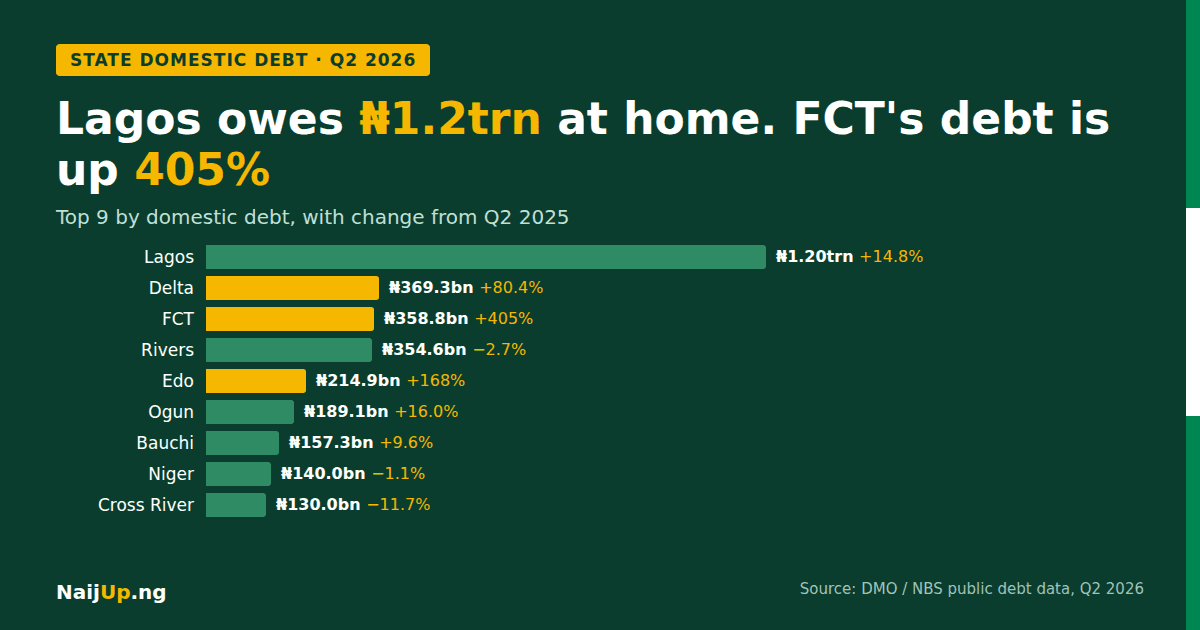
The 36 states and the Federal Capital Territory owed a combined ₦4.59 trillion in domestic debt at the end of June 2026, according to the latest data from the Debt Management Office (DMO).
That is 15.8% higher than a year earlier, when the figure was ₦3.96 trillion.
The total hides a split. 23 of the 37 governments cut their domestic debt over the past year, but the 14 that borrowed more did so heavily enough to push the total up.
The three numbers that matter
1. Total state domestic debt: ₦4.59 trillion
• Year-on-year: +15.8% (from ₦3.96trn in Q2 2025)
• Quarter-on-quarter: +1.5% (from ₦4.52trn in Q1 2026)
2. Lagos alone: ₦1.20 trillion (26% of the total)
Lagos owes more at home than the next three states (Delta, FCT and Rivers) combined, and accounts for about one in every four naira of state domestic debt in Nigeria.
3. Top five states: 54% of the total
Lagos, Delta, FCT, Rivers and Edo together owe ₦2.49 trillion, more than the other 32 combined.
Nigeria's Top 10 States by Domestic Debt (Q2 2026)
| Rank | State | Q2 2025 | Q2 2026 | Change (1 year) |
| 1 | Lagos | ₦1.04trn | ₦1.20trn | +14.8% |
| 2 | Delta | ₦204.67bn | ₦369.30bn | +80.4% |
| 3 | FCT | ₦71.04bn | ₦358.79bn | +405.1% |
| 4 | Rivers | ₦364.39bn | ₦354.64bn | −2.7% |
| 5 | Edo | ₦80.32bn | ₦214.93bn | +167.6% |
| 6 | Ogun | ₦162.92bn | ₦189.05bn | +16.0% |
| 7 | Bauchi | ₦143.62bn | ₦157.35bn | +9.6% |
| 8 | Niger | ₦141.52bn | ₦140.00bn | −1.1% |
| 9 | Cross River | ₦147.28bn | ₦130.01bn | −11.7% |
| 10 | Benue | ₦133.53bn | ₦112.32bn | −15.9% |
FCT: From ₦71 Billion to ₦359 Billion in One Year
The biggest change in this report is the Federal Capital Territory.
| Quarter | FCT domestic debt |
| Q2 2025 | ₦71.04bn |
| Q3 2025 | ₦78.93bn |
| Q4 2025 | ₦188.86bn |
| Q1 2026 | ₦389.88bn |
| Q2 2026 | ₦358.79bn |
FCT's domestic debt grew five times in a year. In Q1 2026 the FCT moved up to second place nationally, behind only Lagos, before slipping to third in Q2 2026 after its debt fell by about ₦31 billion.
Delta Is Back at No. 2
Delta State's domestic debt rose from ₦213.85 billion in Q1 2026 to ₦369.30 billion in Q2 2026, a 72.7% jump in three months. That moved Delta ahead of both the FCT and Rivers into second place.
This is a return to an old position. Delta was Nigeria's second-largest domestic debtor in every quarter from Q2 2022 to Q1 2024, before Rivers took that spot from Q2 2024 to Q4 2025. Rivers' debt has since eased slightly, to ₦354.64 billion.
The Fastest Borrowers: States That More Than Doubled Their Debt
Some states that do not usually appear at the top of debt tables have borrowed heavily in the past year:
1. FCT: +405.1% (₦71.04bn → ₦358.79bn)
2. Kaduna: +262.2% (₦24.09bn → ₦87.25bn)
3. Borno: +226.4% (₦22.28bn → ₦72.71bn)
4. Edo: +167.6% (₦80.32bn → ₦214.93bn)
5. Yobe: +153.8% (₦38.01bn → ₦96.48bn)
Adamawa is also worth watching. Its debt rose 58.2% in just one quarter, from ₦64.70bn to ₦102.38bn.
The Debt Cutters: States Paying Down What They Owe
Other states cut their domestic debt sharply over the year:
| State | Q2 2025 | Q2 2026 | Change |
| Anambra | ₦28.07bn | ₦9.62bn | −65.7% |
| Enugu | ₦180.49bn | ₦74.51bn | −58.7% |
| Ondo | ₦10.65bn | ₦6.16bn | −42.2% |
| Bayelsa | ₦65.99bn | ₦43.49bn | −34.1% |
| Katsina | ₦20.19bn | ₦13.78bn | −31.8% |
| Ebonyi | ₦15.77bn | ₦11.38bn | −27.8% |
| Akwa Ibom | ₦105.82bn | ₦81.53bn | −23.0% |
Enugu's drop is the biggest in naira terms: it reduced its domestic debt by about ₦106 billion in a year, falling from 4th place to 18th.
The Least Indebted States at Home
| Rank | State | Domestic debt (Q2 2026) |
| 37 | Jigawa | ₦1.04bn |
| 36 | Ondo | ₦6.16bn |
| 35 | Anambra | ₦9.62bn |
| 34 | Ebonyi | ₦11.38bn |
| 33 | Katsina | ₦13.78bn |
Jigawa has had the lowest domestic debt in Nigeria in every quarter since Q2 2021 except one (Q1 2022). Ondo has been second-lowest in every quarter since Q1 2024.
Does Low Domestic Debt Mean a State Is Financially Healthy?
Not necessarily. Some states with very low domestic debt have much larger foreign debt.
• Jigawa owes only ₦1.04bn at home, but has $83.21 million in external debt.
• Ondo owes ₦6.16bn at home, but has $132.89 million in external debt.
• Anambra owes ₦9.62bn at home, but has $100.84 million in external debt.
To judge a state's finances properly, you have to look at both kinds of debt together, and compare them with what the state earns from FAAC allocations and its own internally generated revenue (IGR).
Why State Debt Matters to You
State governments pay for primary healthcare, state roads, schools, water and sanitation. When a large share of a state's income goes to debt repayment, there is less left for those services.
States also often repay domestic loans through deductions from their FAAC allocations, so heavy borrowing today can mean less cash for salaries and projects later.
Full Ranking: All 36 States and the FCT (Q2 2026)
| Rank | State | Q2 2025 | Q2 2026 | Change |
| 1 | Lagos | ₦1.04trn | ₦1.20trn | +14.8% |
| 2 | Delta | ₦204.67bn | ₦369.30bn | +80.4% |
| 3 | FCT | ₦71.04bn | ₦358.79bn | +405.1% |
| 4 | Rivers | ₦364.39bn | ₦354.64bn | −2.7% |
| 5 | Edo | ₦80.32bn | ₦214.93bn | +167.6% |
| 6 | Ogun | ₦162.92bn | ₦189.05bn | +16.0% |
| 7 | Bauchi | ₦143.62bn | ₦157.35bn | +9.6% |
| 8 | Niger | ₦141.52bn | ₦140.00bn | −1.1% |
| 9 | Cross River | ₦147.28bn | ₦130.01bn | −11.7% |
| 10 | Benue | ₦133.53bn | ₦112.32bn | −15.9% |
| 11 | Adamawa | ₦75.35bn | ₦102.38bn | +35.9% |
| 12 | Yobe | ₦38.01bn | ₦96.48bn | +153.8% |
| 13 | Kaduna | ₦24.09bn | ₦87.25bn | +262.2% |
| 14 | Akwa Ibom | ₦105.82bn | ₦81.53bn | −23.0% |
| 15 | Imo | ₦97.98bn | ₦79.50bn | −18.9% |
| 16 | Osun | ₦82.34bn | ₦78.07bn | −5.2% |
| 17 | Taraba | ₦93.93bn | ₦75.90bn | −19.2% |
| 18 | Enugu | ₦180.49bn | ₦74.51bn | −58.7% |
| 19 | Borno | ₦22.28bn | ₦72.71bn | +226.4% |
| 20 | Oyo | ₦83.16bn | ₦66.40bn | −20.1% |
| 21 | Gombe | ₦76.92bn | ₦64.92bn | −15.6% |
| 22 | Plateau | ₦74.41bn | ₦59.37bn | −20.2% |
| 23 | Kano | ₦56.89bn | ₦51.17bn | −10.1% |
| 24 | Kwara | ₦57.32bn | ₦51.06bn | −10.9% |
| 25 | Abia | ₦48.58bn | ₦48.63bn | +0.1% |
| 26 | Zamfara | ₦56.88bn | ₦45.14bn | −20.6% |
| 27 | Bayelsa | ₦65.99bn | ₦43.49bn | −34.1% |
| 28 | Sokoto | ₦49.63bn | ₦40.82bn | −17.8% |
| 29 | Ekiti | ₦49.98bn | ₦40.78bn | −18.4% |
| 30 | Nasarawa | ₦23.94bn | ₦27.67bn | +15.6% |
| 31 | Kogi | ₦18.79bn | ₦25.39bn | +35.1% |
| 32 | Kebbi | ₦14.97bn | ₦14.44bn | −3.6% |
| 33 | Katsina | ₦20.19bn | ₦13.78bn | −31.8% |
| 34 | Ebonyi | ₦15.77bn | ₦11.38bn | −27.8% |
| 35 | Anambra | ₦28.07bn | ₦9.62bn | −65.7% |
| 36 | Ondo | ₦10.65bn | ₦6.16bn | −42.2% |
| 37 | Jigawa | ₦0.85bn | ₦1.04bn | +22.5% |
State Domestic Debt: The Numbers at a Glance
| Indicator | Figure |
| Total state & FCT domestic debt (Q2 2026) | ₦4.59 trillion |
| Change in one year | +15.8% |
| Highest | Lagos, ₦1.20trn |
| Fastest growth (1 year) | FCT, +405.1% |
| Biggest cut (%) | Anambra, −65.7% |
| Lowest | Jigawa, ₦1.04bn |
| States that cut debt in the year | 23 of 37 |
| Share held by top 5 states | 54.3% |
Final Takeaway
Nigeria's state debt story is not one story. Most states are holding steady or paying down what they owe. A small group, led by the FCT, Delta, Edo, Kaduna, Borno and Yobe, is borrowing much faster than everyone else.
Borrowing is not wrong in itself, provided it pays for roads, power, water and other projects that raise future revenue. Residents of the fast-borrowing states should ask what the new loans are paying for.
Data source: Debt Management Office (DMO) and National Bureau of Statistics (NBS), Nigeria Public Debt Report, Q2 2026. Domestic debt figures are based on signed-off reports from the 36 states and the FCT.
Keep reading
Related Topics



Conversation
Comments (0)
Sign in to join the conversation or like this post.

Mujeeb Olagunju
I am a finance professional with a strong background in economics and financial technology.,My work centers on building systems that support payments, digital banking, and investment solutions in emerging markets.,I have experience with risk management, transaction monitoring, fraud prevention, and the design of scalable financial products tailored to both retail and institutional clients.,With over 8 years of industry experience, I combine financial insight with technical expertise to deliver solutions that balance compliance, security, and business growth.,My goal is to bridge the gap between finance and technology, creating platforms that expand access to modern financial services and strengthen trust in digital finance.
62
Stories
17900
Reads
0
Likes
0
Comments