
ECOWAS Moves to Scrap Air Ticket Taxes by 2026 - What It Means for Travellers, Traders, and the Region
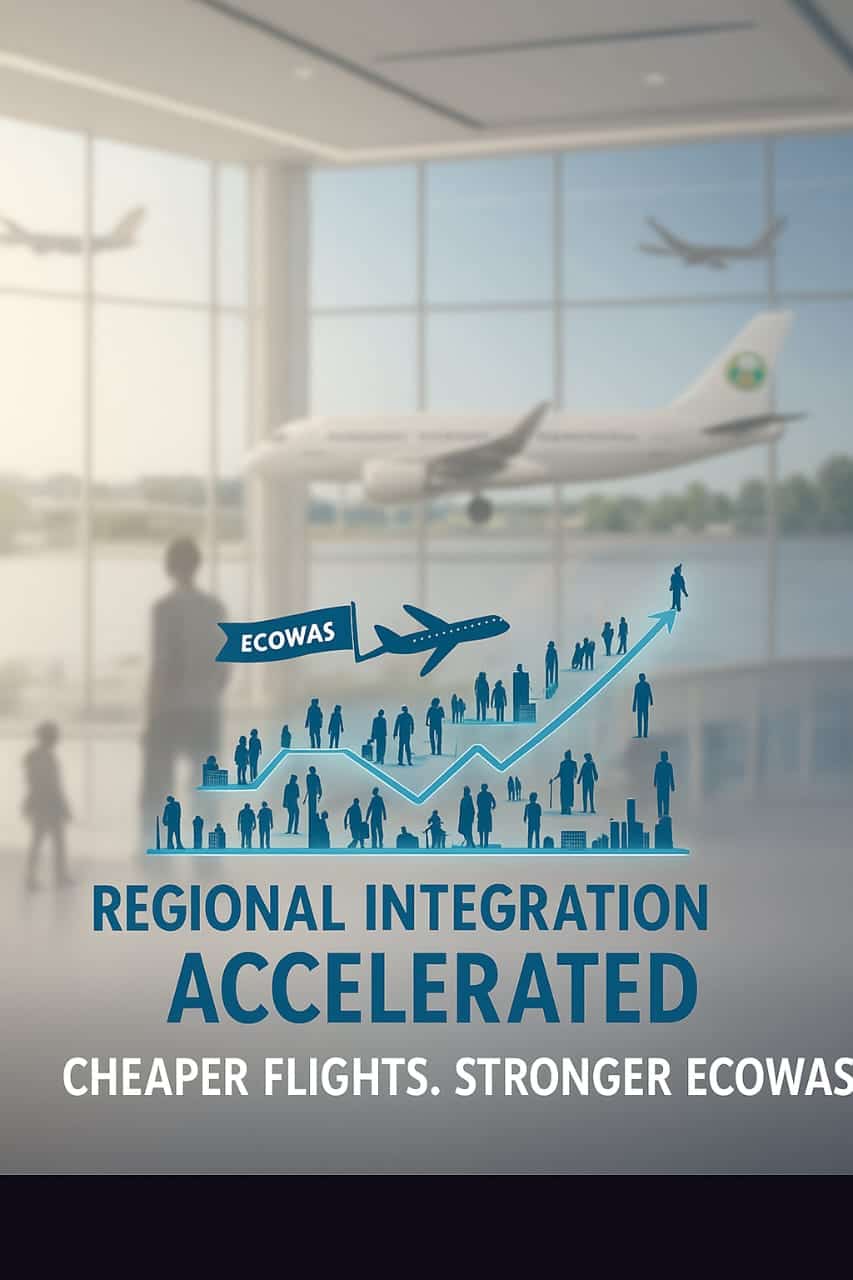
Air travel in West Africa is about to change for the better. The Economic Community of West African States (ECOWAS) has announced a landmark policy to abolish air ticket taxes across member states beginning January 1, 2026, a reform expected to cut flight costs, boost regional travel, and align West Africa with global aviation standards.
The announcement was made by Chris Appiah, ECOWAS Director of Transport and Communications, during the ECOWAS Council of Ministers meeting in Abuja.
And honestly? It’s about time.
Why This Matters: West Africa Has the Most Expensive Flights in Africa
For nearly a decade, ECOWAS has been studying the region’s aviation sector.
The verdict was brutal:
West Africa has some of the most expensive intra-regional flights on the continent, not because airlines are greedy, but because the government piled taxes on tickets like toppings on a badly made pizza.
Appiah explained it plainly: 64% to 70% of the cost of an average ticket in West Africa comes from taxes and charges.
Some routes are so expensive that a Lagos-to-Dakar trader can pay over $3,000, with taxes making up a huge chunk.
Many of these levies also fail to align with International Civil Aviation Organization (ICAO) guidelines, making them distortive rather than supportive of safe and affordable travel.
What Will Change in 2026?
Starting January 1, 2026:
• All air ticket taxes will be removed across ECOWAS airports.
• Passenger and security service charges will be cut by about 25%.
• Major levies, including the controversial security tax, will be eliminated entirely.
These reforms fall under the Supplementary Act on Aviation Charges, Taxes, and Fees adopted in December 2024 and endorsed by ECOWAS heads of state.
Experts suggest ticket prices could fall by 25–40%, though the exact figure will depend on how airlines implement the reductions.
ECOWAS’ goal is clear:
Make flights cheaper → increase demand → support trade, tourism, education, healthcare access, and regional mobility.
High taxes currently “suppress demand” and limit aviation growth. Removing them should flip the script.

Will Airlines Actually Lower Prices?
This is where it gets tricky. Airlines don’t always pass on cost savings to customers especially when margins are thin.
But ECOWAS says it’s working to avoid that. Officials are already in discussions with carriers, regulators, and national aviation authorities to ensure the reductions are visible, direct, and transparent, not quietly absorbed into operating expenses.
In plain English:
If taxes disappear, airlines need to stop pricing tickets like they are building new terminals.
Why This Reform Is a Big Win for Regional Integration
ECOWAS has long championed the free movement of people, goods, and services. But in reality, many West Africans have found it easier and cheaper to fly to Europe than to a neighboring African country.
This reform goes beyond aviation. It’s about fixing a system that has held the region back.
Removing the tax burden unlocks:
• Cheaper business travel for traders and entrepreneurs.
• Easier cross-border commerce.
• A real chance for regional tourism to grow.
• Better access to healthcare and education.
• Stronger, more competitive West African airlines.
Connectivity is the backbone of integration and this reform puts ECOWAS closer to that promise.
This Comes at a Turbulent Time for ECOWAS
Interestingly, the aviation reform is unfolding at a time when ECOWAS is dealing with political and security tensions across parts of the region.
The bloc recently declared a state of emergency in response to rising coup threats, and also announced the deployment of its standby force to Benin after a failed coup attempt.
Still, pushing ahead with economic integration reforms sends a clear message: even amid geopolitical uncertainty, ECOWAS isn’t shelving policies that directly benefit its citizens.
The Bottom Line
If ECOWAS follows through effectively:
• Regional travel stops being a luxury.
• Passengers feel real price drops.
• Traders save significantly.
• Local airlines get space to breathe and compete.
• West Africa moves closer to a connected, mobile regional economy.
This isn’t just good on paper, it could actually change lives.
Keep reading
Related Topics





Conversation
Comments (0)
Sign in to join the conversation or like this post.