
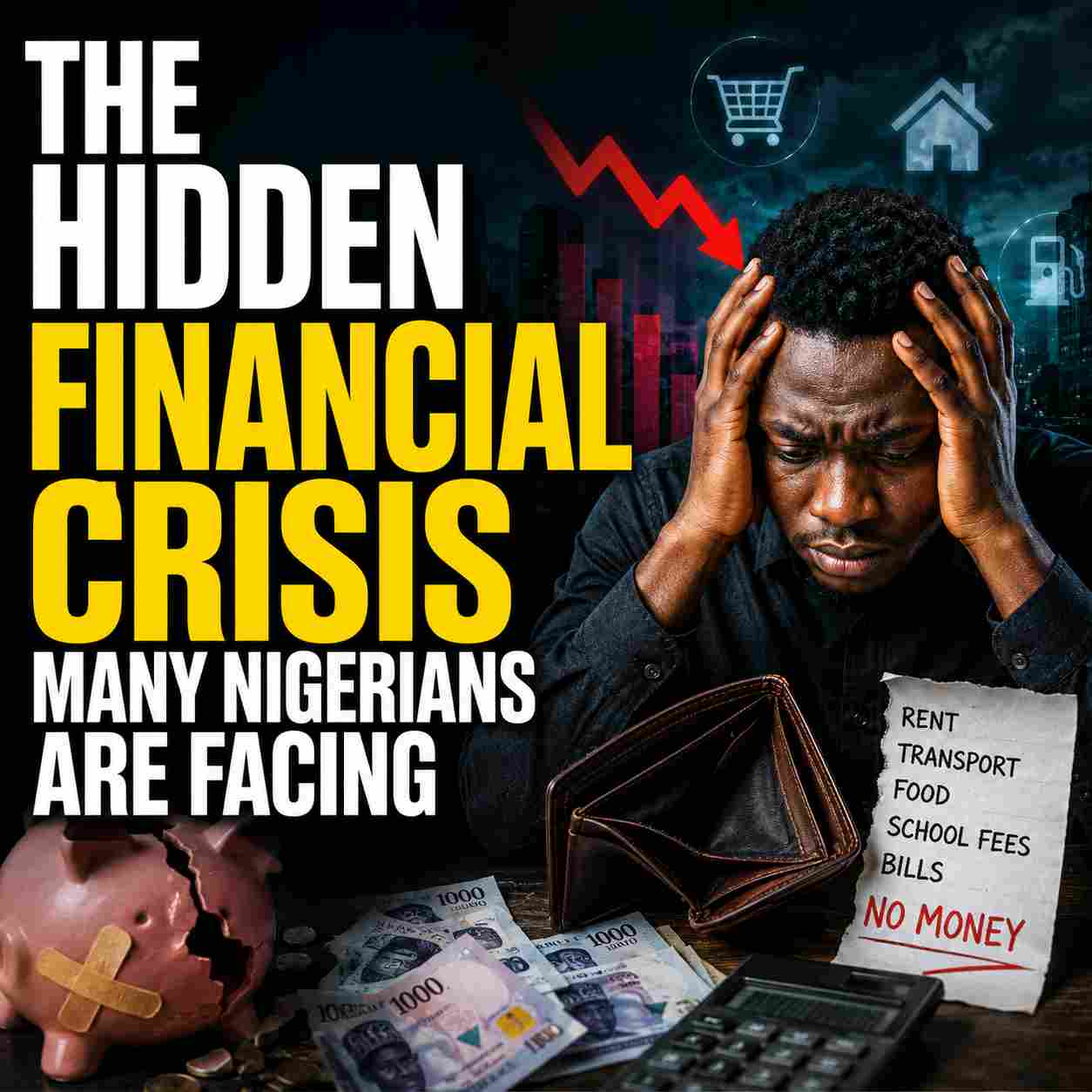
There is a financial crisis happening in Nigeria that many people do not openly talk about. It does not always look like someone losing their job or closing down a business.
Sometimes, it looks like a person who is still going to work every morning but has nothing left in their account before the end of the month. It looks like someone earning a salary but borrowing money to pay rent. It looks like a business owner making sales every day but having no real profit. It looks like a family that used to save money but now spends everything on food, transport, school fees, rent, and bills. It also looks like someone who appears financially comfortable on social media but is quietly using loans to maintain their lifestyle.
This is the hidden financial crisis many Nigerians are facing.The problem is not always that people have no income. In many cases, the problem is that their income is no longer enough to support the life they were previously able to afford.
Earning More but Still Feeling Poor
One of the most frustrating things about the current financial situation is that some people are earning more money than they did a few years ago and still feel poorer. Imagine someone who was earning ₦150,000 monthly three years ago and now earns ₦300,000. On paper, their salary has doubled. But if rent, food, transportation, electricity, school fees, and other expenses have also increased significantly, that person may not actually feel richer.
This is one of the effects of inflation. When prices rise, your money buys less. A salary of ₦300,000 today does not necessarily provide the same lifestyle that ₦300,000 would have provided in the past.
This is why someone can say, “My salary has increased,” and still complain that they are struggling financially. Both things can be true. The person may genuinely be earning more money, but the cost of everything around them may have increased even faster.
The Salary-to-Cost-of-Living Problem
For many Nigerians, the biggest problem is not simply low income. It is the gap between income and the cost of living.
A person may earn ₦200,000 every month, but if rent, transportation, food, electricity, phone bills, and family responsibilities consume ₦220,000, that person is already in a financial crisis.
The problem becomes even worse when unexpected expenses appear. A relative needs help. A child falls sick. The car breaks down. The landlord increases the rent. A work project requires money. Suddenly, the person has no choice but to borrow.
This is how many people gradually enter financial difficulty. It rarely happens all at once. They borrow ₦20,000 today, ₦50,000 next month, and perhaps take a larger loan later. Eventually, part of every salary is already committed before the money even arrives.
More Nigerians Are Living from Salary to Salary
Living from salary to salary is not limited to people earning low incomes. Someone earning ₦500,000 monthly can also live from salary to salary if their expenses are high enough.
Imagine someone earning ₦500,000 every month. Rent and accommodation expenses may take a large portion of their income. Transportation, food, family support, subscriptions, debt repayments, and other bills can quickly consume the rest. By the end of the month, the person may have only a few thousand naira left.
The next salary then becomes something they are waiting for desperately.
This is financially dangerous because it means one major emergency can completely disrupt their lives. Without emergency savings, a single medical bill, urgent family expense, or unexpected repair can push the person into debt.
The person may look financially stable from the outside because they have a job and receive a regular salary. But underneath, they may be one emergency away from serious financial difficulty.
The Rise of Borrowing to Survive
One of the clearest signs of financial pressure is the growing dependence on borrowing.
People borrow money for different reasons. Some borrow for business. Some borrow for rent. Some borrow for school fees. Some borrow for medical emergencies. Others borrow simply to buy food or handle daily expenses.
Digital loan apps have made it easier to access money quickly. Someone who needs ₦50,000 may be able to apply for a loan from their phone and receive the money within a short period.
This convenience can be useful in a genuine emergency. However, it can also create a dangerous cycle.
A person takes a loan to solve one problem. When the repayment date arrives, they do not have enough money. They then borrow another loan to repay the first one. Eventually, they are using new debt to manage old debt.This is why borrowing should not be treated as extra income.
A loan is money that has already been spent before you receive it. If you borrow ₦100,000 today, you have not suddenly become ₦100,000 richer. You have simply received money that you will have to repay later, often with additional charges.
Before taking a loan, it is important to ask yourself a simple question: How exactly will I repay this money?
If the answer is simply, “I will figure it out later,” the loan may create a bigger problem than the one you are currently trying to solve.
Business Owners Are Also Struggling
The financial crisis is not affecting only salary earners. Many small business owners are under serious pressure as well.
A business may be making ₦1 million in sales every month, but that does not mean the owner is earning ₦1 million.
The business still has to pay for stock, transportation, electricity, rent, staff, internet, taxes, packaging, advertising, and other expenses.After all these costs, the actual profit may be very small.
For example, a fashion vendor may sell clothes worth ₦2 million in a month. However, after purchasing the clothes, paying for delivery, packaging, advertising, and other expenses, the actual profit may be only ₦200,000 or less.
If the business owner spends based on the ₦2 million sales figure instead of the actual profit, financial problems will eventually appear.
This is why some businesses can look busy and successful while the owner is personally struggling.
One of the most important financial lessons for business owners is to understand the difference between sales, revenue, and profit. Money coming into the business is not automatically money that belongs to the owner.
The Cost of Supporting Family Members
Family responsibility is another major financial pressure in Nigeria.
Many Nigerians are not only responsible for themselves. They support parents, siblings, relatives, spouses, children, and sometimes extended family members.
A person may be earning ₦400,000 monthly but sending money to several family members every month. They may be paying school fees for a younger sibling, contributing to a parent’s medical expenses, supporting a relative’s business, or helping with rent.
There is nothing wrong with helping family. In fact, supporting loved ones is an important part of life for many Nigerians.
However, the financial pressure becomes dangerous when someone is supporting everyone else while having no savings or emergency fund of their own.
Many people are quietly financially vulnerable because their entire income is already committed to other people.
Sometimes, the person helping everyone else is the same person who will have nobody to help them when they face a financial emergency.
The Pressure to Look Successful
Social media has created another layer of financial pressure.
People constantly see others travelling, buying new phones, wearing expensive clothes, eating at restaurants, and moving into beautiful apartments. This can create the feeling that everyone else is doing better.
Some people then spend money they do not have to maintain a certain image. They upgrade their phones on credit. They buy expensive clothes. They take trips they cannot afford. They move into apartments that consume too much of their income.
The problem is that social media rarely shows the full financial picture.
Someone may be posting from a beautiful apartment while owing several people money. Another person may be driving an expensive car that is being paid for through a loan. Someone else may be travelling frequently but struggling to pay their bills when they return home.
Comparing your real financial life to someone else’s carefully selected online image can lead to poor financial decisions.
You do not know what someone had to borrow, sell, or sacrifice to create the lifestyle you are seeing online.
Savings Are Becoming More Difficult
Saving money has always required discipline, but it has become more difficult for many Nigerians because everyday expenses now consume a larger part of their income.
Someone who used to save ₦50,000 monthly may now be using that money to buy food or pay for transportation.
This does not mean saving is impossible. It means that many people need to rethink how they save.
Instead of waiting to see what is left at the end of the month, it may be more practical to save a specific amount immediately after receiving income, even if the amount is small.
Someone who cannot save ₦100,000 may be able to save ₦10,000. The amount may seem small, but consistency matters.
The bigger goal is to create financial breathing room.
If you earn ₦300,000 monthly and save ₦10,000 every month, you will have saved ₦120,000 in one year. It may not solve every financial problem, but it is better than reaching the end of the year with nothing saved.
Emergency Funds Are More Important Than Ever
Many Nigerians have no emergency savings.
This means that if they suddenly lose their job or face a serious expense, they have no money to fall back on.An emergency fund does not have to be built overnight.
You can start with a small target. The first goal may be ₦50,000. Then ₦100,000. Eventually, you can aim to save enough to cover several months of essential expenses.
The purpose is not to become rich. The purpose is to avoid being forced to take an expensive loan every time something unexpected happens.
Even having a small amount saved can make a difference. If your car develops a problem that costs ₦40,000 to fix, having ₦40,000 available can save you from borrowing money and paying additional charges.
What Can Nigerians Do?
There is no single solution to the financial pressure many people are facing. However, individuals can take practical steps to reduce their vulnerability.
First, know exactly where your money goes. For one month, write down every expense, including small purchases. You may discover that money is disappearing in places you did not notice.
Second, separate your needs from your wants. Not every expense has to be eliminated, but you should know what is essential and what can be reduced when money is tight.
Third, avoid borrowing for things that do not generate income or solve a genuine emergency. A loan used to expand a profitable business is different from a loan used to maintain a lifestyle you cannot afford.
Fourth, if you run a business, separate business money from personal money. Know your actual profit before spending.
Finally, look for ways to increase your income. This could mean learning a valuable skill, taking on freelance work, starting a small business, or finding opportunities to earn from international clients.
Reducing expenses is important, but increasing income can also make a significant difference.
Final Thoughts
The hidden financial crisis many Nigerians are facing is not always visible.
People are still going to work. Businesses are still opening. Social media is still full of celebrations. But underneath all of this, many people are dealing with rising costs, reduced purchasing power, debt, family responsibilities, and the constant fear of an unexpected expense.
This is why financial stability should not be measured only by how much someone earns.The more important question is: How much of that income remains after everything has been paid?
A person earning a large salary but drowning in debt may be less financially secure than someone earning less but living within their means and maintaining emergency savings.
The goal is not to pretend that the current economic situation is easy. It is not. The goal is to understand the reality, make better financial decisions where possible, and avoid allowing financial pressure to become a silent problem until it becomes impossible to manage.For many Nigerians, the financial crisis is already here.It simply does not always look like a crisis from the outside.
Keep reading
Related Topics



Conversation
Comments (0)
Sign in to join the conversation or like this post.

Maramercii
Maramercii contributes reporting and analysis for NaijUp, covering the stories, markets, and business trends shaping Nigeria.
67
Stories
38825
Reads
0
Likes
0
Comments