

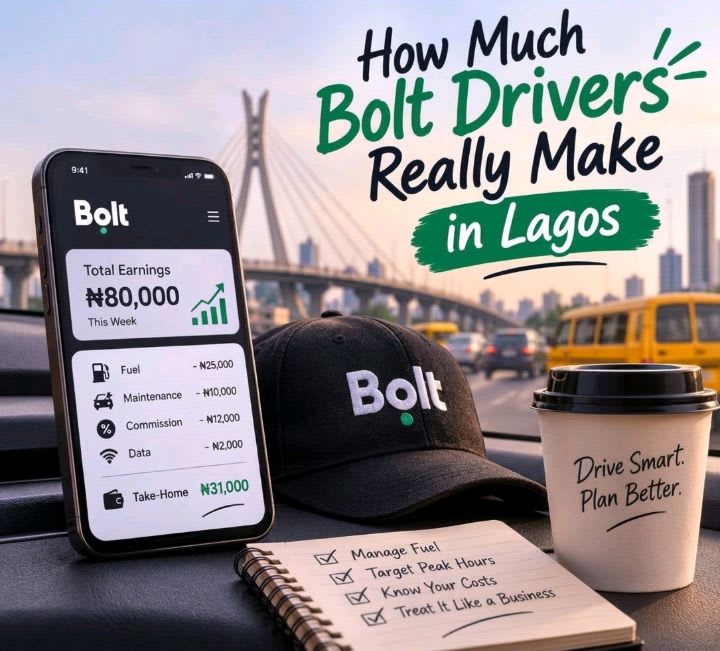
If you've spent enough time in Lagos traffic, you've probably wondered whether Bolt drivers are secretly making a fortune. After all, the rides keep coming, the roads never seem to sleep, and there always appears to be another passenger requesting a trip. From the outside, it can look like easy money.
But then again, revenue and profit are two very different things. The reality is that while some drivers earn impressive amounts, others struggle with rising fuel costs, vehicle maintenance, commissions, and rent arrangements with car owners. The money is there, but so are the expenses. So, how much do Bolt drivers really make in Lagos?
The big numbers you hear are usually gross earnings.
One reason people think Bolt drivers are making a fortune is because they often hear the gross earnings. It's not unusual to hear drivers talk about making ₦60,000, ₦80,000, or even ₦100,000 in fares on a busy day. Reports on driver earnings show that daily gross earnings can fall within this range depending on demand, hours worked, and location.
Sounds amazing, right? Not so fast. That money isn't pure profit. Before a driver even begins calculating what they've earned, they still need to account for fuel, platform commissions, vehicle maintenance, data costs, and other operating expenses. It's similar to a business owner celebrating sales before calculating expenses.
Fuel is usually the biggest expense.
Fuel can humble even the most optimistic business plan. A driver might spend long hours moving between the Mainland and the Island, navigating traffic that turns a twenty-minute journey into an hour-long adventure. Every extra minute on the road burns fuel.
That's why many drivers say fuel is one of the biggest factors affecting profitability. Even when earnings rise, operating costs often rise alongside them. Reports from drivers and industry observers consistently point to fuel as a major expense that significantly reduces take-home income. This is also why some drivers are extremely selective about where and when they drive, as more rides don't always mean more money. Sometimes it's the routes, timing, and fuel consumption that make the difference.
Car owners and fleet arrangements change everything.
Not every Bolt driver owns their vehicle. In fact, many drivers operate under lease, hire-purchase, or "deliver" arrangements where they must remit a fixed amount to the car owner daily or weekly before keeping what's left. This creates a completely different financial reality.
Two drivers could generate identical revenue in the same week and walk away with entirely different amounts. The driver who owns the car generally keeps more of the earnings, while the driver working under a fleet arrangement may have significant obligations before making any personal income. When people ask how much Bolt drivers make, the answer often depends on one important question: "Is it your car?" Because that detail changes the math completely.
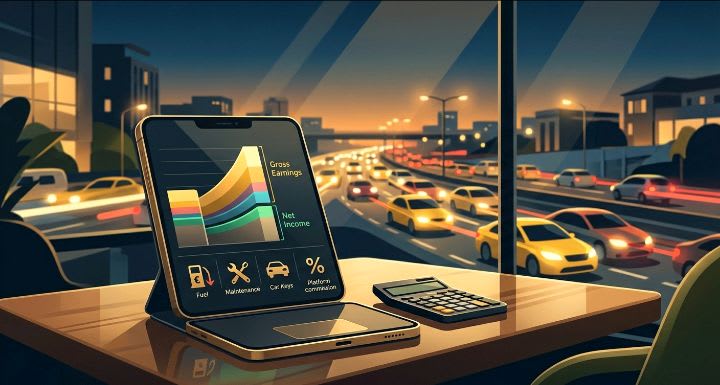
When you drive can matter just as much as how long you drive
Many passengers assume every hour on the road is equally profitable. Experienced drivers know that's not true. Peak periods such as morning rush hours, evening traffic, weekends, airport runs, and high-demand locations often generate more trips and better earning opportunities. Bolt itself advises drivers to target busy periods and high-demand zones to maximize earnings.
A driver spending twelve random hours online may earn less than another driver spending eight strategic hours targeting high-demand periods. In Lagos, timing can be just as important as effort. Experienced drivers learn quickly that some trips are worth chasing and others aren't. Knowing where demand is highest and when traffic is likely to work in your favour can make a bigger difference than simply spending more hours on the road.
Most drivers earn less than people think, but more than many assume
This is where reality sits. The picture is somewhere between the extremes. Most drivers aren't making a fortune, but many aren't struggling as much as people think either. According to Bolt, the average monthly earnings for drivers in Lagos have been reported around ₦400,000 before expenses, while other reports show net monthly earnings varying widely depending on fuel costs, vehicle ownership, and operating efficiency.
The keyword here is varying. A highly active driver who owns their vehicle, understands profitable routes, and manages expenses effectively can earn significantly more than someone who drives occasionally or operates under expensive vehicle arrangements. In the end, two drivers using the same app can have very different outcomes. Vehicle ownership, fuel costs, route selection, and working hours often matter just as much as demand.
Conclusion
The idea that every Bolt driver in Lagos is making a fortune is one of those stories that sounds better than reality. Yes, there is money to be made. Lagos is a busy city, people are constantly moving, and ride-hailing remains an important part of daily life. But making money is only part of the equation. Fuel, maintenance, commissions, and vehicle arrangements can take a significant bite out of a driver's earnings.
So, how much do Bolt drivers really make in Lagos? There isn't a single answer. The experience can look very different depending on the car, the arrangement, the routes, and even the day of the week.
Found this useful? Share it
Help friends, family and colleagues stay informed on Nigerian finance.
Keep reading
Related Topics

Conversation
Comments (0)
Sign in to join the conversation or like this post.

Hep
Hep contributes reporting and analysis for NaijUp, covering the stories, markets, and business trends shaping Nigeria.
12
Stories
1239
Reads
0
Likes
0
Comments