

Not long ago, cash dominated Nigeria’s economy.
From market stalls to large businesses, physical naira notes powered everyday transactions. Today, that reality is changing rapidly. Nigeria is evolving into one of Africa’s most dynamic digital payment ecosystems, driven by fintech innovation, rapid smartphone adoption, and regulatory support from the Central Bank of Nigeria (CBN).
The shift began in earnest in 2012 when the CBN introduced its cashless policy aimed at reducing the amount of physical cash in circulation and improving the efficiency of the financial system.
At the time, digital payments existed but were far from mainstream.
Fast forward to today, and the landscape looks completely different.
The 2022–2023 cash scarcity crisis pushed millions of Nigerians toward bank transfers, mobile wallets, and POS agents almost overnight. What began as necessity quickly became habit.
Electronic transactions reached roughly ₦387 trillion in 2022, and the numbers have continued to climb as fintech platforms become embedded in everyday life.
Nigeria’s digital payment ecosystem
Nigeria’s cashless transition is powered by a rapidly growing mix of fintech startups, telecom operators, banks, and payment infrastructure companies. Together, they form one of the most competitive fintech markets on the continent.
1. Fintech disruptors leading the charge
Fintech companies have been among the biggest drivers of adoption, particularly among young consumers, small businesses, and the unbanked population.
Platforms such as OPay, PalmPay, Moniepoint, Paga, and Kuda have built massive user bases by making financial services faster, cheaper, and easier to access.
PalmPay, for instance, reports tens of millions of users and a vast agent network, while Moniepoint has become a dominant force in agency banking and merchant POS services across the country.
Rather than replacing banks entirely, these fintech platforms are redefining how everyday banking works. Sending money, paying bills, or running a small business can now happen in seconds.
2. Telecom companies expanding financial access
Telecommunications companies are also playing a crucial role in expanding digital finance beyond urban centers.
Services such as MTN’s MoMo Payment Service Bank and Airtel’s SmartCash leverage their massive subscriber bases to bring mobile money services to underserved communities.
Because telecom infrastructure often reaches areas where banks do not, these services are helping bridge Nigeria’s financial inclusion gap.
3. The infrastructure powering it all
Behind the scenes, payment infrastructure companies keep the system running.
Firms like Interswitch, Flutterwave, Paystack, and eTranzact provide the technology that powers online payments, merchant transactions, and large-scale processing. Without these payment rails, Nigeria’s rapidly expanding digital economy would struggle to function efficiently.
4. Traditional banks respond
Traditional banks have also stepped up their digital capabilities.
Institutions such as Access Bank, GTBank, Zenith Bank, and First Bank have significantly improved their mobile banking platforms to compete with fintech apps. Meanwhile, Wema Bank’s ALAT demonstrated early on that fully digital banking could succeed in Nigeria.
Competition between banks and fintech startups has ultimately benefited consumers through faster services and improved user experience.
The numbers behind Nigeria’s cashless boom
Nigeria’s digital payments industry is expanding rapidly.
The sector is projected to exceed $50 billion in transaction value within the next few years, supported by strong annual growth.
Several indicators highlight the scale of this expansion:
• Transfer volumes reached tens of billions of transactions annually in recent years.
• Mobile wallets now serve tens of millions of users.
• Over 200 fintech companies operate within Nigeria’s financial ecosystem.
• Digital payments continue to surge among users aged 18–34.
Investment has followed this growth. Nigeria’s fintech sector has attracted over $1 billion in venture funding, making it one of the most active segments of the country’s tech ecosystem.
Why Nigerians are moving away from cash
The shift toward digital payments is driven by several key factors.
1. A young, digital-first population: Nigeria has one of the youngest populations in the world, and younger consumers naturally gravitate toward speed and convenience.
2. The smartphone revolution: Smartphones form the backbone of Nigeria’s digital payment ecosystem.
With over 100 million internet users and tens of millions of smartphone owners, many Nigerians now have instant access to mobile banking, fintech apps, and digital wallets. For many users, their phone has effectively become their bank
3. Agent banking networks: One of the most powerful drivers of financial inclusion has been Nigeria’s vast network of POS agents.
Across cities and rural communities, these agents provide withdrawals, transfers, and bill payments. In many areas, they function as the closest alternative to a traditional bank branch.
4. Government policy: Government regulation has also played a significant role.
Policies introduced by the Central Bank of Nigeria encourage electronic transactions while supporting fintech innovation. Initiatives such as the eNaira, improved payment infrastructure, and regulatory frameworks aim to strengthen Nigeria’s transition toward a cash-lite economy.
The challenges slowing the transition
Despite impressive growth, several obstacles still stand in the way of a fully cashless Nigeria.
• Infrastructure gaps: Unstable internet and electricity can interrupt transactions, especially outside major cities.
• Fraud and cybersecurity risks: Concerns about scams, phishing, and unauthorized transactions continue to affect trust in digital payments.

• Low financial literacy: Many people are still unfamiliar with digital financial tools and prefer cash because it feels safer.
What the future of payments in Nigeria could look like
Nigeria’s digital payment ecosystem is still evolving, and the next phase could bring even bigger changes.
• AI-powered finance: AI is improving fraud detection, customer support, and personalized financial services, while also helping fintech firms assess credit and expand access to loans.
• Blockchain infrastructure: Blockchain is moving toward real financial use cases such as digital identity verification, transparent records, and faster cross-border settlements.
• Pan-African payments: Systems like Pan-African Payment and Settlement System (PAPSS) aim to make African cross-border transactions faster and cheaper by enabling payments directly in local currencies.
The rise of cash-lite cities
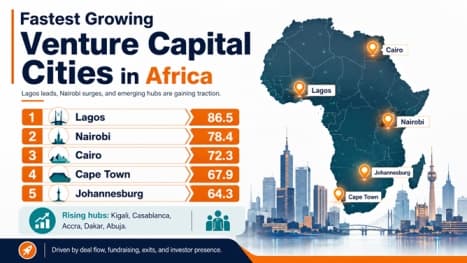
Major urban centers like Lagos are already moving toward a “cash-lite” reality where digital payments dominate everyday transactions.
Government digitization efforts and continued fintech innovation are likely to accelerate this trend.
However, rather than eliminating cash entirely, Nigeria is more likely to operate a hybrid system where digital payments and cash coexist.
Final thoughts
Nigeria has established itself as one of Africa’s most important fintech markets.
From startups and telecom providers to banks and regulators, multiple forces are shaping the country’s financial future.
However, the long-term success of Nigeria’s cashless transformation will depend on addressing key challenges; improving infrastructure, strengthening cybersecurity, and ensuring that millions of unbanked citizens are not left behind.
If these issues are tackled successfully, Nigeria will not only adopt digital payments.
It could help define the future of finance across Africa.
Keep reading
Related Topics





Conversation
Comments (0)
Sign in to join the conversation or like this post.