
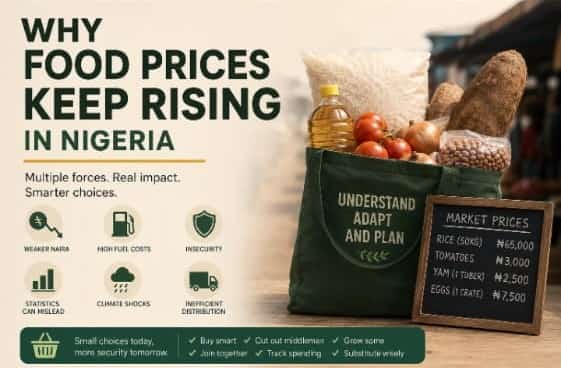
You go to the market. Rice is N65,000 for a 50kg bag. Tomatoes are triple what they were two years ago. Yam tubers hover around N2,500 a piece. You check the news, and someone is telling you inflation has come down. So why does it feel worse?
That feeling is not your imagination. Nigeria's food prices have been on a stubborn upward march for years, and even when the headline inflation numbers look encouraging, the reality at Tejuosho or Mile 12 markets tells a different story.
According to the National Bureau of Statistics (NBS), food inflation stood at 16.96% year-on-year in May 2026, up from 16.06% in April, the fourth consecutive monthly increase. On a month-on-month basis, though, the pace actually eased slightly, suggesting prices are still rising but not accelerating as sharply as before.
To understand why this is happening, you need to look at several forces working together, not just one. Here is a clear breakdown.
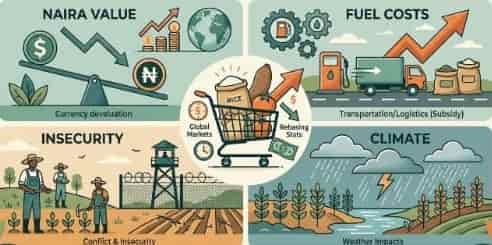
1. The Naira Keeps Losing Value
Although local production plays a major role in feeding the country, Nigeria's food market remains closely linked to global supply chains and relies on imports for a portion of its food needs and agricultural inputs. As a result, domestic food prices are sensitive to exchange rate movements, rising import costs, global commodity price fluctuations, and international trade or supply chain disruptions. This exposure means that both domestic and external shocks can quickly translate into higher food costs for consumers across the country.
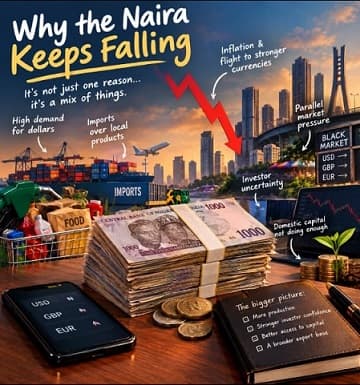
Since the government floated the naira in mid-2023 as part of its reform agenda, the currency has experienced sharp swings. Every time the naira weakens, it adds pressure to the price of everything from pasta to bread and even locally grown staples that depend on imported inputs like agrochemicals and diesel for farm machinery.
2. The Fuel Subsidy Removal Changed Everything
In May 2023, the Tinubu administration removed the petrol subsidy that had kept fuel prices artificially low for decades. Petrol prices rose sharply, triggering higher transportation and distribution costs across the economy. The impact on food prices was particularly significant. In Nigeria, food moves from farms to markets primarily by road, making the agricultural supply chain highly sensitive to fuel costs. As transportation becomes more expensive, those costs are passed along the supply chain and ultimately reflected in the price of everything from tomatoes and bags of garri to crates of eggs sold in urban markets.
The pressure has been compounded by recent increases in global oil prices, including those linked to geopolitical tensions involving Iran and the United States in 2026, which have contributed to higher domestic fuel costs. Multiple petrol price increases since the start of 2026 kept logistics costs elevated through May, adding to the inflationary pressures already facing Nigeria's food supply chain.
3. Insecurity Is Disrupting Food Production
Many of Nigeria's key agricultural regions, particularly parts of the northwest and northeast, continue to face significant security challenges. Persistent banditry, farmer-herder conflicts, and the lingering insurgency in the northeast have displaced farming communities, disrupted cultivation and harvesting activities, and increased the risks and costs associated with transporting food to markets.
The consequences extend beyond security concerns. Food security analysts, including the Famine Early Warning Systems Network (FEWS NET), have repeatedly warned that conflict-related disruptions are reducing agricultural output and worsening food insecurity across affected areas. When farmers are unable to access their land safely or move their produce efficiently, less food reaches the market. The result is tighter supply, which places additional upward pressure on food prices across the country.
4. The Statistics Can Be Misleading
You may have seen headlines earlier in 2026 declaring that inflation had eased. That was technically correct, but the context matters. In January 2026, food inflation was reported at 8.89% following the National Bureau of Statistics' rebasing of the Consumer Price Index (CPI), the first major update to the inflation basket and reference year in more than a decade.
Rebasing does not reduce the prices consumers pay. Instead, it changes how inflation is measured by updating the basket of goods and services and the reference period used for comparison. As a result, inflation rates after the rebase are not directly comparable with those calculated under the old methodology.
Think of it this way: if a bag of garri that once sold for ₦800 rose to ₦2,400 over several years, a rebase would not bring the price back down. Consumers would still be paying ₦2,400. What changes is the benchmark against which future price increases are measured. The inflation rate may look lower, but the higher price level remains very real for households.
5. Climate Shocks Are Getting Worse
Flooding has become a recurring seasonal shock to Nigeria’s agricultural system. In 2024, large portions of farmland in states such as Anambra, Kogi, and Benue were submerged, disrupting planting cycles and destroying harvested crops in some areas. When floods reduce output, food supply tightens quickly, leading to price increases across markets.
This pattern has become more pronounced in recent years, disproportionately affecting staple crops that form the basis of many Nigerian diets, including yams, cassava, and beans. As climate-related disruptions intensify, they are increasingly becoming a structural driver of food inflation rather than a one-off shock.
6. The Middlemen Problem
Even when food is produced in sufficient quantities, getting it from farms to consumers is often inefficient and costly. Nigeria’s food distribution system involves multiple intermediaries, alongside challenges such as weak road infrastructure, high transport costs, and limited storage and cold chain facilities.
These constraints increase handling costs and contribute to significant post-harvest losses, particularly for perishable goods. As a result, a portion of food never reaches the market, effectively tightening supply. When available supply falls short of demand, prices adjust upward.
Policymakers have repeatedly acknowledged these structural inefficiencies, and while efforts to improve logistics and reduce losses are ongoing, the gaps in the food value chain remain a persistent driver of food price pressures.
So What Can You Actually Do?
The structural drivers of food inflation are largely outside individual control. However, there are practical steps to reduce exposure to rising prices and manage food budgets more efficiently:
- Buy in bulk when prices are low. Harvest season is when staple prices typically fall. Stock up on non-perishables like beans, rice, and palm oil during this window.
- Cut out the middlemen. Buying directly from farm markets or produce aggregators means fewer hands touching your money before it becomes food on your table.
- Grow what you can. Even a small backyard or container garden for tomatoes, peppers, or leafy vegetables can meaningfully reduce your monthly food spend.
- Join a food cooperative or buying group. Pooling resources with neighbors or colleagues to buy in bulk and split costs is an old idea that still works.
- Track your food spending. Many households do not realize how much their food budget has crept up until they look at it deliberately. Simple tracking reveals where to cut without sacrificing nutrition.
- Substitute smartly. Protein sources such as beans remain relatively affordable. Where beef has become unaffordable, eggs and fish often offer better value per unit of nutrition.
The Bigger Picture
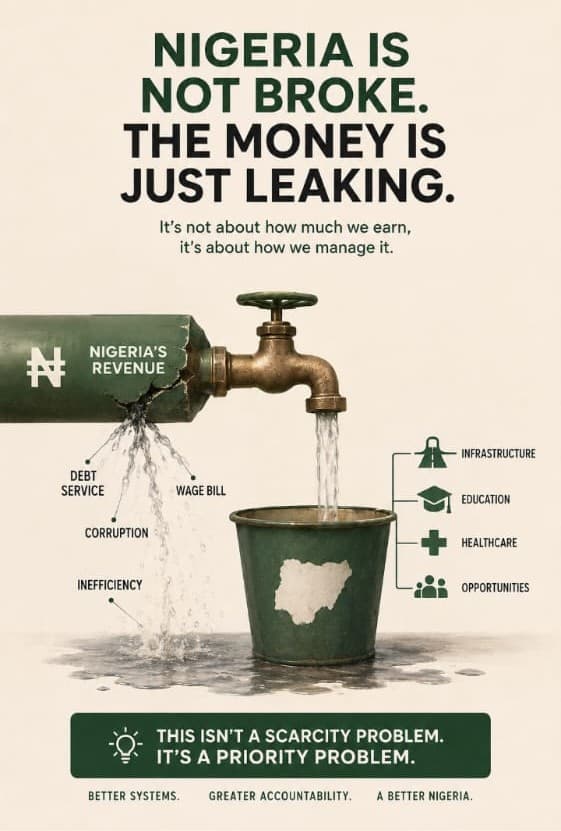
A key reality is that until Nigeria addresses its structural constraints, including insecurity in key agricultural regions, exchange rate volatility, high energy costs, and weak storage infrastructure, food prices are likely to remain under pressure. Some of these reforms take time to materialize. Policy measures such as fuel subsidy removal and exchange rate adjustments have created short-term cost pressures, though they are often viewed by economists as steps aimed at improving long-run efficiency and stability.
For many households, however, the immediate experience has been a period of adjustment, as higher input and transport costs feed through into retail food prices. This is particularly challenging in a context where food accounts for a large share of monthly household expenditure.
Staying informed about the drivers of food inflation, and adapting household spending strategies accordingly, does not solve the underlying policy challenges. However, it remains a practical way for individuals to navigate a difficult transition period while broader structural issues are addressed.
Keep reading
Related Topics



Conversation
Comments (0)
Sign in to join the conversation or like this post.

Elizabeth Ayoola
Elizabeth is a finance analyst and writer passionate about making financial markets accessible to everyday readers.
She has a deep interest in global markets, crypto, and everything shaping the financial world. She writes to simplify complex financial topics, turning them into practical, accessible insights for everyday readers.
102
Stories
31719
Reads
1
Likes
0
Comments