

The gap between how we're expected to live and what we can actually pay for keeps widening, and it says a lot about the choices a whole generation is quietly making.
There's a particular kind of tiredness that comes from doing everything "right" and still feeling like you're falling behind. You got the degree. You landed the job, or you're hustling three gigs at once. You budget, you save what you can, you avoid the Owambe if the Aso-ebi is too pricey. And yet the lifestyle that used to signal "you've made it"; your own apartment, a reliable car, weekend outings that don't require a calculator, and junk foods you used to buy at random, keeps drifting further out of reach.
The lifestyle you once embraced yourself with now feels like a past life you once lived.
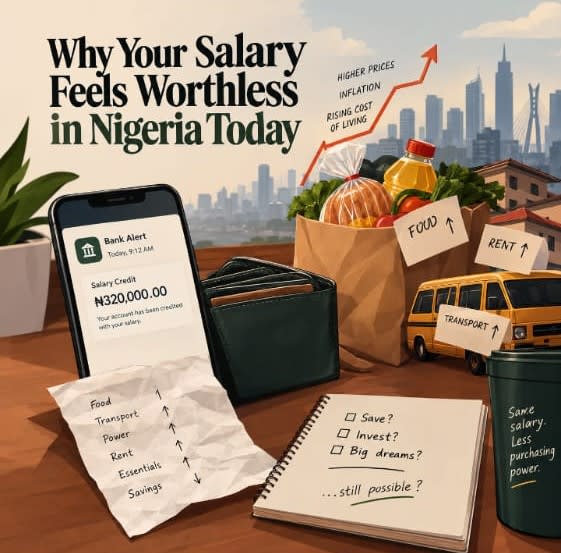
This isn't just in your head. Your purchasing power really has shrunk, and the numbers prove it.
The Math Simply Isn't Mathing
Nigeria's headline inflation rate climbed to 15.93% in May 2026, its third straight monthly rise, driven largely by food and transport costs. Food inflation alone sat at nearly 17%, which matters more than any other single figure because food is where most young Nigerians' salaries actually go first.
But the headline rate almost understates it. Food inflation, the category that hits hardest and fastest, stood at nearly 17% in May 2026, and it's been climbing for four straight months from January’s 8.89%. That's on top of a currency that's lost most of its value in just a few years: the Naira has moved from an average of roughly ₦424/$1 in 2022 to around ₦1,380/$1 today. Even when a single staple's price dips year-on-year (food prices do swing with harvests and base effects), the broader trend hasn't reversed. Households are still spending a bigger share of a shrinking income just to eat.
Put plainly: if your income hasn't grown sixfold since 2020, you haven't just failed to "get ahead." You've actually gotten poorer in real terms, even if the number on your alert looks bigger than it used to.
Minimum Wage, Maximum Irony
The national minimum wage was raised to ₦70,000 in 2024, more than doubling the previous ₦30,000. On paper, that's progress. In dollar terms, though, ₦30,000 in 2019 was worth about $83. Today's ₦70,000 is worth roughly $50. The wage doubled in naira and was nearly cut in half in purchasing power, which is the entire cost-of-living crisis captured in one uncomfortable sentence.
This is why so many young professionals, including graduates with strong CGPAs, relevant internships, and genuinely marketable skills still find themselves doing the same calculation every month: rent, transport, data, family obligations, and then whatever's left over, if anything, for the things that make life feel like more than survival.
So What Exactly Got "Unaffordable"?
It's rarely one big thing. It's the accumulation of small, ordinary expectations quietly becoming luxuries:
Living alone. A self-contained apartment in a decent part of Lagos or Abuja, once a reasonable goal for a mid-level earner, now often demands a rent-plus-agency-plus-caution-fee lump sum that can equal several months' salary upfront. Many young people who'd have moved out by their late twenties are staying home longer, or squeezing into shared flats with three or four roommates, not out of preference but arithmetic.
Owning or maintaining a car. Fuel price shocks tied to global supply disruptions pushed petrol prices sharply higher this year, and that cost doesn't stay contained to fuel; it pushes up the price of transporting food, goods, and everything else along the way. A car that felt like a modest milestone now comes with a monthly running cost that rivals rent.
Eating out, small gatherings, the social glue. Restaurant and accommodation service prices have been rising at some of the fastest rates. The casual Sunday lunch or after-church hangout that used to cost "small money" now requires actual planning.
Saving anything at all. When core inflation is running at doble digits, money sitting in a regular savings account is quietly losing value even while the balance stays the same or grows slowly. That reality is pushing more young Nigerians toward dollar-denominated assets, money market funds, or the stock market.
Enter Japa, the Dream With a Price Tag
None of this happened on its own, it's part of why 'Japa' stopped being a minor conversation and became a defining feature of youth culture. It isn't only about people who've already left, it's the psychological weight it puts on everyone who hasn't. Scholarship, relocation, and skilled-worker visa routes have become a genuine career strategy for many young graduates, discussed as casually as which Masters program or company to apply to.
What's easy to miss is that Japa itself has become part of the lifestyle-affordability problem. Visa applications, standardized tests, application fees, proof-of-funds requirements all cost real money, often in dollars. So even the exit route many are aiming for now demands its own upfront lifestyle: months of saving, side hustles specifically to fund an application, sometimes loans from family. The dream of a better-funded life abroad requires being reasonably well-funded at home first, which is its own quiet irony.

The Social Media Gap
Layer social media on top of all this and the pressure compounds. Timelines are full of lifestyle content, trips, outfits, gadgets, "soft life" aesthetics that can make ordinary financial strain feel like personal failure rather than a structural one. Scroll through Instagram or TikTok for ten minutes and you'll see peers your age unboxing the latest iPhone, posting from Dubai, or captioning a new apartment "manifested this." What you don't see is the sponsorship deal behind the trip, the family support behind the rent, or the loan behind the "flex." Social media shows outcomes, never the balance sheet behind them.
This creates a strange kind of comparison, you're not measuring your progress against your own parents at the same age anymore, or even against your actual neighbors. You're measuring it against a curated highlight reel of the most financially fortunate 5% of your generation, presented as if it's the norm. That distortion matters, because it changes how failure gets interpreted.
It's worth naming clearly: if your income hasn't kept pace with rising prices the way your parents' income once did relative to the cost of living in their day, that's an economic problem. No amount of budgeting apps or "cutting back on small chops" closes such a gap.
What Actually Helps, Practically
This isn't a call to despair, and it isn't a call to pretend things are fine either. A few honest, doable things do help:
- Track your real cost of living, not the one from three years ago. Budgets built on old price assumptions collapse fast. Revisit yours quarterly, not yearly.
- Treat naira savings as a leaking bucket. With inflation this persistent, idle cash loses value. Money market funds, treasury bills, and dollar-hedged instruments deserve a look, even in small amounts.
- Separate "lifestyle" from "identity." The version of adulthood our parents had house, car, comfortable independence by your late twenties was built in a very different economy. Redefining what a good life looks like right now is being accurate.
- If Japa is the plan, cost it like a project. Visa fees, tests, flights, initial settling costs, build a real number and a real timeline.
The Bottom Line
The lifestyle many young Nigerians grew up expecting: stable, self-sufficient, comfortably social hasn't disappeared because people got lazier or worse with money. It's gotten more expensive faster than incomes have grown, and the gap is wide enough that even careful, disciplined people feel like they're losing ground.
Naming that clearly matters. It won't fix the naira or bring petrol prices down, but it does mean the next financial decision, whether that's negotiating a salary, starting a side income, building an emergency fund in a stronger currency, or simply choosing not to feel guilty about skipping another Owambe, gets made with clear eyes instead of quiet shame.
Keep reading
Related Topics




Conversation
Comments (0)
Sign in to join the conversation or like this post.

Elizabeth Ayoola
Elizabeth is a finance analyst and writer passionate about making financial markets accessible to everyday readers.
She has a deep interest in global markets, crypto, and everything shaping the financial world. She writes to simplify complex financial topics, turning them into practical, accessible insights for everyday readers.
108
Stories
36004
Reads
1
Likes
0
Comments