

You were told the formula early. Study hard. Get a good job. Work your way up. Stay disciplined. Put in enough hours, enough sacrifice, and financial security would follow.
But somewhere along the line, the formula stopped working.
You know people who are exhausted. People clocking in early and leaving late, picking up side hustles on weekends, and still struggling to save, still watching their account balance shrink faster than it grows. Maybe that person is you.
This isn't a motivation problem. It's a system problem. And until we name it clearly, hard work will keep feeling like a betrayal.
The Rules Changed. Nobody Told Us
The dream was simple. Go to school, get your certificate, land a good job ideally in oil and gas or a bank, and life would follow. A steady salary, a house, and a car. It wasn’t glamorous, but it was a plan that worked. People built entire lives on it.
That deal is largely gone.
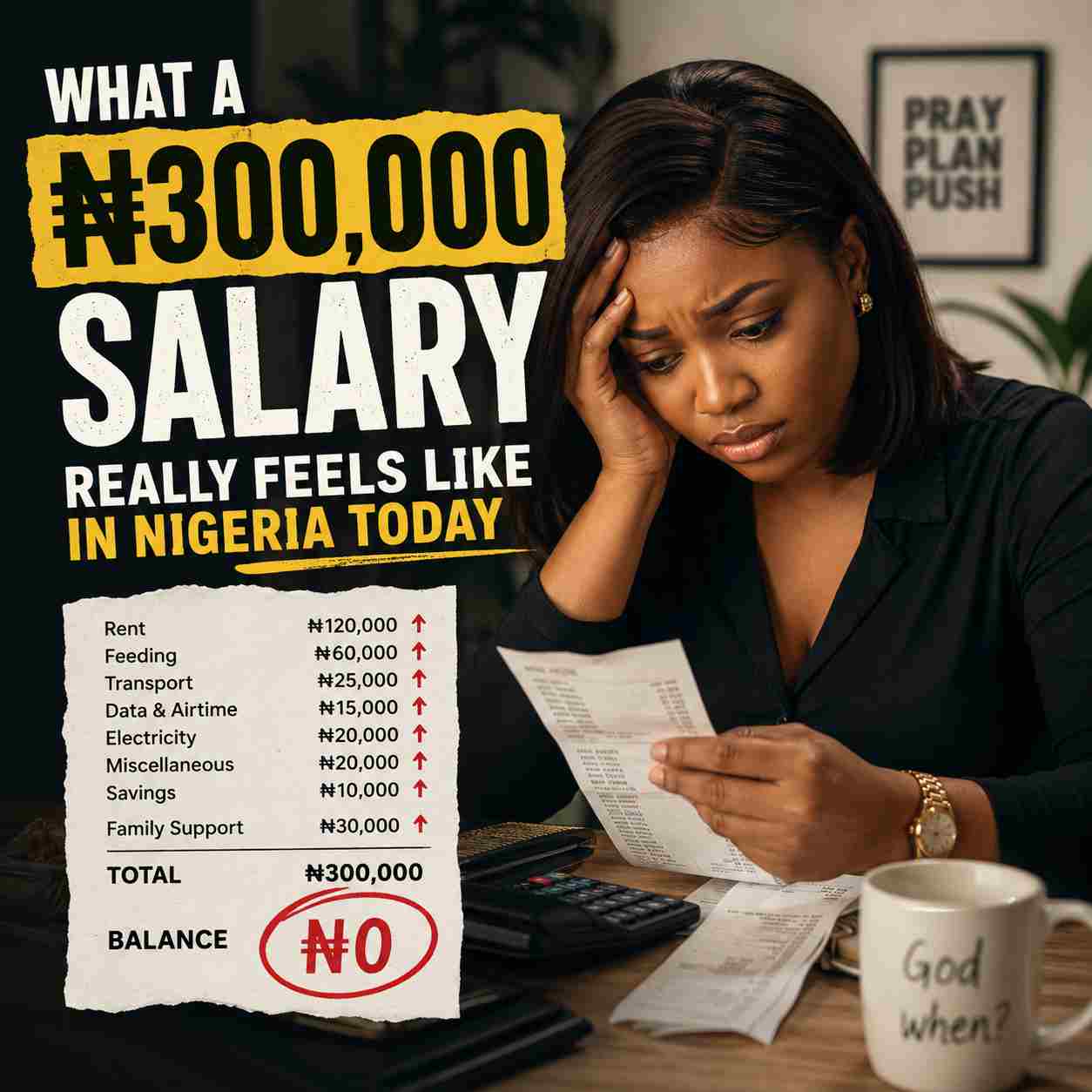
Today, wages grow slowly, if at all, while the cost of everything else keeps climbing: food, rent, school fees, transport, and healthcare. In Nigeria, this gap is even sharper because of one brutal, compounding force: naira devaluation.
A worker earning ₦200,000 per month in 2020 may have gotten a raise since then. But if that raise didn't outpace inflation, and for most Nigerians, it didn't, they are actually earning less in real terms today than five years ago. They worked harder. They got promoted. They're still falling behind.
That's not a personal failure. That's the system.
Wages vs. Cost of Living: The Numbers Don't Lie
In many industries, pay has barely moved in real terms while the cost of living has sprinted ahead. Housing, education, healthcare, and basic transport now consume most incomes before anything that looks like wealth even enters the conversation.
This creates a painful dynamic: you can work harder all year, get a promotion, a side hustle, an extra client and still end up with nothing left to invest, save, or build on. Because the goalposts moved while you were running.
This isn't just a wage problem, it's a currency problem. Most Nigerians are saving in naira, earning in naira, and measuring their financial progress in naira, without accounting for what that naira is actually worth against inflation or the dollar.
What ₦1,000 bought in 2015 is not what it buys today. Disciplined savers, people doing everything right can find themselves losing ground simply because of macroeconomic forces entirely outside their control.
Hard work cannot fix exchange rate policy. But financial strategy can adapt to it.
The Real Wealth Gap: Effort vs. Leverage
Here is the uncomfortable truth that financial education rarely teaches: in today's economy, what you own matters more than what you do.
Working harder usually means trading more time for money and time has a ceiling. There are only so many hours you can sell before exhaustion sets in. Wealth, on the other hand, is built through leverage: ownership, capital, and scale.
Two people can work equally hard. One will own property in Lekki. The other will barely afford rent. The difference isn't discipline, it's what they own.
While the average salary earner watches their purchasing power erode, asset owners are quietly getting wealthier. Property values are appreciated. Stocks compound. Dollar-denominated investments grow while the naira weakens. A landlord collects rent every month without lifting a finger. An investor holding NGX-listed stocks earns dividends and capital gains while sitting at home.
Technology Promised to Help. It Mostly Hasn't.
Technology was supposed to make work easier. Instead, we now live in a world where availability has become a permanent part of the job description.
People produce more per hour than ever before but that extra output rarely flows back to them. It flows upward: to shareholders, executives, and platforms. What do individuals do in response? The only thing they know: push harder.
But squeezing more effort out of a capped income doesn't create wealth. It creates burnout.
And this is the productivity trap: working harder inside a broken structure doesn't fix the structure. It just makes you more efficiently stuck.

The Market Now Rewards Positioning, Not Just Effort
Something fundamental has shifted in how income is generated. The modern economy doesn't just reward effort, it rewards leverage and positioning.
Leverage means your output isn't limited by your hours. A content creator who posts one video reaches 100,000 people. A developer who builds one app earns from it around the clock. A writer with a newsletter charges brands for access to their audience.
These people aren't necessarily working harder than a civil servant clocking in daily, but their earning potential is multiplied because their work scales.
Skills in global demand; tech, finance, writing, design, and sales give access to dollar-denominated income even from Nigeria.
We Were Taught to Work Hard, Not to Think Rich
Perhaps the deepest issue is this: most of us were never taught how money actually works.
School taught us to be good employees; punctual, obedient, hardworking. It didn't teach us about compound interest, investment vehicles, portfolio diversification, or why letting cash sit idle in a savings account is quietly costing you money.
So we enter adulthood armed with a strong work ethic and almost no financial literacy. We work hard because that's what we know. And then we wonder why it's not enough.
The wealthy don't just work harder. They understand money as a tool, one that can be deployed, multiplied, and put to work independently of their own labour. That knowledge is the real gap.
What Actually Works Now?
This is not an argument against hard work. Hard work still matters; it funds your starting capital, builds your skills, and keeps you in the game. But it is a necessary condition, not a sufficient one.
Effort is the entry fee. It's no longer the differentiator. Working harder in the wrong place just makes you better at staying stuck.
What hard work needs to be paired with:
- Investing early and consistently: Even small, regular investments in stocks, mutual funds, or dollar assets compound meaningfully over time.
- Building income that doesn't require your constant presence: A side business, a scalable skill, a digital product, rental income, anything that earns while you rest is an asset.
- Earning in stronger currencies where possible: Remote work, freelancing, and global platforms have made dollar income accessible to Nigerians in ways that weren't available a generation ago.
- Tracking and protecting your purchasing power: Saving in naira without a strategy is not safe, it's a slow loss. Know what inflation is doing to your money.
- Closing the financial literacy gap: Understand what the CBN, SEC, and NGX are doing, because these institutions shape the environment your money lives in.
The Bottom Line
If you're putting in the work and not seeing results, it is not always because you're not trying hard enough. It might just mean the system has changed the rules without telling you.
Hard work is buying lottery tickets. Better odds than doing nothing, but still not a guarantee. Some people are born already holding winning tickets. Financial strategy is how you print your own.
The goal was never to stop working hard. The goal is to make sure your money is working just as hard as you are.
Hard work will get you started. Financial intelligence will get you there. The people winning financially today aren't just disciplined workers, they're disciplined thinkers who understand the rules of the game and play accordingly.
Keep reading
Related Topics





Conversation
Comments (0)
Sign in to join the conversation or like this post.