
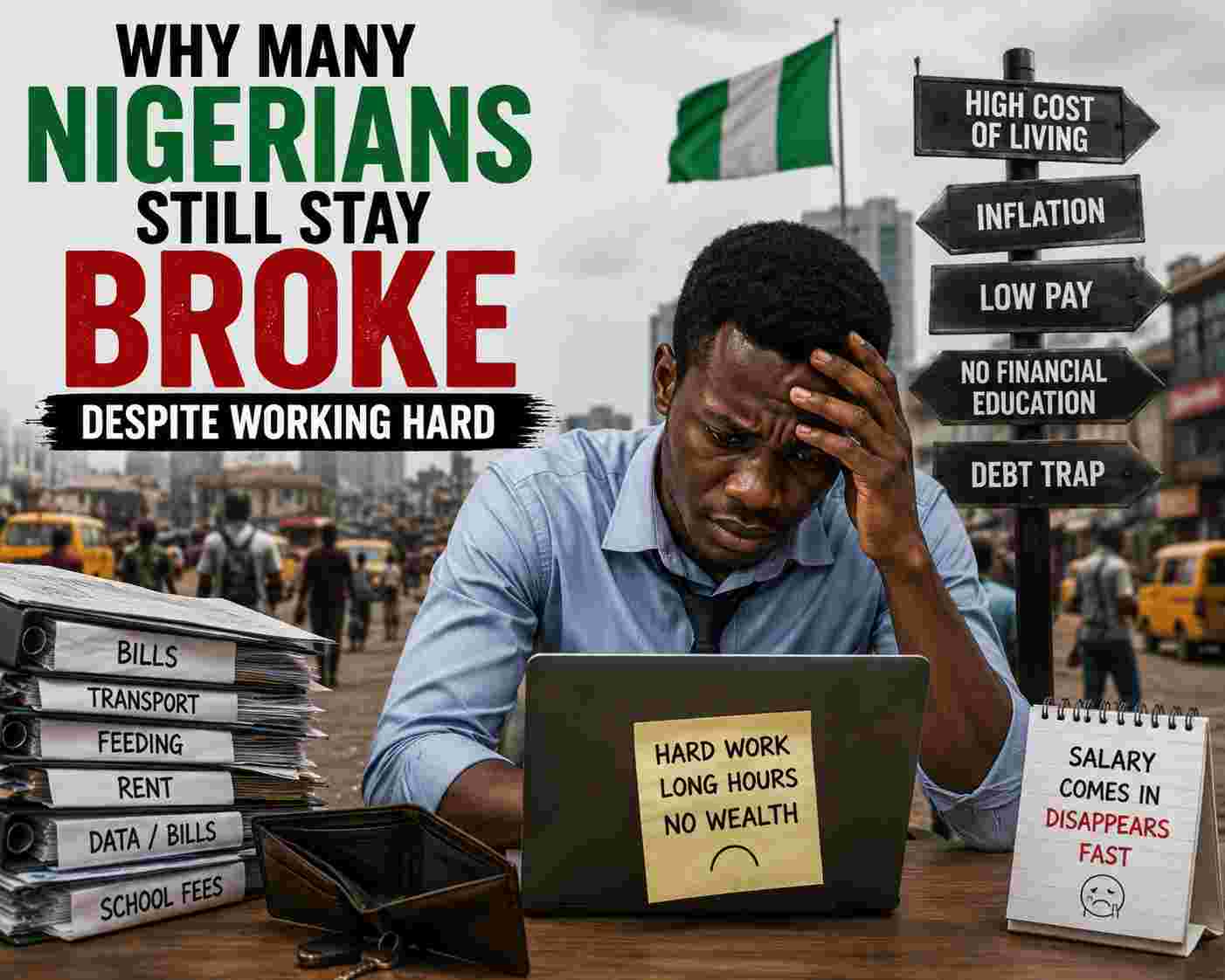
Every day, millions of Nigerians wake up before sunrise and spend long hours trying to make ends meet. From civil servants and traders to artisans, drivers, freelancers, and business owners, many people work extremely hard just to survive. Yet, despite all the effort, financial stability still feels out of reach for many households.
The truth is that hard work alone is no longer enough in today’s Nigeria. Many Nigerians are not broke because they are lazy. They are broke because the economy is harsh, opportunities are limited, and many people are trapped in financial habits and systems that make wealth creation difficult.
The Cost of Living Keeps Increasing
One major reason many Nigerians remain financially unstable is the rising cost of living. Prices of food, transportation, rent, electricity, healthcare, and internet subscriptions continue to increase rapidly, while salaries remain the same for many workers.
A person earning ₦100,000 monthly today may still struggle to survive comfortably because almost everything has become expensive. Even basic necessities now consume most of people’s income. Families that could once survive on one salary now struggle even with multiple income earners in the home.
Fuel price increases have also affected transportation and business costs across the country. Small business owners now spend heavily on generators because of poor electricity supply. According to the , inflation continues to place pressure on Nigerian households, reducing the purchasing power of millions of people.
Depending on One Source of Income
Another major problem is that many Nigerians still rely on only one source of income. Once that salary delays or a business slows down, financial problems immediately begin.
Unexpected expenses can happen at any time, including:
• Hospital bills
• Rent increases
• School fees
• Family emergencies
• Job loss
Without additional income streams, many people quickly fall into debt whenever financial emergencies arise. In today’s economy, depending on one salary alone is risky.
Many financially stable Nigerians today survive because they combine different income sources such as:
• Freelancing
• Side businesses
• Online jobs
• Investments
• Digital skills
Unfortunately, many hardworking people still have no backup income source.
Poor Financial Education
A lot of Nigerians were taught how to pass examinations but were never taught how to manage money properly. Schools rarely teach practical financial education like:
• Budgeting
• Saving
• Investing
• Debt management
• Wealth building
Because of this, many people earn money but do not know how to grow or manage it wisely. Some common financial mistakes include spending everything earned, taking unnecessary loans, and living above one’s income level.
Some people focus more on appearing wealthy than actually becoming financially stable. A person can work hard for many years and still remain broke if there is no financial discipline.
Social Media Pressure and “Packaging”
Nigeria has a strong culture of appearances, and social media has made this even worse. Many people now feel pressured to look successful online, even when they are struggling financially behind the scenes.
Some people spend heavily on:
• Expensive phones
• Designer clothes
• Luxury lifestyles
• Costly parties
• Trends they cannot truly afford
Meanwhile, they may have:
• No savings
• No investments
• No emergency funds
This pressure to “package” success has pushed many young Nigerians into financial stress and unnecessary debt. Sadly, society often praises appearances more than financial wisdom.
Unemployment and Underemployment
Nigeria continues to face serious unemployment challenges. Every year, thousands of graduates enter the labour market, but there are not enough quality jobs available.
Some people remain unemployed for years despite having qualifications, while others work jobs that pay salaries too low to match the current cost of living.
Many employees now work:
• Long hours daily
• Stressful jobs
• Six days weekly
• Without proper benefits
• Without job security
Hard work without fair income often leads to exhaustion instead of financial progress.
Lack of Valuable Skills
The world has changed rapidly, but many Nigerians still depend only on traditional certificates. Today, employers and businesses value practical skills that solve problems.
People with valuable skills now have access to:
• Remote jobs
• Freelancing opportunities
• International clients
• Better-paying jobs
Some of the most profitable skills today include:
• Digital marketing
• Software development
• Video editing
• UI/UX design
• Data analysis
• Virtual assistance
• Copywriting
Unfortunately, many people have not upgraded their skills to meet the demands of the modern economy. This keeps many hardworking Nigerians trapped in low-paying jobs.
Fear of Taking Smart Risks
Another reason many Nigerians remain financially stuck is fear. Some people are afraid to step outside their comfort zones, even when their current situation is clearly not improving.
Many people avoid:
• Learning new skills
• Starting businesses
• Applying for bigger opportunities
• Relocating for better jobs
• Trying remote work
• Investing carefully in new opportunities
Of course, not every risk is wise, but avoiding every form of change can also keep people stagnant financially. The modern economy rewards people who adapt, learn, and improve themselves continuously.
Some successful Nigerians today improved their lives because they took smart risks like learning a digital skill, starting a side hustle, or applying for international opportunities despite uncertainty.
Supporting Too Many Family Members
Family responsibility is another hidden reason many hardworking Nigerians struggle financially. In many homes, one person may be responsible for supporting several relatives.
A young graduate earning ₦150,000 monthly may already be paying for:
• Family feeding
• School fees for siblings
• Medical bills
• Rent
• Transportation for relatives
Under this kind of pressure, saving and investing become difficult. Unlike in some countries where young adults focus mainly on themselves, many Nigerians carry heavy family responsibilities from an early age.
Lack of Investment Culture
Many Nigerians work hard for money but do not make money work for them. A lot of people focus only on active income, meaning income stops once they stop working.
Very few people invest consistently because of:
• Fear of scams
• Lack of financial knowledge
• Low income
• Distrust in investment platforms
However, wealth creation usually requires long-term investments. People who build wealth often invest in:
• Businesses
• Real estate
• Agriculture
• Mutual funds
• Stocks
• Digital businesses
Without investments, many hardworking people remain trapped in a cycle of constant labour without long-term financial growth.
Poor Access to Opportunities
Location and exposure also affect financial success in Nigeria. Many talented Nigerians live in areas with:
• Poor electricity
• Limited internet access
• Few job opportunities
• Weak business support systems
Some hardworking people simply lack access to the right opportunities, networks, or mentors that could help them grow financially.
This is why two equally hardworking people may end up with completely different financial outcomes depending on their environment and exposure.
The Rise of Fake Wealth Online
Social media has created unrealistic expectations about success. Many influencers display luxurious lifestyles online, making wealth look fast and easy. However, not everything online is real. Some people:
• Borrow money to maintain appearances
• Rent luxury items for content
• Fake lifestyles to attract attention
This creates unhealthy comparison, especially among young Nigerians. Some people now chase quick money instead of focusing on long-term growth and stability.As a result, many fall into:
• Ponzi schemes
• Gambling
• Internet fraud
• Risky investments
• Scam opportunities
Real wealth usually takes patience, discipline, consistency, and long-term planning.
Poor Governance and Economic Challenges
The Nigerian economic environment also makes financial growth difficult. Businesses and workers face challenges such as:
• Corruption
• Poor roads
• Unstable electricity
• High fuel costs
• Insecurity
Many entrepreneurs spend heavily on fuel and generators just to keep their businesses running. Small businesses struggle with rising operational costs, reducing profits and slowing growth.
Even hardworking people sometimes fail financially because the environment itself is extremely difficult.
What Nigerians Can Do Differently
Although the challenges are real, financial improvement is still possible. Many Nigerians are gradually improving their lives by becoming more intentional about money, skills, and career growth.
Some practical steps include:
• Learning profitable skills
• Building multiple income streams
• Improving financial discipline
• Saving consistently
• Investing wisely
• Avoiding unnecessary lifestyle pressure
• Networking with the right people
• Thinking long-term instead of chasing quick money
The goal should not only be to work hard. The goal should be to work smart, build valuable skills, and create long-term financial stability.
Final Thoughts
Many Nigerians are hardworking, ambitious, and resilient, but hard work alone is no longer enough in today’s economy. Rising living costs, unemployment, poor financial education, social pressure, limited opportunities, and lack of valuable skills continue to keep many people financially stuck.
However, financial progress is still possible with the right mindset, discipline, and strategy. Nigerians who focus on learning valuable skills, managing money wisely, taking smart risks, and building multiple income streams are more likely to escape the cycle of constant financial struggle.
At the end of the day, financial success is not only about how hard you work. It is also about how wisely you work, how well you manage money, and how prepared you are for the future.
Keep reading
Related Topics






Conversation
Comments (0)
Sign in to join the conversation or like this post.