

While most Nigerians are still arguing about whether to put their money in fixed deposits or Treasury bills, a different group is quietly doing something else entirely. They are buying fractions of properties they have never visited. They are parking naira in dollar-denominated funds. They are funding farms from the comfort of their phones. And they are building portfolios that do not charge them interest, on purpose.
These are not flashy trends. They do not trend on Twitter every week. But they are real; they are growing, and if you have not paid attention yet, this is your introduction.
1. Fractional Real Estate: Owning Property Without the Millions
The usual Nigerian real estate story goes like this: save for years, buy land somewhere, pray the area develops, repeat. That story has always excluded most people because the entry cost is simply too high.
Fractional real estate flips that. Instead of buying a whole property, you buy a share of it, proportional to what you invest. The returns (rental income or capital appreciation) flow to you based on your stake. Think of it like owning slices of a pie rather than the whole thing.
Platforms like Risevest, Keble, Wealth.ng, and QShelter have been building within this space. Risevest primarily offers exposure to US-based rental properties and real estate assets. Keble enables users to invest in or co-own properties across markets, including Nigeria, the UK, the US, and Dubai. Wealth.ng offers fractional real estate and REIT-related investment opportunities focused on Nigerian real estate.
The housing gap is very real. Nigeria's housing deficit is commonly estimated at between 20 and 28 million units. In Lagos alone, the housing shortfall is estimated to have increased from about 2.95 million units in 2016 to roughly 3.4 million units by 2025, reflecting how population growth continues to outpace housing supply. More than 70% of Lagos residents are renters, with many households reportedly spending 40% to 60% of their income on accommodation, highlighting the growing affordability crisis in the city.
That kind of demand does not disappear, and that is what makes real estate attractive even in fractional form.
The risk is also real, though. Not every platform is properly regulated. Before you invest in any platform, confirm its SEC registration and understand the exit mechanism.
2. Dollar-Denominated Assets: The Quiet Currency Hedge
If your savings sat in a naira account for the last five years, inflation and devaluation did not wait for your permission before eating into them.
This is why more and more Nigerians, including everyday savers, not just finance people, are deliberately moving a portion of their portfolio into dollar-denominated investments. Not because they are expecting to relocate abroad, but because they want their savings to hold value regardless of what the naira does next.
The most accessible entry points right now include:
- Dollar-denominated savings and fixed-income products on platforms like Bamboo, Risevest, and others have also gained popularity, with some offering returns of up to 7–8% annually in USD. For many users, they provide a relatively low-effort way to preserve value in dollars while earning passive returns, although higher yields may require lock-in periods rather than fully liquid balances.
- Dollar mutual funds have also become increasingly popular. These funds pool investors' money and invest in USD-denominated assets such as Eurobonds and other fixed-income securities, giving investors exposure to dollar-based returns without having to buy the underlying assets themselves.
- FGN Eurobonds are another option for investors who want more direct exposure to dollar-denominated assets. Nigeria's return to the international debt market attracted strong interest from global investors, highlighting continued demand for Nigerian sovereign debt despite economic challenges. For investors seeking to earn returns in dollars while diversifying away from naira-denominated assets, Eurobonds remain one of the most discussed options in the market.
The logic is simple: if your goals are priced in dollars, school fees abroad, international travel, and imported goods, your savings need a dollar cushion. And even if your goals are fully naira-denominated, holding some USD exposure protects your overall purchasing power.
Just remember: the currency story works both ways. If the naira strengthens unexpectedly, naira-only assets would outperform. Dollar hedging is insurance, not a guaranteed win.
3. Agri-Investment Platforms
A few years ago, agricultural crowdfunding became one of the most talked-about investment themes in Nigeria. Platforms like Farmcrowdy and ThriveAgric allowed individuals to fund farming activities, such as crops or livestock, over a production cycle and earn returns upon harvest. The model was simple, accessible, and widely marketed as a way for everyday Nigerians to participate in agriculture without directly managing farms, which helped drive strong early interest.
Then reality showed up.
Farmcrowdy later shifted away from its original retail crowdfunding model and repositioned itself as an agri-tech and B2B agricultural services company. ThriveAgric also faced liquidity and payout challenges around 2020, which led to delayed investor repayments and a subsequent restructuring. The company survived but moved more toward institutional partnerships and structured agricultural financing rather than public crowdfunding. Several early agricultural crowdfunding platforms either scaled down, pivoted, or quietly exited the retail investment space as the model faced operational and funding pressures.
The reasons are structural. Agriculture is unpredictable: weather, pests, logistics, and price volatility can all eat into returns within a single cycle. The venture capital model that funded many of these startups expected fintech-like returns that farming simply cannot deliver consistently. And for years, the regulatory environment was unclear enough that bad actors could operate alongside legitimate platforms, making it harder for investors to tell the difference.
Does this mean you should avoid agricultural investment entirely? Not necessarily. Direct investment in agribusiness companies listed on the NGX, where you can see audited financials and track performance over time, is a different conversation. What you should be very cautious about is any platform that promises guaranteed high returns from farm cycles without clear regulatory backing or a track record.
4. Halal Investing: Ethical Finance Going Mainstream
Nigeria has a large Muslim population, generally estimated at around half of the country’s population. For years, a significant portion of them kept their savings in low-yield bank accounts or real estate simply because they could not find investment products that did not involve interest (riba). That is changing.
Halal investing in Nigeria today is not a niche product. It is a growing financial category with government backing, regulated institutions, and dedicated fund options.
- Sukuk (Islamic bonds) are arguably the most established product. The Debt Management Office has issued multiple Sukuk instruments in recent years, and one recent issuance attracted subscriptions worth over ₦2.2 trillion, clear evidence of demand. Sukuk are structured around real assets rather than interest, so investors earn returns from the economic activity linked to those assets (roads, hospitals, and infrastructure) rather than from lending money at a rate.
- Halal mutual funds are also gaining ground. The Afrinvest Halal Fund invests in Sukuk, Islamic contracts, and Sharia-compliant equities, while First Asset’s Halal Fund also provides exposure to non-interest-bearing investments within the same framework. These are regulated, SEC-registered products.
- Islamic banking has moved beyond just Jaiz Bank. Taj Bank and Sterling Bank’s non-interest banking window (Sterling Alternative Finance) offer Sharia-compliant savings and investment accounts for customers who want profit-sharing structures rather than fixed interest.
What is interesting about this trend is that it is no longer exclusively religious in its appeal. Investors who care about ethical finance more broadly, transparency, asset-backed instruments, and no exposure to gambling, alcohol, or exploitative lending are finding halal products worth considering on the merits alone.
5. Stock Market Investing: The NGX Is No Longer Just for Oga
For a long time, the Nigerian stock market had a reputation as something for older, wealthier investors and stockbrokers. That image is changing fast.
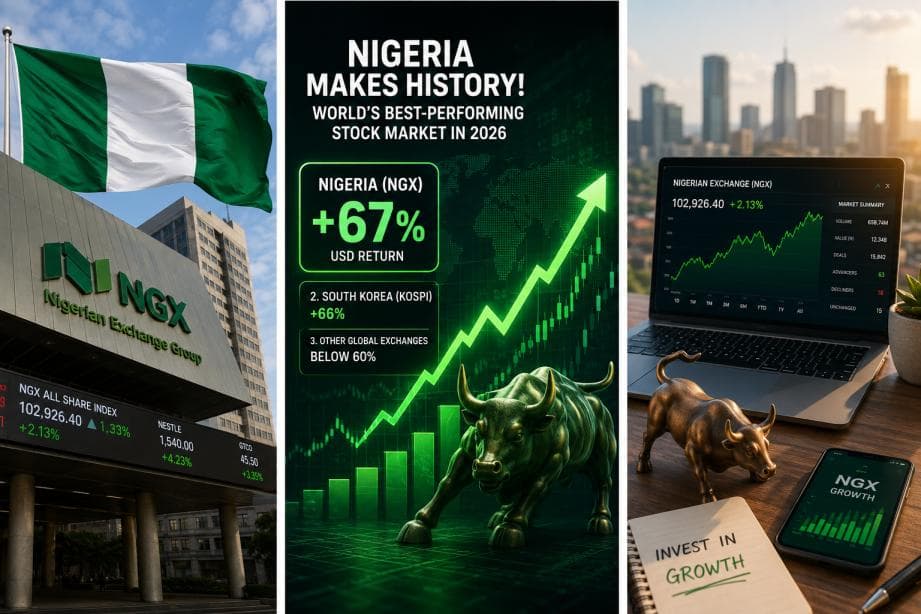
The NGX All-Share Index delivered strong gains in 2025, comfortably outperforming inflation in nominal terms. The momentum carried into 2026, with the index reaching new record highs around the 165,000-point level and market capitalization crossing the ₦100 trillion mark, underscoring renewed investor confidence in Nigerian equities.
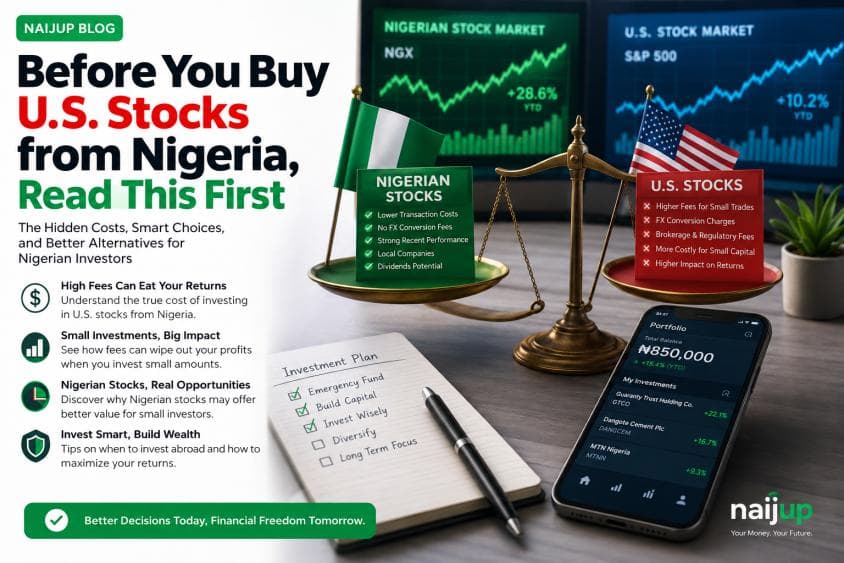
What changed is the access layer. Platforms like Bamboo, Trove, and Chaka have made it possible to buy shares on the NGX or US stocks from your phone.
The risks are what you would expect from equities: prices go down as well as up, liquidity on some counters is thin, and corporate governance quality varies. But for anyone building long-term wealth, ignoring the stock market entirely because it feels inaccessible is no longer a valid reason.

6. Fixed Income: Government Debt Has Never Been This Interesting
There is something slightly ironic about listing government bonds as a “trend,” but here we are.
Nigeria’s tight monetary policy cycle pushed risk-free naira returns to levels not seen in years. Treasury bills and government bonds offered elevated yields across 2025 and into 2026, drawing investors back into fixed income. A recent FGN bond issuance by the Debt Management Office was significantly oversubscribed, underscoring renewed demand for government-backed assets.
The good news for ordinary investors is that the barrier to entry is low. The FGN Savings Bond designed specifically for individuals can be purchased with as little as ₦5,000 and offers coupon payments every quarter. Cowrywise, PiggyVest, and other platforms have also made it easy to put money into T-bill and bond-based mutual funds without needing to go through a stockbroker.
7. REITs: Real Estate on the Stock Exchange
If fractional real estate platforms feel too new or unregulated for your taste, there is an older, more regulated version of the same idea that has been sitting on the Nigerian stock exchange for years: Real Estate Investment Trusts, or REITs.
A REIT pools investor capital into income-generating real estate assets such as commercial buildings, residential estates, and retail centers. In Nigeria, REITs are required to distribute at least 90% of their taxable income as dividends annually, allowing investors to gain exposure to real estate income streams without directly owning or managing property.
REITs will not make you rich overnight, and they carry real estate risk, vacancy, property devaluation, and management quality. But they offer something fractional platforms currently cannot: regulatory transparency, audited financials, and a proper exit mechanism through the stock exchange. For investors who want real estate exposure without the platform risk, this is worth knowing about.
8. Commodities via ETFs (Exchange-Traded Funds): Owning Gold Without Storing It
Gold has always been a store of value. The problem for most Nigerian investors is that buying physical gold is impractical. Where do you store it? How do you verify its purity? And how do you sell it quickly if you need cash?
Commodities via ETFs offer investors a way to gain exposure to assets like gold without the challenges of physical storage. The NewGold ETF on the Nigerian Exchange tracks the gold spot price and is backed by physical bullion held in secure vaults. Each unit represents fractional exposure to gold, and investors can buy or sell it through licensed brokers just like any other listed security.
More broadly, Nigeria’s ETF market remains relatively small but is gradually expanding. It includes products tracking equities, fixed income, and sector indices, alongside thematic funds such as Sharia-compliant ETFs. While total market size is still modest by global standards, the range of available instruments has improved steadily, reflecting growing sophistication in the local capital market.
So, What Does This All Mean for You?
None of these eight trends is a magic solution. Fractional real estate still requires platform vetting. Dollar assets still carry currency risk in reverse. Agricultural crowdfunding demands serious caution. Halal products vary in quality. Stocks go down. Bond yields are compressing. REITs carry property risk. And ETFs are still thin on liquidity in Nigeria.
But together, they represent something important: Nigerian investors are no longer limited to the traditional menu of fixed deposits, Treasury bills, and real estate. There are more ways to build wealth than there were five years ago, and a growing number of people are using them quietly while everyone else debates the basics.
The question is whether you are paying attention.
Before you invest in any platform, verify its SEC registration. Returns are not guaranteed, and past performance is never a promise of future results.
Keep reading
Related Topics



Conversation
Comments (0)
Sign in to join the conversation or like this post.