

Your 20s are often described as the decade of discovery. It's the period when you land your first job, earn your first salary, start making independent financial decisions, and begin laying the foundation for your future.
Unfortunately, it's also the decade where many people make costly money mistakes that can affect their finances for years.
In Nigeria's challenging economic environment, where inflation continues to erode purchasing power and the cost of living keeps rising, making smart financial decisions early has become more important than ever.
Mistakes are part of life's learning process. Some mistakes are small and forgettable. Others follow into your 30s and 40s. However, some financial errors are avoidable.
Here are some of the biggest money mistakes Nigerians make in their 20s and how to avoid them.
1. Falling for Quick Loans and Instant Credit
Debt itself is not always bad. The real issue is borrowing for consumption rather than value creation. Loan apps make borrowing painfully easy. A few taps, no collateral, and the money lands in minutes. In your 20s, when income is still small and bills feel big, that convenience is tempting.
Many of these loans carry short repayment windows and an interest rate that looks small. Miss a payment and penalties pile on. Some apps also pressure borrowers aggressively, which adds stress on top of the debt.
Before borrowing, ask: will this money help me earn more, or am I just covering spending I couldn't afford? Borrowing for a laptop that lets you take on freelance clients is one thing. Borrowing to fund weekend enjoyment is another. If you must borrow, compare the total cost of repayment.
As debt grows, financial flexibility disappears. A significant portion of income becomes tied to servicing loans rather than building wealth. This creates a cycle that is difficult to escape.
The better approach: Borrow strategically and prioritize debt that contributes to future income or asset growth
2. Delaying Savings Until "Later"
"I'll start when I earn more." "Let me settle down first." Sound familiar? Your 20s are a good time to start, because time does a huge part of the work.
Many young adults believe they will start saving once they begin earning more money. The problem is that waiting for the "right time" can easily become a habit. Financial habits are rarely determined by income level alone. A person who cannot save ₦10,000 from a ₦100,000 salary may struggle to save ₦100,000 from a ₦1,000,000 salary.
As income rises, lifestyle expenses often rise alongside it. By postponing savings, many Nigerians miss out on years of potential compound growth. Even small contributions made consistently can accumulate into substantial amounts over time.
The better approach: Treat savings as a fixed monthly expense, not an afterthought.
3. Leaving Money Idle While Inflation Eats It
Keeping all your savings in a regular account feels safe. But when prices keep rising, cash that just sits there buys less and less over time.
Once you have started saving, the next question is where to keep that money. Instead of letting your money sit pretty in the account, learn about options for growing money at different risk levels: fixed deposits, treasury bills, money market funds, and other regulated investment products. Each has its own risk, return, and access rules, so learn the basics before choosing.
A good starting point is putting longer-term savings in investments that have the potential to keep pace with inflation.
The better approach: Educate yourself about investment options and start small while focusing on long-term growth.
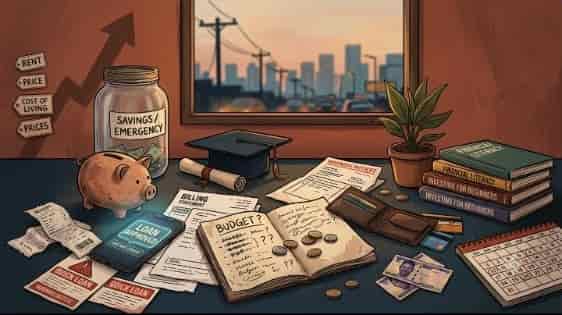
4. Failing to Build an Emergency Fund
Life is unpredictable. Unexpected expenses can come up at any time.
A medical emergency, job loss, family crisis, business setback, broken phone screen. A sudden rent increase. A relative's emergency.
Yet many Nigerians live without any financial safety net. When emergencies arise, they are forced to borrow money, sell valuable assets, or rely entirely on friends and family for assistance. Without a cushion, every surprise becomes a crisis, and crises get solved with debt.
The better approach: Aim to gradually build a reserve that can cover several months of basic expenses.
5. Letting Lifestyle Grow as Fast as Income
You get a raise, and suddenly the old phone feels embarrassing. A better apartment starts to look reasonable. Owambe outfits get fancier, and one party turns into a full weekend of outings, all in the name of "problem party go solve" vibes.
Nothing feels reckless because each upgrade seems earned. This is called lifestyle inflation, and it's sneaky.
Your income goes up, but your spending rises right alongside it, so your savings barely move. Five years and three raises later, you're earning far more and still broke before the month ends.
The fix is simple, but not easy. When your income rises, decide in advance what share of the increase goes to savings, before your spending has a chance to adjust. Focus on building your net worth, not your image.
6. Neglecting Skill Development
Many people in their 20s focus so hard on saving and cutting costs that they forget the other side of the equation: earning more. At this stage, your biggest asset is your ability to earn.
As industries change, skills and adaptability become increasingly important to earning more and staying competitive. Investing in certifications, digital skills, communication abilities, and industry expertise can dramatically increase earning potential over time.
This doesn't mean spending recklessly on every course you see advertised. Pick skills tied to real demand in your field, and use free resources first to test your interest. Treat it as an investment in your future earning power.
The better approach: Allocate part of your income to personal and professional development every year.
7. Never Tracking Where the Money Goes
Many people know how much they earn but have no idea where their money goes.
Without a budget, it's easy for expenses to injure you, and quietly consume your income. Small daily purchases, impulsive spending, and unplanned expenses can add up significantly over time.
You don't need a perfect budget. You need awareness. Once you can see where the money goes, you can decide, on purpose, where it should go instead.
The better approach: Track your income and expenses. Even a simple monthly budget can help you identify unnecessary spending and improve financial discipline.
8. Not Learning Basic Financial Literacy
Many people spend years in school yet never learn fundamental money management skills.
Topics such as budgeting, investing, debt management, taxes, insurance, and wealth building are often overlooked.
This knowledge gap leads to poor financial choices that could have been avoided.
Financial literacy is not just for investors or business owners. It is a life skill that affects nearly every aspect of adulthood. The better you understand money, the easier it becomes to make informed financial decisions
The better approach: Make financial education a lifelong habit through books, podcasts, articles, and trusted experts.
Final Thoughts
The goal isn't to get everything right in your 20s. They are about building the habits, skills, and financial systems that will determine your future.
Many financial success stories involve smart decisions made early. Avoid these common money mistakes in your 20s, and your future self will thank you for it.
The biggest financial mistakes are rarely dramatic. More often, they are small decisions repeated consistently over time: spending instead of saving, consuming instead of investing, and chasing appearances instead of building assets.
Nobody gets their 20s perfect. Most of us make several of these mistakes, sometimes at the same time. What matters is noticing them early, while you still have time and flexibility on your side.
Keep reading
Related Topics






Conversation
Comments (0)
Sign in to join the conversation or like this post.

Elizabeth Ayoola
Elizabeth is a finance analyst and writer passionate about making financial markets accessible to everyday readers.
She has a deep interest in global markets, crypto, and everything shaping the financial world. She writes to simplify complex financial topics, turning them into practical, accessible insights for everyday readers.
104
Stories
31937
Reads
1
Likes
0
Comments