
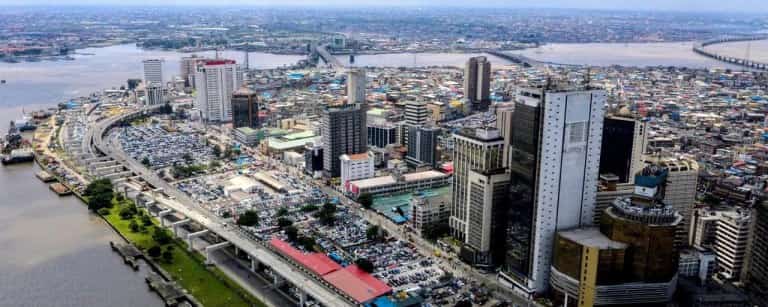
Nigeria has the bigger economy. Kenya has the higher income per person. Nigeria has the bigger population and consumer market. Kenya has a more concentrated technology and regional-business ecosystem.
So, which country is actually more developed?
The answer becomes much more interesting when you look beyond GDP.
Nigeria and Kenya are two of Africa’s most important economies, but they have taken very different development paths. Nigeria has built its economic strength around population, natural resources, financial services, telecommunications, manufacturing and an enormous domestic market.
Kenya, meanwhile, has built a smaller but highly connected economy around Nairobi, financial services, mobile money, agriculture, tourism, technology and its position as a gateway to East Africa.
And the numbers tell a fascinating story.
According to the latest World Bank data, Nigeria's economy was worth about $290.8 billion in 2025, compared with $135.9 billion for Kenya. But Kenya's GDP per capita was almost twice Nigeria's at about $2,363 versus $1,224.
That raises a bigger question:
Is a bigger economy necessarily a more developed economy?
Here is the full Nigeria vs Kenya comparison.
Nigeria vs Kenya: The Numbers at a Glance
| Indicator | ?? Nigeria | ?? Kenya |
| Population, 2025 | 237.5 million | 57.5 million |
| GDP, 2025 | $290.8bn | $135.9bn |
| GDP per capita | $1,224 | $2,363 |
| GDP growth, 2025 | 4.0% | 4.6% |
| Inflation, 2025 | 23.0% | 4.1% |
| Life expectancy | 55 years | 64 years |
| Electricity access | 62.5% | 77.0% |
| Internet users | 41% | 35% |
| Poverty at $3/day | 41.8% | 45.5% |
| Major tech funding in 2025 | $572m | $1.04bn |
| 2025 tech deals | 102 | 91 |
Figures are from different reference years where noted; GDP, GDP per capita, population, growth and inflation are 2025 World Bank figures. Social indicators use the latest available World Bank observations.
The first major lesson is clear:
Nigeria wins on scale. Kenya wins on several per-person and macroeconomic indicators.
1. Nigeria Has the Bigger Economy — By a Wide Margin
Nigeria's 2025 GDP was approximately $290.8 billion, more than twice Kenya's $135.9 billion.
That makes Nigeria one of Africa's largest economic markets.
But Nigeria's advantage becomes even more obvious when population is considered.
Nigeria has about 237.5 million people, while Kenya has approximately 57.5 million.
That means Nigeria has more than four times Kenya's population.
For businesses, this is a huge advantage.
A company operating in Nigeria can potentially sell to:
- Hundreds of millions of consumers
- Millions of businesses
- One of Africa's largest banking markets
- A huge telecommunications market
- A massive food market
- A huge housing market
- One of Africa's largest entertainment audiences
Kenya simply does not have the same domestic population scale.
But there is a catch.
Nigeria's huge population also means the country needs to create infrastructure, jobs, electricity, housing, healthcare and education for far more people.
This is one reason Nigeria's GDP does not automatically translate into higher living standards.
2. Kenya Is Almost Twice as Rich Per Person
This is where the comparison changes.
Nigeria's 2025 GDP per capita was approximately $1,224.
Kenya's was approximately $2,363.
In other words, Kenya's nominal GDP per person was about 93% higher.
This does not mean that the average Kenyan has twice the disposable income of the average Nigerian.
GDP per capita is an economic output measure, not a household bank-balance measure.
But it does indicate that Kenya currently generates significantly more economic output per person.
And that matters for:
- Consumer purchasing power
- Government revenue
- Infrastructure spending
- Business productivity
- Household consumption
- Access to services
This is one of the biggest differences between the two economies.
3. Nigeria Is Growing, But Kenya Has Been More Stable on Inflation
Nigeria's economy grew by approximately 4.0% in 2025, while Kenya recorded about 4.6% growth.
But inflation tells a completely different story.
In 2025:
Nigeria: 23.0%
Kenya: 4.1%
That is a massive difference.
For Nigerian consumers, high inflation affects almost everything:
- Food
- Rent
- Transport
- School fees
- Building materials
- Imported electronics
- Business equipment
- Salaries
- Savings
- Investment returns
Nigeria's recent macroeconomic reforms have improved some external and fiscal indicators, but inflation remains a major pressure on household purchasing power. The World Bank estimated that more than 60% of Nigerians were living below the national poverty line in 2025.
Kenya, meanwhile, has maintained relatively low inflation and stronger macroeconomic stability, although it faces significant fiscal and debt challenges.
4. Kenya Has a Major Human-Development Advantage
Look beyond GDP and another pattern emerges.
Life expectancy:
Nigeria: 55 years
Kenya: 64 years
That's a difference of roughly nine years.
Electricity access also favours Kenya.
Kenya: 77%
Nigeria: 62.5%
of the population had access to electricity in the latest comparable World Bank data.
Nigeria's electricity challenge is particularly important because access is only one part of the problem.
Reliability also matters.
The World Bank has highlighted the geographic and reliability problems in Nigeria's electricity system, noting that large areas remain poorly served and that grid-connected consumers can still experience substantial outages.
For businesses, unreliable power effectively becomes an additional operating cost.
Factories buy generators.
Restaurants buy generators.
Offices buy inverters.
Small businesses buy solar systems.
Households buy batteries.
Nigeria's electricity problem is therefore also an enormous business opportunity.
5. Nigeria Has the Bigger Labour Pool
This is one area where Nigeria's size becomes an enormous economic advantage.
Nigeria has approximately 237.5 million people.
Kenya has approximately 57.5 million.
Nigeria therefore has a much larger potential labour pool.
The country produces large numbers of:
- Software developers
- Engineers
- Accountants
- Bankers
- Lawyers
- Doctors
- Analysts
- Entrepreneurs
- Creatives
- Technicians
But there is a major problem.
Nigeria needs to create jobs fast enough to absorb its rapidly growing workforce.
The World Bank estimates that approximately 3.5 million people enter Nigeria's labour force every year, while weak job creation, limited opportunities and emigration remain challenges.
Kenya faces a similar problem on a smaller scale.
The World Bank says formal employment accounts for only around 15% of total jobs in Kenya, while most new employment remains informal.
So both countries have a skills-and-jobs problem, but Nigeria faces it at a dramatically larger population scale.
6. The Startup Battle Is Much Closer Than GDP Suggests
This is where things get very interesting.
You might expect Nigeria to dominate Kenya in technology investment because Nigeria has:
- A much larger population
- A much larger economy
- A huge fintech industry
- Several major technology companies
- A large startup ecosystem
But 2025 venture funding tells a different story.
According to Partech's 2025 Africa Tech Venture Capital report:
Kenya
$1.04 billion
Nigeria
$572 million
in total equity and debt technology funding.
Kenya therefore raised almost twice as much technology funding as Nigeria in 2025.
But there is another side.
Nigeria recorded 102 technology deals.
Kenya recorded 91.
Nigeria therefore had more transactions, while Kenya attracted more total capital.
That distinction is extremely important.
Kenya's 2025 funding was heavily influenced by several very large transactions.
Nigeria's ecosystem continued to show strong deal activity and remains one of Africa's deepest early-stage startup markets. Partech reports that Nigeria accounted for 513 Seed+ deals between 2021 and 2025, representing about 26% of Africa's Seed+ transactions during that period.
7. Nigeria Is Still the Fintech Giant
Nigeria's startup ecosystem has become strongly associated with fintech.
Think:
- Payments
- Digital banking
- Remittances
- Lending
- Merchant payments
- Embedded finance
- Banking infrastructure
- Payment processing
Nigeria's huge population makes financial technology particularly attractive.
There are millions of consumers and businesses that still need better financial services.
Kenya's fintech story is different.
Kenya became globally known for mobile money and the development of M-Pesa, creating one of the world's most advanced mobile-financial ecosystems.
This has helped Kenya achieve dramatically higher financial inclusion.
The World Bank's Global Findex data shows account ownership at approximately 90% in Kenya versus 63% in Nigeria, while mobile-money account ownership is dramatically higher in Kenya.
The lesson for investors is simple:
Nigeria has massive fintech market scale.
Kenya has exceptional digital-finance penetration.
8. Nairobi vs Lagos: Two Very Different African Giants
If Nigeria and Kenya were companies, their biggest "business units" would probably be Lagos and Nairobi.
Lagos
Lagos is Nigeria's:
- Financial centre
- Technology hub
- Commercial centre
- Entertainment capital
- Port city
- Consumer market
- Startup centre
- Manufacturing gateway
The Lagos metropolitan economy is enormous and much larger in population than Nairobi.
It is also much more commercially diverse.
From Victoria Island and Lekki to Ikeja, Yaba, Apapa, Alaba, Oshodi and the Lagos-Ogun industrial corridor, the city contains several overlapping economic ecosystems.
Nairobi
Nairobi is Kenya's:
- Political capital
- Financial centre
- Technology hub
- Regional headquarters centre
- Diplomatic centre
- Professional-services centre
- Startup hub
The key difference is concentration.
Lagos is Nigeria's biggest city and economic powerhouse.
But Nigeria also has Abuja, Kano, Ibadan, Port Harcourt, Onitsha, Aba, Nnewi, Kaduna, Benin City and other important commercial centres.
Nairobi dominates Kenya's economy much more heavily.
9. Abuja vs Nairobi: Which Capital Is More Economically Important?
Abuja is Nigeria's political capital.
Nairobi is both Kenya's political capital and its primary commercial centre.
That makes the two capitals structurally different.
Abuja
Strong in:
- Government
- Real estate
- Diplomacy
- Professional services
- Construction
- Government contracting
- Emerging technology
Nairobi
Strong in:
- Government
- Banking
- Technology
- Regional headquarters
- International organisations
- Logistics
- Real estate
- Professional services
Nairobi therefore plays a broader economic role.
Nigeria's commercial economy is much less dependent on its capital because Lagos performs the country's main commercial and financial role.
10. Nigeria Has More Major Economic Cities
This is one of the most interesting geographical differences.
Nigeria's economy is spread across several major centres.
Southwest
Lagos — finance, technology, trade, ports and entertainment
Ibadan — education, services, agriculture and commerce
Abeokuta — manufacturing, agriculture and Lagos-linked development
Southeast
Onitsha — trade and wholesale commerce
Aba — manufacturing and SMEs
Nnewi — industrial manufacturing
Enugu — services, education and government
South-South
Port Harcourt — oil, gas and industrial services
Warri — energy and industrial activity
North
Kano — trade, agriculture and manufacturing
Kaduna — industry, agriculture and education
Abuja — government and services
This gives Nigeria a relatively multi-polar economic geography.
Kenya is more concentrated.
Its major economic centres include:
Nairobi
Mombasa
Kisumu
Nakuru
Eldoret
But Nairobi dominates the national business ecosystem.
11. Nigeria Has a Bigger Market, Kenya Has a Stronger Regional Gateway
This is where geography becomes an economic advantage.
Nigeria has an enormous domestic market.
A company can potentially grow for years without leaving Nigeria.
Kenya's domestic market is much smaller.
But Kenya sits at the centre of East African commercial networks.
From Kenya, businesses can target markets such as:
- Uganda
- Tanzania
- Rwanda
- South Sudan
- Ethiopia
- Democratic Republic of Congo
That makes Nairobi particularly attractive for companies seeking an East African headquarters.
So there are two very different business strategies:
Nigeria
Build for enormous domestic scale.
Kenya
Build a regional African platform from East Africa.
12. Infrastructure: Nigeria Has More Infrastructure Needs — and More Infrastructure Opportunity
Nigeria's infrastructure challenge is enormous.
The country needs more:
- Roads
- Railways
- Ports
- Electricity
- Water
- Housing
- Airports
- Broadband
- Logistics infrastructure
- Industrial parks
The World Bank has identified infrastructure gaps in electricity, transport and logistics as major constraints on Nigeria's productivity and domestic market integration.
This creates an unusual investment situation.
Nigeria's infrastructure deficit is a problem.
But it is also an opportunity.
Potential sectors include:
Power
Solar
Battery storage
Transport
Logistics
Housing
Industrial parks
Warehousing
Data centres
Telecommunications
Water infrastructure
13. Kenya's Infrastructure Is More Connected Around Its Main Economic Corridors
Kenya has invested heavily in transport infrastructure connecting Nairobi with other parts of the country and with the coast.
The country's infrastructure strategy is closely linked to its role as an East African trade gateway.
Mombasa is particularly important because the port serves not only Kenya but also neighbouring landlocked markets.
The Nairobi–Mombasa corridor therefore has economic importance far beyond Kenya's borders.
Kenya's infrastructure challenge is increasingly about:
efficiency + productivity + regional connectivity + affordability
rather than simply creating infrastructure from scratch.
14. Manufacturing: Nigeria Has a Much Bigger Long-Term Opportunity
Nigeria has several advantages for manufacturing:
- Huge domestic demand
- Large labour force
- Oil and gas resources
- Agriculture
- Large consumer market
- Ports
- Existing industrial clusters
- Growing demand for locally produced goods
The Lagos–Ogun corridor is particularly important.
So are:
Onitsha–Nnewi–Aba
Kano–Kaduna
Port Harcourt–Delta
The biggest challenge is cost.
Manufacturers need reliable:
- Electricity
- Roads
- Transport
- Finance
- FX
- Raw materials
- Security
Fix those constraints and Nigeria's domestic market could support a much larger manufacturing sector.
15. Kenya's Manufacturing Opportunity Is Smaller but Strategically Important
Kenya's manufacturing sector is connected to:
- Agriculture
- Food processing
- Consumer goods
- Textiles
- Chemicals
- Construction
- Export markets
But the World Bank continues to identify weak industrial activity, limited productivity and insufficient formal job creation as structural challenges.
For Kenya, manufacturing is important not only because it produces goods but because it can create the higher-productivity jobs the economy needs.
16. Agriculture: Two Different Powerhouses
Nigeria has enormous agricultural potential because of its landmass and population.
Major opportunities include:
- Rice
- Cassava
- Maize
- Cocoa
- Palm oil
- Livestock
- Poultry
- Fisheries
- Food processing
- Fertilizer
- Agricultural logistics
Nigeria's biggest opportunity is arguably moving from agricultural production to agricultural processing.
Instead of exporting or selling raw commodities, more value can be created through:
processing → packaging → manufacturing → distribution → export
Kenya has a particularly strong export-oriented agricultural system.
It is globally recognised for products including:
- Tea
- Coffee
- Flowers
- Horticultural products
- Vegetables
- Dairy products
Kenya therefore has an advantage in building internationally competitive agricultural value chains.
17. Energy: Nigeria's Biggest Problem Could Become Its Biggest Market
Nigeria is one of the world's largest countries by population with an enormous electricity deficit.
That creates opportunities in:
- Solar
- Mini-grids
- Gas
- Power generation
- Transmission
- Distribution
- Battery storage
- Industrial power
- Energy financing
- Electric mobility
Nigeria's energy market is therefore unusual:
The demand is enormous, but supply and infrastructure remain inadequate.
The World Bank has repeatedly identified electricity as a major constraint on Nigerian productivity.
Kenya has a different energy profile and has developed a stronger renewable-energy ecosystem, giving it opportunities around clean power, geothermal energy, solar, wind and climate-related investment.
18. Where the Startup Opportunities Are
Nigeria
Some of the most interesting sectors include:
Fintech
Huge consumer and business market.
Energy tech
Power reliability creates demand.
Logistics
Large cities and long-distance movement create enormous demand.
Agritech
Large agricultural sector with major inefficiencies.
Healthtech
Huge population and healthcare gaps.
AI
Large English-speaking workforce and enterprise market.
B2B SaaS
Millions of businesses remain under-digitised.
Media and entertainment
One of Africa's largest audiences.
Kenya
Important opportunities include:
Climate tech
Kenya's startup ecosystem has attracted significant capital into climate-related businesses.
Cleantech
Renewable energy and climate infrastructure are major opportunities.
Agritech
Strong agricultural export networks create opportunities for technology.
Fintech
Deep digital-finance adoption creates opportunities for financial infrastructure.
Logistics
Kenya's position as an East African gateway creates regional opportunities.
Tourism technology
Tourism remains an important part of the economy.
Partech's 2025 data shows that Kenya's tech funding surge was particularly associated with large transactions and sectors including cleantech, while Nigeria remained heavily concentrated around an equity-driven startup ecosystem with especially strong early-stage activity.
19. The Biggest Economic Problems Facing Nigeria
Nigeria's biggest challenges include:
1. Inflation
High inflation reduces purchasing power.
2. Electricity
Businesses often have to provide their own power.
3. Infrastructure
Roads, rail, logistics and urban infrastructure remain uneven.
4. Job creation
Millions enter the labour force every year.
5. Skills mismatch
High-growth sectors do not yet employ enough of the population.
6. Security
Some regions face serious insecurity.
7. FX volatility
Businesses that depend on imports can be particularly exposed.
8. Poverty
Economic growth has not yet translated into sufficient improvements for large parts of the population.
The World Bank says Nigeria needs to improve infrastructure, logistics, electricity, access to finance and the broader business environment to translate growth into more inclusive prosperity.
20. Kenya's Biggest Economic Problems
Kenya's problems are different.
1. Public debt
The World Bank continues to classify Kenya as being at high risk of debt distress.
2. Formal employment
Only around 15% of jobs are formal, according to the World Bank.
3. Youth employment
The economy needs to create more productive jobs.
4. Manufacturing
Industrial growth remains below its potential.
5. Cost of doing business
Taxes, regulation, financing and infrastructure costs can constrain businesses.
6. Fiscal pressure
Interest payments consume a substantial share of government revenue.
7. Small domestic market
Kenya's population is only around one-quarter of Nigeria's.
So Kenya needs regional expansion to unlock much larger markets.
21. The Development Geography Is Probably the Most Interesting Difference
Think of Nigeria as a network of large economic islands.
Lagos
Abuja
Ibadan
Port Harcourt
Kano
Onitsha
Aba
Nnewi
Kaduna
Benin City
Each has a different economic role.
Kenya is more like a powerful central hub connected to several secondary cities.
Nairobi
↓Nakuru
↓Eldoret
↓Kisumu
and
Nairobi
↓Mombasa
This does not automatically make one model better.
It simply means the two countries have different development structures.
22. Lagos vs Nairobi: Where Is the Bigger Opportunity?
For consumer businesses, Lagos offers enormous scale.
For regional African businesses, Nairobi offers a particularly attractive East African gateway.
For fintech, both markets are highly significant but for different reasons.
For manufacturing, Nigeria has a much larger domestic market.
For regional headquarters, Nairobi has a particularly strong position.
For entertainment and media, Lagos has an enormous audience and cultural influence.
For climate and cleantech, Kenya has developed a particularly strong ecosystem.
For energy infrastructure, Nigeria's enormous unmet demand creates a huge addressable market.
23. Nigeria vs Kenya: The Investment Opportunity Map
| Sector | Nigeria | Kenya |
| Fintech | ? Huge market | ? Highly developed |
| Manufacturing | ?? Huge potential | Strong opportunity |
| Energy | ?? Massive unmet demand | Strong renewable opportunity |
| Agriculture | ?? Huge domestic market | Strong export ecosystem |
| Logistics | ?? Huge | Strong regional gateway |
| Real estate | ?? Huge demand | Strong Nairobi demand |
| Technology | ?? Huge ecosystem | ? Strong regional hub |
| Cleantech | Huge opportunity | ?? Major ecosystem |
| Tourism | Strong | ? Major sector |
| Healthcare | ?? Huge unmet demand | Strong opportunity |
| B2B software | ? Huge | Strong |
| E-commerce | ? Huge market | Growing |
| Infrastructure | ?? Enormous need | Major opportunity |
| Regional expansion | West Africa | ? East Africa |
24. So, Is Nigeria More Developed Than Kenya?
There isn't one number that can answer that question.
If you measure economic size, Nigeria is considerably larger.
If you measure population, Nigeria is dramatically larger.
If you measure GDP per capita, Kenya is considerably ahead.
If you measure inflation stability, Kenya currently has a major advantage.
If you measure electricity access, Kenya is ahead.
If you measure life expectancy, Kenya is ahead.
If you measure financial inclusion, Kenya is far ahead.
If you measure technology deal count, Nigeria had more deals in 2025.
If you measure total technology funding in 2025, Kenya raised more.
If you measure domestic consumer-market potential, Nigeria has a huge advantage.
If you measure East African regional connectivity, Kenya has a major advantage.
If you measure number of major economic centres, Nigeria has a more distributed economic structure.
25. The Bigger Picture
The Nigeria vs Kenya debate is ultimately not about finding a single winner.
It is about understanding two different African economic models.
?? Nigeria: Scale
Nigeria's story is about:
237 million people + resources + massive consumer demand + fintech + manufacturing + energy + multiple economic centres.
The challenge is converting that enormous scale into higher productivity, better infrastructure and higher living standards.
?? Kenya: Connectivity
Kenya's story is about:
Nairobi + mobile money + technology + agriculture + regional trade + renewable energy + East African connectivity.
The challenge is creating enough high-quality formal employment and maintaining fiscal sustainability while increasing productivity.
What Does This Mean for Investors and Entrepreneurs?
For anyone looking at Africa, the biggest mistake would be treating Nigeria and Kenya as interchangeable markets.
They are not.
A business built around mass-market consumption, fintech, energy, housing, logistics or manufacturing may find Nigeria's enormous domestic market particularly important.
A business built around East African expansion, cleantech, regional headquarters, digital finance or agricultural exports may find Kenya's ecosystem particularly relevant.
And there is another possibility:
You don't necessarily have to choose one.
A company could build its Nigerian operation around Lagos and use Nairobi as an East African expansion base.
That creates a potential:
Lagos → West Africa
and
Nairobi → East Africa
strategy.
For investors looking across Africa, understanding those regional hubs may be more useful than simply asking which country has the larger GDP.
NaijUp's Bottom Line
Nigeria is the larger economic giant.
Kenya is the smaller but higher-income-per-person economy.
Nigeria has the larger consumer market, a deeper domestic startup pipeline and enormous opportunities in infrastructure, energy, manufacturing, finance and consumer businesses.
Kenya has stronger indicators in several areas of human development, financial inclusion and macroeconomic stability, while Nairobi has established itself as a major East African technology and regional-business hub.
The most important takeaway is this:
Nigeria's biggest advantage is scale. Kenya's biggest advantage is connectivity and economic concentration.
Both countries also have major structural challenges.
Nigeria must turn population and resources into productivity.
Kenya must turn its relatively sophisticated economic ecosystem into more productive jobs and sustainable growth.
And for businesses, entrepreneurs and investors watching Africa, that makes both countries important—but for very different reasons.
Key Sources
- World Bank — Nigeria and Kenya economic and development indicators.
- World Bank — Nigeria economic outlook and infrastructure challenges.
- World Bank — Kenya economic outlook, fiscal pressures and employment.
- Partech Africa — 2025 Africa Tech Venture Capital Report.
Data years vary by indicator. GDP, GDP per capita, population, growth and inflation figures cited above are primarily 2025 World Bank data; social and infrastructure indicators use the latest available observations. Startup funding figures are for calendar year 2025.
NaijUp | Business • Economy • Finance • Technology
Keep reading
Related Topics




Conversation
Comments (0)
Sign in to join the conversation or like this post.

Mujeeb Olagunju
I am a finance professional with a strong background in economics and financial technology.,My work centers on building systems that support payments, digital banking, and investment solutions in emerging markets.,I have experience with risk management, transaction monitoring, fraud prevention, and the design of scalable financial products tailored to both retail and institutional clients.,With over 8 years of industry experience, I combine financial insight with technical expertise to deliver solutions that balance compliance, security, and business growth.,My goal is to bridge the gap between finance and technology, creating platforms that expand access to modern financial services and strengthen trust in digital finance.
58
Stories
16726
Reads
0
Likes
0
Comments