

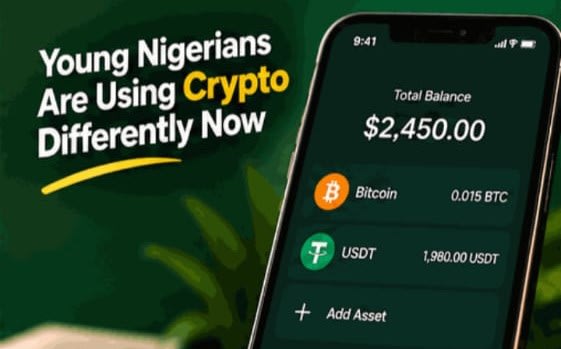
A young Nigerian earning in dollars has a problem many people would love to have: figuring out how to keep those dollars. Someone running an online business may have a different concern, such as paying an overseas supplier without dealing with the usual banking delays. Meanwhile, another person may simply be trying to save enough to pay for an international course without watching the naira lose more value.
These situations have something in common: cryptocurrency is increasingly finding a place in how young Nigerians handle their money. Bitcoin and stablecoins such as USDT are being used for more than trading and the hope of making quick profits. From receiving payments to storing value and moving money across borders, crypto is gradually becoming part of everyday financial decisions.
The Search for Financial Stability
A major driver of this shift is Nigeria’s economic reality. The volatility of the naira, persistent inflation, and limited access to foreign currency have pushed many young people to rethink how they save and store wealth. Rather than holding all their funds in naira, some are turning to Bitcoin and, increasingly, stablecoins such as USDT. Because stablecoins are pegged to the US dollar, they are often seen as a way to protect savings from currency depreciation.
For someone saving towards a laptop, planning an international trip, or hoping to pay for a course priced in dollars, the appeal is easy to understand. Keeping some money in a dollar-pegged asset can make it easier to plan around expenses that are tied to foreign currencies. However, crypto savings come with their own risks, including exchange rate differences, platform failures, wallet security issues, and regulatory uncertainty. The convenience is attractive, but users still need to understand where they are putting their money.
Beyond Savings: Crypto for Payments and Business
Cryptocurrency is also helping to bridge gaps left by traditional financial systems. Through mobile wallets and peer-to-peer platforms, users can send, receive, and store funds with greater ease. Freelancers working with overseas clients increasingly rely on crypto payments to avoid lengthy processing times and costly banking charges. Small business owners are also embracing digital currencies as a faster way to make cross-border transactions and participate in international trade.
Consider a Nigerian designer working with a client in Europe or a software developer earning from a company in the United States. Receiving payment through traditional banking channels can sometimes involve delays, conversion charges, and other complications. Crypto offers another route, allowing payments to move across borders without relying entirely on conventional banking processes. For small businesses dealing with international suppliers, this flexibility can make a difference, particularly when timing and access to foreign currency affect how quickly they can complete transactions.
Simplifying International Transactions
Beyond investing and business, cryptocurrency is finding its way into everyday financial activities. International transfers through conventional banks can be expensive and slow, while crypto often offers a quicker alternative. Some Nigerians now use digital assets to pay for subscriptions, settle online transactions, and move money across borders.
The appeal is particularly clear for people who regularly interact with international platforms. Paying for software, online courses, digital services, and other subscriptions can be frustrating when local payment cards are declined or foreign currency limits get in the way. Crypto provides another payment option in some of these situations, although acceptance varies across platforms and users may still need to convert their assets before making payments. For a generation that studies, works, shops, and does business online, having another way to move money can be useful.

Young Nigerians at the Centre of Adoption
Young people remain at the forefront of this transformation. Drawn by the speed, accessibility, and borderless nature of digital currencies, they continue to drive crypto adoption across the country. According to PwC's 2026 Nigeria Economic Outlook, crypto adoption is dominated by young, tech-savvy Nigerians, particularly students. Self-employed entrepreneurs and traders also account for a significant share of users, with many turning to digital assets for greater flexibility and business utility.
Much of this interest is tied to how young Nigerians already use technology. People who are comfortable with mobile banking, online marketplaces, remote work, and digital payments are often more willing to experiment with financial tools that operate outside traditional systems. Crypto communities on social media also make it easier for beginners to learn about wallets, exchanges, and different digital assets. Of course, easy access can come with a downside: misinformation, unrealistic profit expectations, and scams can spread just as quickly as useful information.
Regulation and the Cost of Compliance
As adoption grows, regulators are paying closer attention. The Nigerian Securities and Exchange Commission has introduced frameworks for digital asset service providers, while recent tax reforms have expanded reporting obligations around cryptocurrency transactions. These measures reflect the government's growing interest in bringing more structure and oversight to a sector that has expanded rapidly over the years.
PwC notes that Nigeria's new regulatory and tax framework could increase compliance and reporting costs for cryptocurrency businesses, particularly exchanges and other licensed service providers. While formal regulation may improve oversight and transparency, the additional obligations could place pressure on smaller platforms. PwC also warns that higher operating costs could push some crypto activity towards informal and offshore channels, especially if regulatory enforcement does not keep pace with the new requirements.
A New Chapter for Crypto in Nigeria
The conversation around cryptocurrency in Nigeria is no longer centered solely on the possibility of quick wealth. Increasingly, it is about preserving value, facilitating payments, enabling international transactions, and maintaining access to a connected global economy. As adoption continues to mature, the future of crypto in Nigeria may depend more on its ability to meet the everyday financial needs of millions of young people.
There is still plenty to figure out. Price volatility, security concerns, scams, and regulatory changes remain real challenges, and greater adoption will depend partly on how well users understand the risks involved. However, the growing range of ways Nigerians are using digital assets suggests that crypto is becoming part of a wider conversation about financial access and economic opportunity.
Found this useful? Share it
Help friends, family and colleagues stay informed on Nigerian finance.
Keep reading
Related Topics





Conversation
Comments (0)
Sign in to join the conversation or like this post.

Elizabeth Ayoola
Elizabeth is a finance analyst and writer passionate about making financial markets accessible to everyday readers.
She has a deep interest in global markets, crypto, and everything shaping the financial world. She writes to simplify complex financial topics, turning them into practical, accessible insights for everyday readers.
118
Stories
42420
Reads
1
Likes
0
Comments