

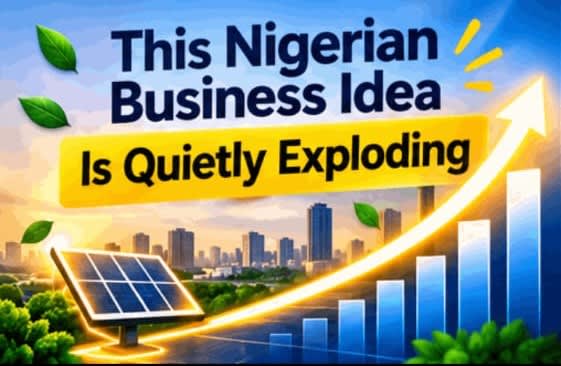
In Nigeria, unreliable power supply has become a business problem that refuses to go away. From small shops and clinics to manufacturers and office buildings, many businesses spend heavily on generators and fuel just to keep operating. For years, rising energy costs and inconsistent electricity supply have eaten into profits and made business growth more difficult.
Rather than seeing this challenge as a setback, a growing number of entrepreneurs are turning it into an opportunity. Solar installation and energy service businesses are expanding rapidly as demand for reliable and cost-effective power solutions continues to grow.
Why the Opportunity Is Growing
Falling solar panel and lithium battery prices have made solar systems far more affordable than they were a decade ago. At the same time, the removal of fuel subsidies has increased the cost of running generators. As a result, many businesses are actively looking for more reliable and cost-effective power alternatives.
Unlike many businesses, solar providers do not have to convince customers that a problem exists. Most businesses already know how much they spend on fuel and how much productivity is lost during power outages.
That creates a much easier sales conversation. Instead of convincing customers that a problem exists, solar providers only need to show how their solution can reduce energy costs and provide more reliable power.
The Financing Model Driving Growth
What makes this opportunity particularly interesting is that the growth is not being driven by technology alone. In many cases, it is the financing model that makes solar solutions accessible to a wider range of customers.
Not all small businesses can afford the upfront cost of a full solar installation. To address this challenge, many providers now offer pay-as-you-go and leasing arrangements that allow customers to spread payments over time.
Rather than paying for the entire system at once, customers make weekly or monthly payments, which can sometimes be lower than what they already spend on generators and fuel. In many cases, ownership of the system is transferred to the customer once the payment period ends.
For customers, this removes one of the biggest barriers to adopting solar power. For providers, it creates an ongoing revenue stream instead of a one-off installation project. As a result, both sides benefit from a model that makes reliable electricity more affordable and accessible.

Opportunities Beyond Installation
Many people immediately think about solar installation when they hear about the industry's growth, but installation is only one part of a much larger ecosystem. As demand for alternative energy solutions increases, opportunities are emerging across the entire value chain.
Solar component importers, battery suppliers, financing companies, maintenance providers, and technical training businesses are all benefiting from the sector's expansion. Many of these businesses do not install solar systems themselves but still generate revenue by supporting companies and consumers adopting the technology.
This means entrepreneurs do not necessarily need to become solar installers to participate in the opportunity. Some may focus on supplying equipment, others on financing purchases or providing maintenance services. As the industry grows, demand for these supporting services is likely to grow alongside it.
What It Takes to Get Going
Getting started in the solar energy industry does not always require a huge amount of capital. Many entrepreneurs begin by offering installation services or acting as resellers, earning income from labour and equipment margins without keeping large amounts of inventory.
Beyond sales, technical knowledge is crucial. Understanding how to properly size a solar system can make the difference between a satisfied customer and a disappointed one. A system that is too small may fail to meet a customer's energy needs, while one that is too large can unnecessarily increase costs.
The opportunity also extends beyond the initial installation. Solar systems require periodic maintenance and inspections, creating an additional source of recurring income for service providers.
As businesses grow, partnerships with banks, investors, and other financing providers can help make solar systems more affordable for customers through installment payment plans, allowing companies to reach a larger market.
The Challenges Can’t Be Overlooked
As promising as the opportunity may be, it is not without its challenges. Much of the equipment used in the industry is imported, which means costs can rise quickly when exchange rates move against businesses. At the same time, the market is flooded with low-quality products, making it harder for reputable operators to stand out and maintain customer trust.
The financial side of the business also comes with risks. Companies that offer installment plans or pay-as-you-go arrangements must be prepared to deal with late payments and customer defaults, which can put pressure on cash flow. In addition, operators must navigate an evolving regulatory environment that can affect how they source, finance, and deploy their systems.
Ultimately, the businesses most likely to succeed are the ones that focus on quality installations, accurate energy assessments, transparent pricing, and reliable after-sales support.
The Long-Term Business Potential
What makes this opportunity particularly attractive is that it serves an essential need rather than a passing trend. Electricity in Nigeria is not a nice-to-have for the country’s businesses; it is a must-have. Each additional hour of reliable electricity can mean the difference between having a store open, being able to keep a freezer operating, protecting valuable medicine, or continuing to serve their patients at a clinic well into the night.
This is why the Solar-as-a-Service model is so attractive. It will probably not attract as much media attention as the latest tech startup, but it is quietly growing as more and more Nigerians seek alternative sources of electricity.
In a country where dependable power remains a daily challenge, businesses built around providing electricity are unlikely to run out of customers anytime soon.
Found this useful? Share it
Help friends, family and colleagues stay informed on Nigerian finance.
Keep reading
Related Topics




Conversation
Comments (0)
Sign in to join the conversation or like this post.

Elizabeth Ayoola
Elizabeth is a finance analyst and writer passionate about making financial markets accessible to everyday readers.
She has a deep interest in global markets, crypto, and everything shaping the financial world. She writes to simplify complex financial topics, turning them into practical, accessible insights for everyday readers.
120
Stories
42523
Reads
1
Likes
0
Comments