
The chic investor’s guide: 5 portfolio mistakes you can’t afford in 2026
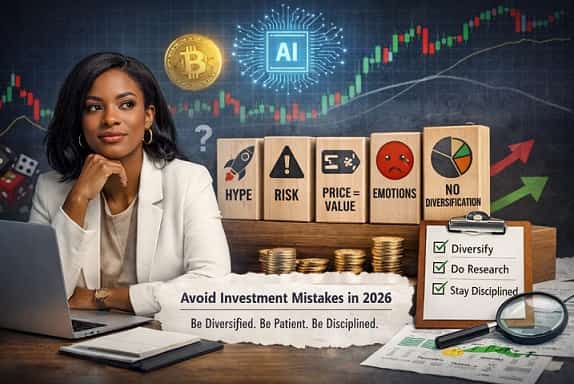
2026 is shaping up to be one of those “blink and your portfolio moves 10%” kind of years. Between AI hype cycles, crypto mood swings, FX volatility, rising interest rates in some regions, and geopolitical noise, the market is loud. Very loud.
Add social media “investment gurus” and WhatsApp broadcast tips into the mix, and it’s easier than ever to make costly mistakes.
Some of these errors are timeless. The difference in 2026? Information (and misinformation) travels faster than your money can recover from bad decisions.
The problem? Most investors don’t lose money because they are unlucky. They lose it repeating avoidable errors.
If you want to grow your portfolio without self-sabotage, here are five mistakes to dodge, and what to do instead.
1. Chasing hype without real research: Every cycle has its “can’t-lose” story. In 2026, it’s likely AI, frontier tech, and whatever the crypto narrative of the year happens to be. The problem isn’t trends; it’s buying hype without understanding the business.
Beginners often mistake rising prices for quality. They spot a stock trending on social media, jump in, then learn it has weak earnings, heavy debt, or no competitive edge.
What to do instead:
Before investing, ask:
- How does this company make money?
- Is it profitable, or on a clear path to it?
- What could go wrong?
No understanding = no investment. That’s vibes-based finance, not investing.
2. Taking the wrong amount of risk: Some investors play too safe, watching inflation erode their cash. Others go casino mode on volatile assets, chasing overnight wins.
Too little risk starves growth. Too much wipes you out on one downturn.
Risk isn’t the enemy unmanaged risk is.
What smart investors do instead:
Build a portfolio that:
• Has growth assets (stocks, equity funds).
• Has stability (bonds, fixed income, cash buffer).
• Matches your time horizon (short-term money should not be in long-term investments).
If market drops make you panic-sell, your risk level is too high. If your portfolio barely beats inflation, your risk level is too low.
Find the middle ground.
3. Forgetting price ≠ value: Assuming a rising stock is a good investment just because it’s going up or a falling stock is cheap just because the price is lower leads to traps.
What smart investors do instead:
They focus on value:
- Is the business profitable or improving profitability?
- Does it have a durable competitive advantage?
- Is the current price justified by realistic future growth?
"Smart investors stop asking 'Is this popular?' and start asking 'Is it worth the price?'"

4. Letting emotions run your portfolio: Two emotions ruin more portfolios than bad analysis ever will:
• FOMO (Fear of Missing Out) when markets are pumping, buying because of FOMO.
• Fear when markets are crashing, selling because of fear.
This is how people consistently buy high and sell low, the exact opposite of what works.
Short-term price movements don’t mean much. The market is emotional in the short run and rational in the long run.
What to do instead:
Create simple rules and stick to them. Ask yourself: Why did you buy this investment? Under what conditions would you sell? How long is your time horizon?
If your strategy changes every time the market moves, you are not investing, you are reacting.
5. Ignoring diversification and rebalancing: Putting most of your money into one stock, one sector, or one country feels bold. It’s also how people blow up their portfolios.
“I’m all-in on tech.” “Everything I own is crypto.” “This one stock is my entire portfolio.”
Famous last words.
Markets move in cycles. Sectors fall in and out of favour. One regulation change, one earnings miss, or one global event, and your whole portfolio takes the hit.
Even if you diversify initially, your portfolio won’t stay balanced forever. One asset grows faster than the others, and suddenly your “balanced” portfolio is actually a concentrated bet in disguise.
What smart investors do instead:
They diversify across:
- Asset classes (stocks, bonds, funds)
- Sectors (tech, finance, energy, consumer goods)
- Regions (local and international exposure)
And they rebalance periodically to bring the portfolio back to the intended risk level.
Don’t aim to be perfect, aim to avoid being wrecked
You don’t need to pick every winning stock to succeed as an investor. You just need to avoid the mistakes that cause permanent capital loss.
In 2026, the biggest danger isn’t missing the next hot investment.
It’s blowing up your portfolio by chasing hype, ignoring risk, and letting emotions drive decisions.
Be diversified. Be patient.
That’s how real portfolios quietly win while noisy ones blow up.
Your future net worth will thank you.
3 habits that separate winning investors in 2026
1. Keep learning.
Markets evolve fast. Strategies go stale. The investors who keep compounding are the ones upgrading their thinking: new sectors, new risks, new tools. If you stop learning, the market will happily teach you the hard way.
2. Ask for help when needed
There’s no trophy for doing this alone. Smart investors borrow insight; from data tools, mentors, credible research, and professional advisors when needed. Lone-wolf investing is how portfolios go off track.
3. Prioritize quality over yield.
Eye-watering yields usually come with hidden risks. High yields often signal higher default risk for bonds or future dividend cuts for stocks. Go for durable cash flows, strong balance sheets, and payouts that can survive a bad year, not just look good in a good one.
Final takeaway
The biggest investment risk in 2026 won’t be AI, crypto, or geopolitics.
It’ll be your own behaviour.
Avoiding these mistakes won’t make you rich overnight, but it will quietly compound your wealth while others blow up their portfolios chasing noise.
Keep reading
Related Topics






Conversation
Comments (0)
Sign in to join the conversation or like this post.