
Opening and Funding a Brokerage Account in Nigeria: A Complete Beginner’s Process
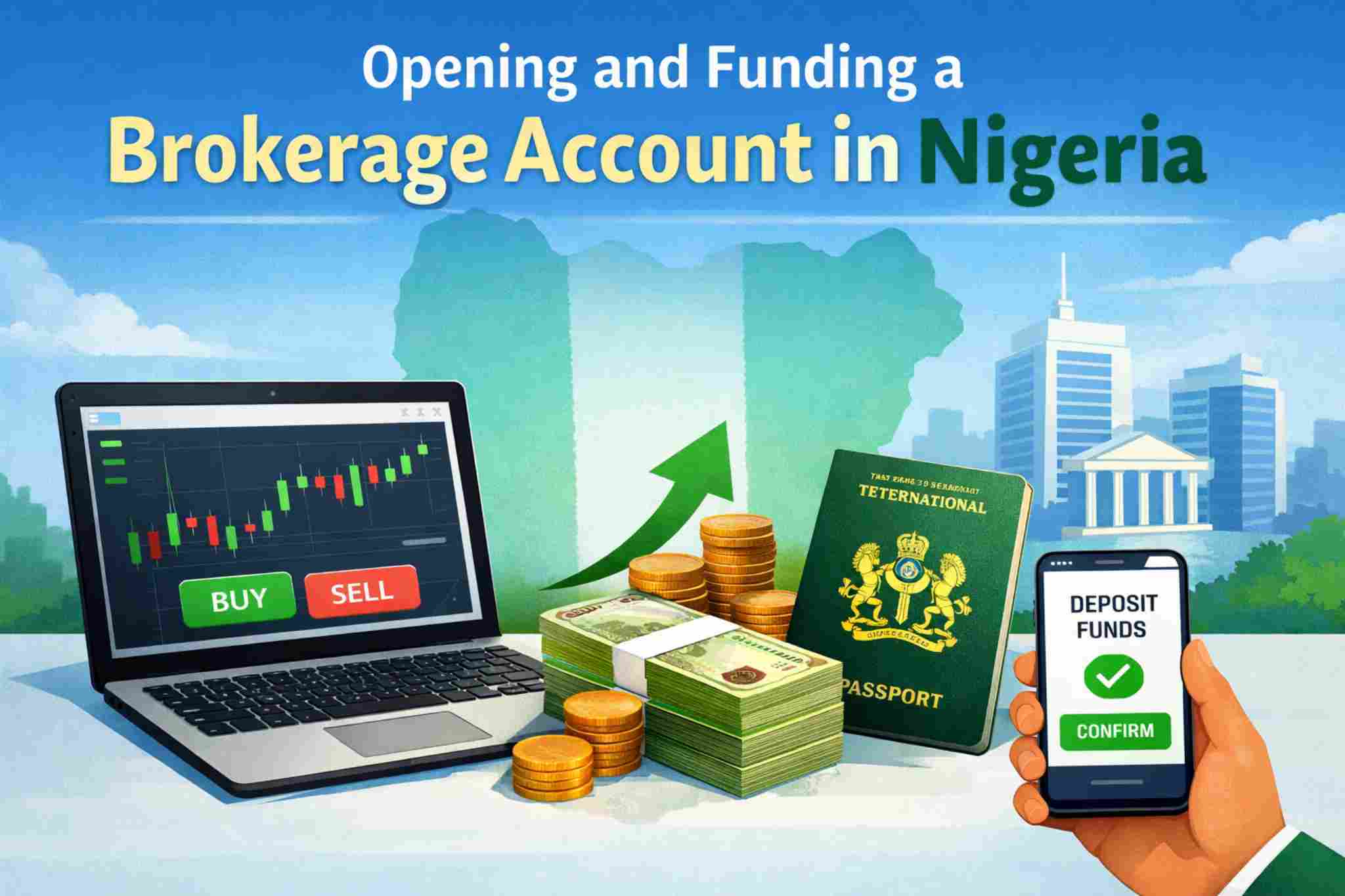
For many Nigerians today, saving money is no longer enough. Inflation keeps rising, the naira continues to fluctuate, and more people are beginning to ask a different question: How do I make my money work for me?
This shift has quietly pushed thousands of young professionals, freelancers, and business owners toward investing, not just in Nigeria, but globally. Stocks, ETFs, and foreign assets are no longer things reserved for bankers in Lagos Island. With the right brokerage account, anyone with a smartphone and internet connection can participate.
But here is the reality: opening and funding a brokerage account in Nigeria still feels confusing for beginners. Between regulation, verification requirements, dollar funding challenges, and fear of scams, many people stop before they even start.
Understanding What a Brokerage Account Really Is
A brokerage account is simply an investment account that allows you to buy and sell financial assets such as shares, exchange-traded funds (ETFs), bonds, and sometimes foreign securities.
Think of it as the investment version of a bank account.
Your bank holds cash.Your broker holds investments.
In Nigeria, brokerage accounts fall into two broad categories:
• Local brokerage accounts (for Nigerian stocks listed on NGX)
• International brokerage access (for foreign stocks like U.S. companies)
Both follow structured regulatory systems overseen primarily by Nigeria’s Securities and Exchange Commission (SEC).
And regulation has become stricter recently.
In January 2026, the SEC significantly increased minimum capital requirements for brokers, raising thresholds to strengthen investor protection and remove undercapitalized operators from the market. Brokers must now maintain far higher capital bases, a move designed to make the industry safer for investors.
For beginners, this change actually works in your favor: fewer weak brokers, stronger platforms.
Step One: Decide What You Want to Invest In
Before opening any account, clarity matters.
Many Nigerians rush into investment apps because someone on Twitter said a stock doubled. That approach usually ends badly.
Your choice determines the type of brokerage account you need.
If your interest is Nigerian companies,banks, cement firms, telecoms,you need a local SEC-registered broker connected to the Nigerian Exchange (NGX).
If your goal is diversification or earning in dollars, you will likely use platforms that provide access to foreign markets through partner brokers.
The mistake beginners make is opening accounts without defining purpose. A brokerage account should match a financial goal: wealth building, dividend income, or currency diversification.
Step Two: Choosing a Legitimate Broker in Nigeria
This is the most important decision you will make.
Nigeria has hundreds of capital market operators, but not all operate at the same quality level. Experts consistently advise investors to verify whether a broker is registered with the SEC before opening an account.
Why this matters is simple: unregistered platforms carry real legal and financial risks. Funds placed with unauthorized brokers may not be recoverable if anything goes wrong.
A legitimate broker should offer:
• SEC registration
• Transparent fees
• Digital trading access
• Clear customer support channels
• Documented custody structure
Many beginners overlook custody,but this is crucial.
In Nigeria, shares are stored electronically through the Central Securities Clearing System (CSCS). Once your account is opened, you receive a unique Clearing House Number tied to your investments.
This means your shares are recorded in your name, not owned by the broker.
Step Three: The Documents You’ll Need
Opening a brokerage account today is largely digital, but compliance rules remain strict.
Typical requirements include:
• Government ID (NIN, passport, or driver’s licence)
• Proof of address
• Passport photograph
• Bank Verification Number (BVN)
• Signature verification
Some brokers may also request a short investor profile questionnaire. This is not bureaucracy, it helps determine your risk tolerance under regulatory guidelines.
Verification timelines vary. Some accounts activate within 24–72 hours, while traditional brokers may take longer due to manual compliance checks.
Step Four: Understanding Minimum Funding Requirements
One myth discourages many Nigerians: the belief that investing requires millions.
In reality, minimum deposits vary widely.
Some brokers allow accounts to start with as little as ₦5,000, while others,especially premium advisory firms,may require significantly higher entry amounts.
The difference usually reflects services offered.
Execution-only platforms are cheaper. Advisory brokers charge more because they provide research and portfolio guidance.
For beginners, simplicity usually wins.
Step Five: Funding the Account:The Nigerian Reality
Funding is where most people encounter friction.
For Nigerian stock investments, funding is straightforward. You transfer naira from your bank account into your brokerage wallet.
Foreign investments introduce another layer.
Because of foreign exchange controls and banking procedures, investors typically fund through:
• Domiciliary (USD) accounts
• Card payments via fintech investment apps
• FX conversion inside investment platforms
Many Nigerians now open domiciliary accounts specifically for investment funding, allowing transfers in dollars rather than naira.
This step matters because currency exposure has become a major motivation for investing abroad.
Step Six: Placing Your First Trade
Once funded, the actual investment process is surprisingly simple.
You log into your broker’s trading platform, search for the company or asset, choose the quantity, and place an order.
But beginners should understand one important difference.
The Nigerian market may not execute trades instantly like international platforms. Settlement structures and liquidity vary, and patience is sometimes required.
This is normal, not a system failure.
Understanding Fees and Hidden Costs
Many first-time investors focus only on profits and ignore costs.
Brokerage investing involves several possible charges:
• Brokerage commission
• Exchange fees
• SEC transaction charges
• Currency conversion spreads (for foreign trades)
Transparent brokers disclose these upfront. Hidden charges are often a red flag.
The New 2026 Regulatory Environment
The Nigerian investment ecosystem is changing rapidly.
The SEC’s 2026 reforms significantly increased capital requirements for brokers, dealers, and digital investment operators to strengthen market resilience and investor protection.
Industry analysts expect consolidation,meaning fewer but stronger brokerage firms over the next two years.
For investors, this signals a maturing capital market.
It also means choosing regulated platforms is more important than ever.
Common Mistakes Nigerian Beginners Make
The biggest mistake is treating investing like quick money.
Online conversations often exaggerate returns, but sustainable investing works differently. It rewards consistency, not urgency.
Another common error is chasing unverified offshore brokers promising unrealistic profits. Nigerian regulators warn that using unregistered platforms can lead to frozen funds or legal penalties.Investment should feel structured, not rushed.
What Happens After Opening Your Account
Opening the account is only the beginning.
Successful investors develop routines:
They monitor markets periodically, reinvest dividends, and gradually increase contributions. Over time, the account becomes less of an experiment and more of a financial system.
Many Nigerians who started small now treat brokerage investing as a long-term wealth strategy rather than speculative trading.
Why Brokerage Accounts Are Becoming Mainstream in Nigeria
A few years ago, investing felt exclusive. Today, fintech platforms, remote work income, and digital financial education have changed access entirely.
Young Nigerians earning online increasingly look for ways to preserve value in stronger currencies and diversified assets.
At the same time, regulatory upgrades are quietly improving trust in the system.
The result is a shift: brokerage investing is moving from niche activity to everyday financial planning.
Final Thoughts
Opening and funding a brokerage account in Nigeria is no longer complicated,but it does require clarity and patience.
The real advantage is not speed. It is access.
1.Access to ownership.
2.Access to global markets.
3.Access to long-term wealth building.
The beginners who succeed are not the ones chasing trends. They are the ones who understand the process, choose regulated platforms, and invest consistently.
In 2026, the opportunity is no longer hidden. The tools already exist.The only remaining step is starting deliberately.
Keep reading
Related Topics



Conversation
Comments (0)
Sign in to join the conversation or like this post.

Maramercii
Maramercii contributes reporting and analysis for NaijUp, covering the stories, markets, and business trends shaping Nigeria.
67
Stories
35052
Reads
0
Likes
0
Comments