

At this point, surviving in Nigeria deserves to be listed as a professional skill.
The economy has turned ordinary activities into extreme sports. A quick trip to the market now requires mental preparation, emotional resilience, and sometimes a calculator. Transport fares change faster than WhatsApp statuses, and rent keeps climbing.
Everybody seems to have a story. The shawarma that quietly became a luxury item. The Uber ride you cancelled because the fare looked like a flight ticket. The moment you checked your bank balance after buying a few essentials and wondered if your account had been hacked.
Yet somehow, Nigerians continue to adapt. People are finding smarter ways to spend, earning money from multiple sources, relying more on community, and rethinking what financial success actually looks like. The economy may be applying pressure, but Nigerians are responding with equal parts creativity, resilience, and a little bit of stubbornness.
Here are some of the ways people are staying afloat in one of the toughest economic periods in recent memory.
1. They're becoming masters of cutting costs
These days, making money last until the end of the month can feel like a competitive sport. Households are paying greater attention to spending habits, comparing prices across different markets, switching to more affordable alternatives, and eliminating expenses that no longer seem necessary.
Many families now buy food items in bulk, reduce dining out, share transportation costs, and take advantage of discounts whenever possible. Others have become more deliberate about subscriptions, impulse purchases, and lifestyle spending.
The average Nigerian consumer today is far more price-conscious than they were a few years ago. A simple shopping trip has now become a strategic exercise in getting maximum value from every naira.

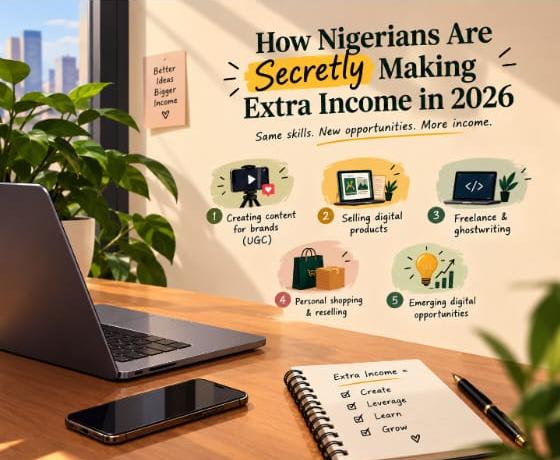
2. They're building multiple streams of income
There was a time when having a stable job felt like enough. One salary came in, bills were paid, food stayed in the kitchen, and life moved on.
That version of Nigeria now feels like historical fiction.
Today's reality has convinced many Nigerians that relying on a single income stream is a bit like sitting on a one-legged chair. Technically possible, but not something you'd want to bet your future on.
That's why side hustles have evolved from optional hobbies into financial backup generators. In fact, one of the most common questions among young professionals today isn't "What do you do?" It's "What else do you do?"
And honestly, the question makes sense.
For many households, side hustles are funding the basics: groceries, transport, school fees, data subscriptions, electricity bills, and the endless collection of expenses adulthood keeps unlocking like video game levels.
3. They're leaning more on community and family support
In Nigeria, "I dey manage" is rarely a solo project.
When times get tough, people often lean on something that's difficult to measure but incredibly valuable: their network of family, friends, neighbours, colleagues, and community groups.
During difficult economic periods, many people rely on support systems that extend beyond their immediate household. Family members contribute to school fees, friends support one another during emergencies, and community groups often provide financial assistance when needed.
Informal savings groups, cooperative societies, contribution schemes, and family networks continue to play an important role in helping people navigate financial challenges. While these systems are not perfect, they often provide a safety net when formal financial support is unavailable.
In tough economic periods, having people you can rely on can be just as valuable as having money in the bank.
4. They're adapting their lifestyle expectations
One unexpected effect of the economy is that it's forcing people to separate genuine financial success from social media success.
Many Nigerians are postponing major purchases, delaying relocation plans, keeping their phones longer, and becoming much more intentional about spending. The pressure to keep up appearances still exists, but reality has become a powerful financial adviser.
After all, looking wealthy and being financially stable are not always the same thing.
Increasingly, people are choosing peace of mind over performance. A healthy bank account may not attract as many likes as a luxury lifestyle, but it certainly helps people sleep better at night.
Many Nigerians have quietly moved things from the "I want it now" list to the "God willing, someday" folder.
5. They're investing in skills instead of waiting for the economy to improve
Instead of waiting for the economy to do them a favour, many Nigerians are betting on themselves. People are learning high-income skills, taking online courses, pursuing certifications, and developing expertise that can increase their earning potential.
The logic is hard to argue with: nobody can personally lower inflation, but people can increase their value in the job market. And in a tough economy, higher earning potential can make all the difference. From digital marketing and graphic design to software development, content creation, and project management, Nigerians are increasingly investing in skills that can provide access to better-paying jobs and international opportunities.
Nobody knows exactly what the economy will look like a few years from now, but most people agree on one thing: having valuable skills creates more options. And in a tough economy, options matter.
CONCLUSION
If this economy has taught Nigerians anything, it's that survival often requires reinvention.
People are earning differently, spending differently, planning differently, and in many cases, redefining what financial success looks like altogether.
Nobody is pretending it's easy. Every trip to the market, every utility bill, and every new expense is a reminder of how challenging things have become.
But Nigerians continue to adjust, adapt, and find ways to move forward.
And if there's one thing Nigerians have never lacked, it's the ability to find a way, even when the odds suggest otherwise.
Found this useful? Share it
Help friends, family and colleagues stay informed on Nigerian finance.
Keep reading
Related Topics


Conversation
Comments (0)
Sign in to join the conversation or like this post.

Hep
Hep contributes reporting and analysis for NaijUp, covering the stories, markets, and business trends shaping Nigeria.
8
Stories
613
Reads
0
Likes
0
Comments