
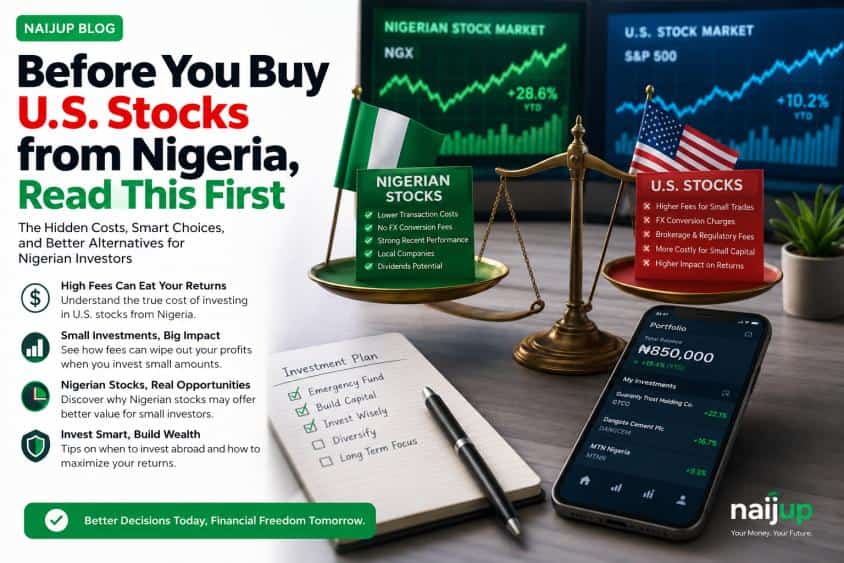
For many Nigerians, investing in U.S. stocks has become easier than ever. With just a smartphone, you can buy shares of companies like Apple, Microsoft, Nvidia, Tesla, Amazon and Google through several investment apps.
While investing in global companies is a great way to diversify your portfolio, many first-time investors make one costly mistake—they start with very little capital.
If you're investing from Nigeria, here's why you should think twice before putting small amounts of money into foreign stocks.
The Hidden Cost of Investing in U.S. Stocks
Unlike investing on the Nigerian Exchange (NGX), buying U.S. stocks from Nigeria often involves additional costs. Depending on the investment platform you use, these may include:
- Currency conversion (FX) charges
- Brokerage commissions
- Regulatory or exchange fees
- Withdrawal charges
- Deposit or transfer fees
- Platform service charges
While many modern brokers advertise commission-free trading, investors can still incur costs through foreign exchange spreads and other platform fees. For someone investing a small amount, these charges can significantly reduce potential returns.
Why Small Investments Can Lose Value
Imagine you have just $50 to invest.
You decide to spread your money across 10 different U.S. stocks, investing $5 in each company.
If your investment platform charges around $1 per transaction or the combined cost of fees and currency conversion works out to a similar amount, your costs can quickly add up.
Even if your portfolio grows by 10% after one year, a large portion of your profits could be wiped out by the costs of buying and eventually selling your investments.
The smaller your investment, the greater the percentage impact of these fees.
Diversification Isn't Always Free
Diversification is one of the best investing strategies because it reduces risk.
However, when your investment capital is very small, buying many different stocks may not always be the most cost-effective approach.
Instead of purchasing ten different companies with tiny amounts, some investors may be better off by:
Investing in fewer high-quality companies.Buying a broad-market ETF that provides instant diversification.Waiting until they have accumulated more capital before building a diversified international portfolio.
The goal is to ensure transaction costs do not consume a large portion of your investment.
Why Nigerian Stocks May Be a Better Starting Point
For many beginners, the Nigerian stock market offers a more practical starting point.
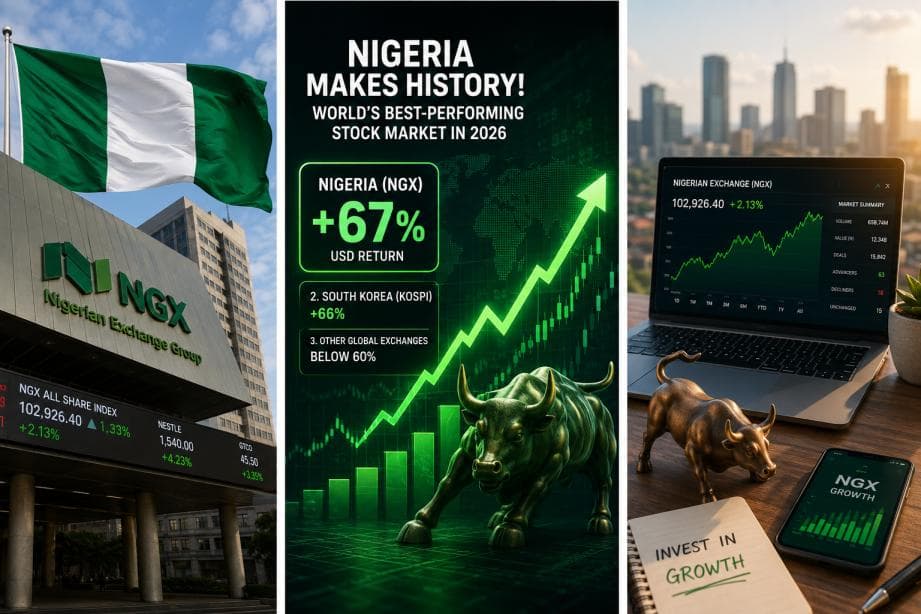
The Nigerian Exchange has produced impressive returns in recent years, ranking among the world's top-performing stock markets during certain periods.
In addition:
Transaction costs are generally lower.There are no foreign exchange conversion charges.Investors have access to leading Nigerian companies across banking, telecommunications, consumer goods, industrials and agriculture.Dividends from many Nigerian companies can provide attractive income for long-term investors.
For someone building wealth gradually, these advantages can make local investing more efficient.
Should You Wait Before Investing Abroad?
There is no magic number, but investing larger amounts generally helps reduce the percentage impact of transaction costs.
If you're investing only $20, $50 or $100, fees can eat into your returns depending on your platform.
Once your portfolio grows to $500 or more, those same costs usually represent a much smaller percentage of your investment, making international investing more efficient.
More importantly, always compare the fee structure of your chosen investment platform before investing.
Investing in U.S. stocks is an excellent long-term strategy, but it isn't always the best choice for Nigerians with very small amounts of capital.
Before buying foreign stocks, understand every fee involved—from brokerage costs to foreign exchange charges—and calculate how those costs affect your expected returns.
If you're just starting your investment journey, building wealth through quality Nigerian stocks may offer better value until your portfolio is large enough to make international diversification more cost-effective.
Remember, successful investing isn't about following trends. It's about making informed decisions, managing costs, staying diversified, and investing consistently over the long term.
Keep reading
Related Topics




Conversation
Comments (0)
Sign in to join the conversation or like this post.

Mujeeb Olagunju
I am a finance professional with a strong background in economics and financial technology.,My work centers on building systems that support payments, digital banking, and investment solutions in emerging markets.,I have experience with risk management, transaction monitoring, fraud prevention, and the design of scalable financial products tailored to both retail and institutional clients.,With over 8 years of industry experience, I combine financial insight with technical expertise to deliver solutions that balance compliance, security, and business growth.,My goal is to bridge the gap between finance and technology, creating platforms that expand access to modern financial services and strengthen trust in digital finance.
58
Stories
16719
Reads
0
Likes
0
Comments