
What the CBN’s ₦1.15 Trillion Treasury Bills Auction Really Means for Nigerians
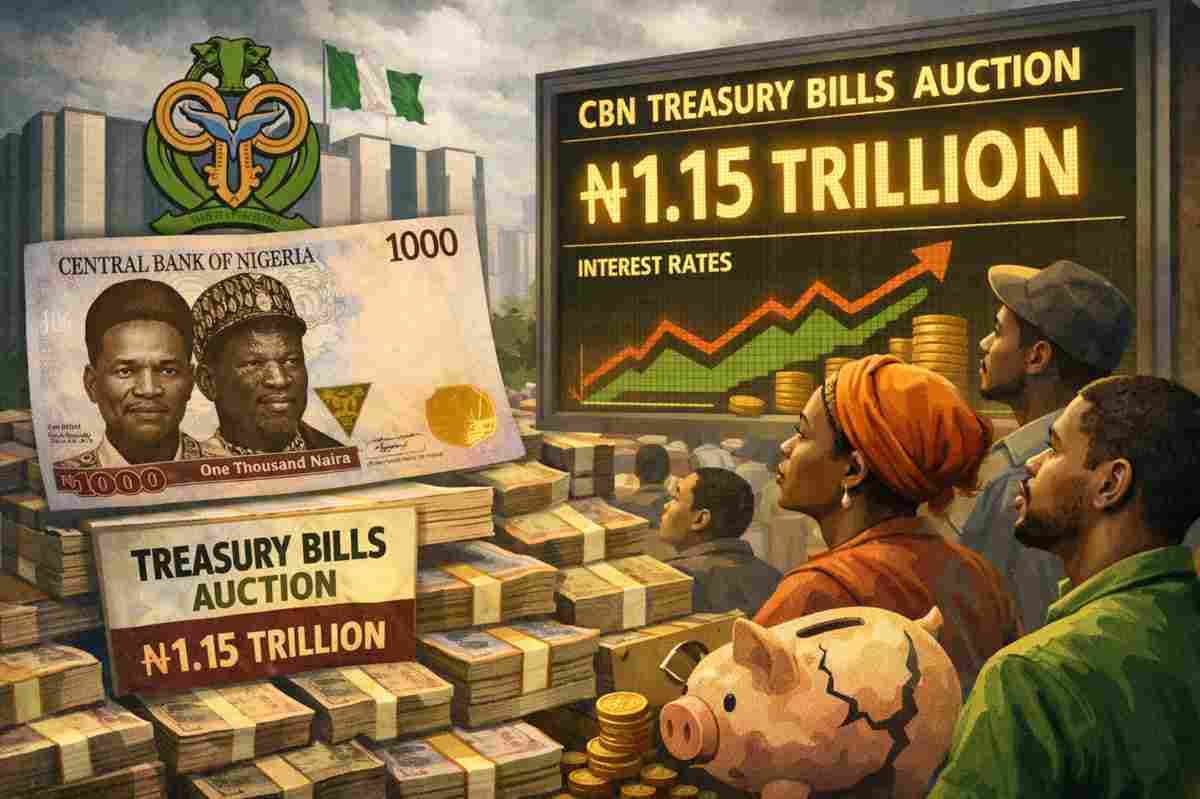
For many Nigerians, financial news often feels distant, filled with big numbers, complex terms, and decisions that seem to affect only banks and investors. But the truth is that actions taken by the Central Bank of Nigeria (CBN) quietly shape everyday life: how much interest your savings earn, how expensive loans become, and even how fast prices rise.
One such action is the CBN’s recent Treasury Bills auction, where the federal government raised a massive ₦1.15 trillion from investors. While this may sound like an event meant strictly for financial institutions, its impact goes far beyond boardrooms and trading floors. It influences household finances, business decisions, and the overall direction of the economy.
Understanding Treasury Bills
Treasury Bills, often called T-Bills, are short-term debt instruments issued by the federal government. When investors buy them, they are essentially lending money to the government for a fixed period. In return, the government promises to pay back the money with interest when the bill matures.
These instruments usually come in three durations: three months, six months, and one year. Because they are backed by the government, they are widely considered one of the safest places to keep money, especially during uncertain economic times.
For banks, pension funds, and large investors, Treasury Bills are tools for managing excess cash. For the government, they are a way to fund operations and manage liquidity in the economy.
Why the ₦1.15 Trillion Auction Matters
The scale of this particular auction is what made it significant. Offering over one trillion naira worth of Treasury Bills in a single exercise signals two things at once.
First, the government needs substantial funding in the short term. Second, the financial system currently has enough money circulating for investors to absorb such a large offer.
Interestingly, demand for the bills far exceeded the amount offered. Investors were willing to commit several times more than what the government planned to borrow. This strong appetite reveals confidence in government securities and shows where money is flowing in the current economic climate.
What Is Driving Investor Interest?
Several factors explain why investors rushed toward Treasury Bills.
One major reason is uncertainty. Inflation, currency movements, and policy changes have made riskier investments less attractive to many players. Treasury Bills offer a sense of safety and predictability, especially for institutions managing large sums.
Another factor is yield. Compared to traditional savings accounts, Treasury Bills often provide better returns. When interest rates in the broader economy remain high, government securities become even more attractive.
Liquidity also plays a role. Banks and institutional investors currently have significant cash on hand. Rather than letting that money sit idle, they prefer to place it in instruments that earn returns while preserving capital.
Why Longer Term Bills Are Gaining Attention
A noticeable trend in the auction was the strong demand for the one-year Treasury Bills. Investors showed a clear preference for locking in returns over a longer period instead of rolling over short-term placements.
This behavior suggests cautious optimism. Investors appear willing to commit funds for longer periods, but only at yields that compensate for inflation risks and policy uncertainty.
In simple terms, people are saying: “We’re willing to trust the system, but we want to be paid properly for it.
What This Means for Interest Rates
Treasury Bills play a key role in determining interest rates across the economy. When the government borrows heavily through these instruments, it can influence how much money is available for lending elsewhere.
If government borrowing absorbs a large share of available funds, banks may become more cautious about lending to businesses and individuals. This can push borrowing costs higher.
On the other hand, strong demand for Treasury Bills can sometimes help stabilize rates by providing the government with funding without excessive pressure on the financial system.
Either way, movements in Treasury Bill yields tend to ripple across savings rates, loan pricing, and investment decisions.
How This Affects Ordinary Nigerians
Even if you have never bought a Treasury Bill, this auction still matters to you.
Savings and Investments
Returns on Treasury Bills often set the benchmark for other low-risk investments. When yields are attractive, banks and investment platforms may adjust their offerings to remain competitive. However, many savings accounts still struggle to keep up with inflation, which means money can lose value over time if left idle.
Loans and Credit
Government borrowing influences how much banks are willing to lend. When banks prioritize safer government instruments, access to credit for businesses and individuals can tighten. This may result in higher interest rates on loans or stricter lending conditions.
Cost of Living
Monetary decisions tied to Treasury Bills also affect inflation and currency stability. These factors directly impact prices of food, transport, rent, and other essentials. In this way, a financial auction held behind closed doors can quietly shape everyday expenses.
What Oversubscription Tells Us About the Economy
The fact that investors demanded far more Treasury Bills than were available sends an important signal.
It shows confidence in government instruments at a time when uncertainty still lingers. It also suggests that many investors prefer predictable returns over riskier opportunities.
However, oversubscription can also indicate a lack of attractive alternatives. When investors crowd into Treasury Bills, it may reflect caution toward other parts of the economy, such as equities or private sector lending.
This dual message,confidence mixed with caution captures the current mood of Nigeria’s financial landscape.
Government Borrowing and the Bigger Picture
Treasury Bills are part of a broader strategy to manage government finances and control liquidity. While they provide short-term funding, heavy reliance on them raises questions about sustainability.
Frequent large auctions increase domestic debt and can crowd out private sector borrowing. Over time, this may slow business expansion and job creation if not carefully managed.
Balancing government funding needs with private sector growth remains one of the biggest economic challenges.
What Investors Are Watching Closely
Market participants are paying attention to several signals following this auction.
Inflation trends remain a major concern. If price pressures persist, investors will continue demanding higher yields to protect their money.
Policy direction is another key factor. Any shift in monetary stance could alter expectations and influence future auctions.
Finally, economic growth indicators will determine whether confidence expands beyond government securities into productive sectors of the economy.
Why This Moment Matters
This Treasury Bills auction is more than a routine financial exercise. It reflects how investors see Nigeria’s economy right now,cautious, defensive, but still engaged.
For individuals, it’s a reminder that where money flows at the top eventually shapes conditions at the bottom. Savings returns, borrowing costs, and economic opportunities are all connected to these decisions.
Understanding these connections helps Nigerians make better financial choices, even in uncertain times.
Final Thoughts
The CBN’s ₦1.15 trillion Treasury Bills auction highlights a familiar pattern: in times of uncertainty, money seeks safety. Investors are prioritizing preservation and predictable returns, while the government continues to rely on domestic borrowing to manage its finances.
For everyday Nigerians, the lesson is clear. Economic policies may seem abstract, but they influence daily realities,from how much savings grow to how expensive life becomes.
Staying informed is not just about following headlines. It’s about understanding how these financial moves quietly shape the economy we all live in.
Keep reading
Related Topics





Conversation
Comments (0)
Sign in to join the conversation or like this post.