
Treasury Bills or Fixed Deposits? What Nigerians Should Know Before Investing Their Money in 2026
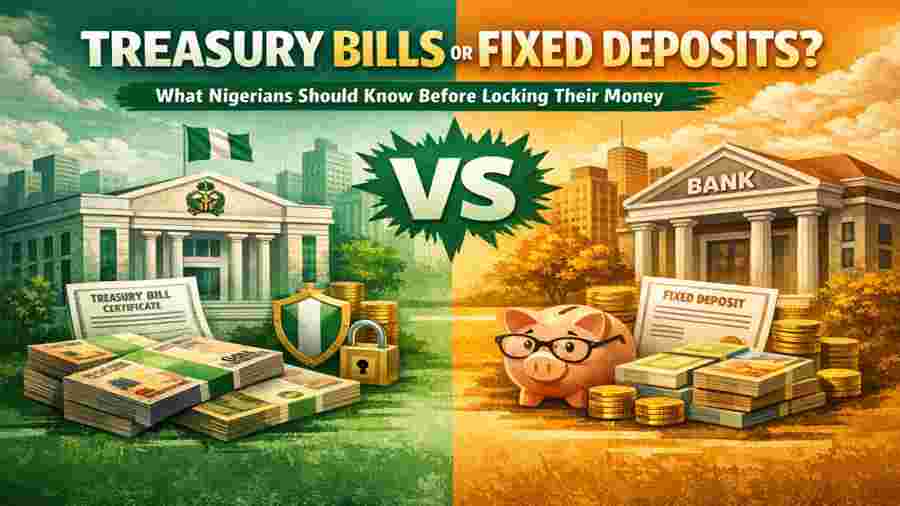
Many Nigerians are slowly coming to the same realization: leaving money idle in a normal bank account is no longer smart. Every month, banks deduct charges. At the same time, prices of food, transport, rent, and almost everything else keep going up. So even though your money is sitting quietly in the bank, it is actually losing value.
This is why more people are now asking better questions. Not everyone wants to trade crypto or jump into risky businesses. Some people simply want their money to work, even if slowly. They want returns. They want structure. They want to feel that their money is doing something, not just sleeping.
For many of these people, the first options they hear about are Treasury Bills and Fixed Deposits. Both are often described as “safe”. But safety alone is not enough for someone who is thinking like an investor. The real question becomes: “Which one makes more sense for my money”?
Why Keeping Money Idle Is No Longer an Option
A few years ago, keeping money in the bank felt okay. Today, it feels wasteful. Inflation keeps rising, and interest from savings accounts is almost nothing. After bank charges, many people are actually worse off than before.
People who think like investors understand something important: doing nothing with money is still a decision. And in Nigeria’s economy, it is often a bad one.
This does not mean everyone wants to take big risks. Many Nigerians just want to move from “idle money” to “working money”. That is where Treasury Bills and Fixed Deposits come in.
Treasury Bills Explained
Treasury Bills, also called T-bills, are simple at their core. You are lending your money to the Nigerian government for a short period. In return, the government pays you interest.
You do not receive the interest monthly. Instead, you buy the Treasury Bill at a discount and receive the full amount at maturity. The difference is your return.
For example, if you invest ₦1,000,000, you might pay slightly less today and receive the full ₦1,000,000 after a few months. That difference is your gain.
Treasury Bills usually come in three time frames: about three months, six months, or one year. Once your money is locked in, it stays there until maturity, unless you decide to sell it earlier.
From an investor’s point of view, Treasury Bills are attractive because they are backed by the federal government. This gives people confidence that their capital is safe, even if returns are not very high.
Fixed Deposits Explained
A Fixed Deposit is different but also straightforward. You give your money to a bank for a fixed period, and the bank promises to pay you interest at the end of that period.
During that time, you are not supposed to touch the money. The bank uses it for its business, and you earn a return for allowing them to do so.
Fixed Deposits can be for one month, three months, six months, or even longer. The interest rate depends on the bank, the amount you are depositing, and how long you are willing to lock the money.
What many people do not realize is that Fixed Deposits are not always “one-size-fits-all”. If you are investing a serious amount, banks are often willing to negotiate better rates.
Thinking Like an Investor Changes Everything
When someone sees Treasury Bills or Fixed Deposits as just “safe places to keep money”, they often miss important details. But when you think like an investor, your mindset changes.
You start asking questions like:
- How much will I really earn after everything?
- What happens if I need my money suddenly?
- Is my money growing faster than inflation?
- What am I giving up by locking this money here?
These questions help you avoid disappointment later.
Safety: What Investors Actually Care About
From an investor’s view, safety is not just about fear. It is about understanding where the risk truly is.
With Treasury Bills, the risk is tied to the government. Many Nigerians feel comfortable lending money to the government for short periods because default is unlikely.
With Fixed Deposits, the risk depends on the bank. Strong banks feel safer than smaller or struggling ones. While deposits are insured to some extent, investors still pay attention to where they are placing large sums.
Both options are considered low risk, but they are not identical. Investors know that spreading money across different places can reduce stress.
Returns: The Honest Truth
This is where many people get confused. Treasury Bills and Fixed Deposits will not make you rich. They are not designed for that.
However, they are still better than leaving money idle. Treasury Bill rates change based on government policy and economic conditions. Sometimes they are attractive, sometimes they are not.
Fixed Deposit rates vary from bank to bank. Smaller amounts usually earn less. Bigger amounts give room for negotiation.
An investor understands that the goal here is steady and predictable returns, not excitement.
Liquidity: Access to Your Money Matters
One thing investors think about deeply is access. Locking money away sounds fine until life happens.
Treasury Bills can be sold before maturity, but this usually requires going through a broker, and you may not get the full value.
Fixed Deposits are stricter. Many banks charge penalties for early withdrawal, and some may even cancel your interest entirely.
This is why experienced investors do not lock all their money at once. They plan carefully so that some funds remain accessible.
Inflation: The Silent Problem
Inflation is one of the biggest challenges in Nigeria. Even when your money earns interest, inflation can quietly reduce its real value.
Investors know that Treasury Bills and Fixed Deposits may not always beat inflation, but they still protect money better than ordinary savings accounts.
This is why these instruments are often used as part of a larger plan, not the whole plan.
When Treasury Bills Make More Sense
Treasury Bills often make sense when you want structure and government backing. They are useful when you want to invest money for a fixed period and do not want to negotiate with banks.
They are also helpful when you are waiting for better investment opportunities and need a temporary place to keep capital working.
When Fixed Deposits Make More Sense
Fixed Deposits can be attractive when banks are offering good rates and you have a solid relationship with them. They work well when you are confident you will not need the money before maturity.
For some investors, Fixed Deposits feel simpler and more familiar.
The Smarter Way to Decide
Instead of asking which one is better, smarter investors ask which one fits their situation right now.
Interest rates change. Inflation changes. Personal needs change. What worked last year may not work today.
Flexibility and awareness are more important than loyalty to any single option.
Final Thoughts
Treasury Bills and Fixed Deposits may look boring, but they serve an important purpose. They help Nigerians move from idle money to intentional investing.
They will not give dramatic growth, but they protect capital and provide calm, predictable returns. When used properly, they stop money from being eaten by charges and inflation.
The real difference is mindset. Once you start seeing these options as investment tools, not just savings tricks, you begin to use them more wisely.
Keep reading
Related Topics





Conversation
Comments (0)
Sign in to join the conversation or like this post.