

There's a particular kind of stress that comes with being a student in Africa right now. Tuition that keeps creeping up. Data that isn't cheap. Parents who mean well but can't always send extra. And then there's you, sitting with a laptop or just a phone, wondering if there's a way to actually make something happen without dropping out of school to do it.
Good news: there is. And it's not the "click here to make $500 a day" nonsense that used to flood our timelines. In 2026, the online money-making landscape for African students has matured. Real platforms, real clients, real payments landing in real mobile money wallets. A recent study tracking over 4,000 students across 55 tertiary institutions in Nigeria alone found that two-thirds of them are already earning some kind of income while in school, and researchers estimate the campus gig economy there could be worth close to $300 million a year.
So let's talk about how students across the continent, from Lagos to Nairobi to Johannesburg to Dar es Salaam, are actually pulling this off.
Why now is different
Ten years ago, "make money online" mostly meant scams targeting people desperate enough to believe them. The infrastructure just wasn't there. Data was expensive, payment platforms didn't talk to each other, and most of the paying opportunities online were built with someone in London or New York in mind, not a 300-level student in Enugu or a first-year in Kano.
That shifted, and it shifted fast. Internet penetration across Africa is climbing quickly; mobile money has matured into something reliable, and platforms now actively design for African users, with payouts through M-Pesa, Flutterwave, and similar rails instead of assuming everyone has a US bank account. A young person with a decent smartphone today genuinely has access to the same global client base as someone sitting in a co-working space in New York. The tools are the same. The money is real, and it moves.
1. Freelancing: still the most reliable entry point
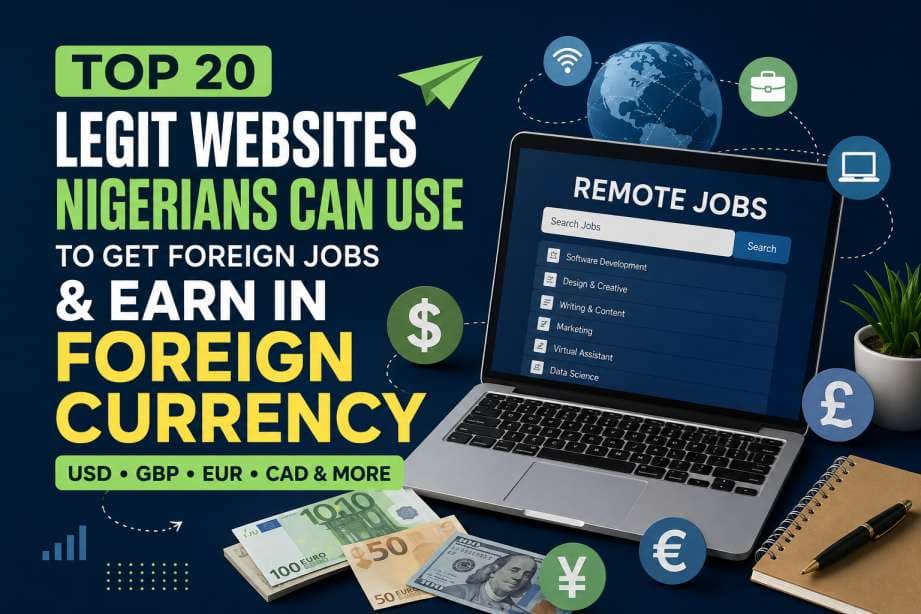
If you have a skill; writing, graphic design, video editing, social media management, virtual assistance, freelancing remains the sturdiest way in. Platforms like Fiverr and Upwork connect you directly to clients who don't care what country you're logging in from, only whether you deliver.
Video editing in particular has exploded. Every YouTuber, TikToker, and small brand needs someone who can cut clips fast and make them look good, and CapCut or DaVinci Resolve is often all you need to start. Same story with voice-over work for podcasts and graphic design for social media. Canva alone has turned a lot of design-curious students into paid designers.
The realistic pay range for beginners sits somewhere between $5 and $100 per task, depending on the platform and how polished your portfolio is. It won't replace a salary overnight, but it compounds; the student who started with $10 gigs a year ago is often charging five times that now, purely from consistency and reviews stacking up.
2. Teaching what you already know
If you're strong in a subject: English, math, coding, or even a local language, there's a market for that knowledge. Platforms like Preply and iTalki connect tutors to students worldwide, and English tutoring specifically pays well for students with strong spoken English, often $10 to $30 an hour.
There's also a growing niche in teaching African languages; Yoruba, Hausa, Swahili, Amharic to an international audience of learners, researchers, and diaspora kids trying to reconnect with their roots. It's a smaller market than English tutoring, but there's far less competition in it too.
3. Selling digital products (the quiet millionaire-maker)
This is the one people sleep on, and it shouldn't be slept on. E-books, templates, online courses, and printables: you build them once and sell them repeatedly, with no inventory and almost no ongoing cost.
A $3 ebook selling 20 copies a month is $60 passively. A $25 mini-course selling 10 copies a month is $250. Stack a few of these products together and you've got a real income stream running quietly in the background while you're in lectures. Selar has become a favorite here because it pays out through mobile money, which solves the payment headache that used to kill this option for a lot of African creators. Gumroad works well too if you're targeting an international audience.
The students doing well here usually pick one specific problem to solve, like CV templates for job seekers, a study guide for a notoriously hard course, or a social media template pack for small business owners, rather than trying to be everything to everyone.

4. The AI-adjacent hustles (and the hype to ignore)
AI has opened up a genuinely new category of income, but it's worth being honest about what's real and what's noise.
What's overhyped: selling "prompt packs" as a standalone business. It was a real niche around 2023 to 2025, but as AI models have gotten better at understanding plain language, the market for cleverly worded prompts has thinned out. If someone's pitching you a course on becoming a full-time "prompt engineer" earning six figures from prompts alone, be skeptical.
What's actually working: using AI as leverage on a skill you already have, not as the skill itself. Students are building simple no-code chatbots for small businesses, helping a local SME automate customer questions or bookings. Others are producing AI-assisted content (blog posts, product descriptions, and social captions) faster and at a higher volume than before, which lets them take on more clients. It's not glamorous, but it's flexible, requires no special equipment, and pays per task.
Google's Hustle Academy, a free training program aimed at African students and young entrepreneurs, has leaned into this space too, offering certificates in things like data analytics and IT support alongside AI fundamentals, which is worth checking out if you want structured learning rather than figuring it all out from YouTube.
5. Hyper-local online businesses
Not everything has to be global. Some of the most consistent earners are students running small, local operations through Instagram or WhatsApp, a thrift store reselling second-hand clothes from local markets, a food delivery hustle for other students on campus, or a small accessories business. The barrier to entry is low, the customer base is right there, and word-of-mouth through fellow students does a lot of the marketing for you.
Team up with a student influencer on campus, keep delivery cheap and fast, and post consistently; that's most of the playbook.
A word on risk
Not every online opportunity is created equal, and it's worth saying plainly: skills-based work, like writing, design, tutoring, and virtual assistance, is generally safe and builds something real over time. Things like copy trading, crypto speculation, or "investment" schemes carry real financial risk, and anything promising guaranteed high returns for little effort is a red flag, full stop. Before committing time or money to any platform, check that it's legitimate, ask around, and be patient.
Start small, start now
None of this requires you to be a tech genius or to quit school. It requires picking one thing, one skill, one platform, one small offer, and actually starting, even messily.
That's really the whole secret. The internet doesn't care about your CGPA or which university you're at. It rewards people who show up, deliver, and keep going. Pick your lane, and start today.
Keep reading
Related Topics




Conversation
Comments (0)
Sign in to join the conversation or like this post.

Elizabeth Ayoola
Elizabeth is a finance analyst and writer passionate about making financial markets accessible to everyday readers.
She has a deep interest in global markets, crypto, and everything shaping the financial world. She writes to simplify complex financial topics, turning them into practical, accessible insights for everyday readers.
102
Stories
31719
Reads
1
Likes
0
Comments