
Good Debt vs Bad Debt: The Difference That Can Shape Your Financial Future
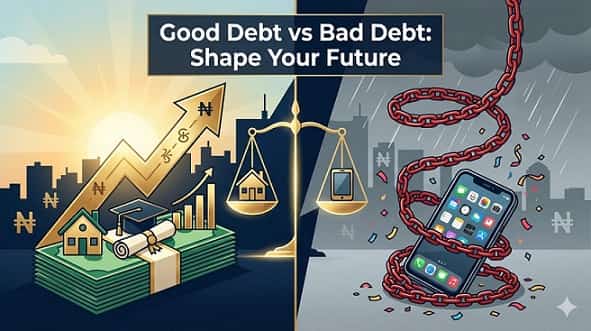
Debt has a terrible reputation. The moment people hear the word, they think of financial stress, loan apps, high interest rates, endless repayments, and sleepless nights.
According to Nigeria’s credit reporting industry, the number of Nigerians using digital lending platforms has risen sharply in recent years, showing just how easy borrowing has become.
But here’s the truth: not all debt is bad.
Some types of debt can help you build wealth, increase your income, and secure your future. Others quietly drain your money and trap you in financial cycles.
Understanding good debt versus bad debt empowers smarter financial decisions and helps you avoid unnecessary financial pressure.
In this article, we’ll break down the difference between good debt and bad debt, with practical examples to help you borrow smarter.
What is Good Debt?
Good debt is money borrowed to improve your long-term financial situation, typically for assets that appreciate or boost earning potential. In simple terms, it’s an investment in your future.
These debts often carry lower interest rates and provide benefits that outweigh the cost of borrowing.
Key Characteristics of Good Debt
1. It helps you earn more money
Borrowing to start or expand a business, or to gain valuable skills, can increase your income over time. It supports education, skill development, or business growth that can generate higher earnings in the long run.
2. It involves assets that may appreciate
It is used to acquire appreciating assets such as property or land, which may increase in value over time and provide long-term financial benefits.
3. It has manageable interest rates
Good debt typically comes with manageable interest rates and reasonable repayment terms.
However, even good debt can turn bad if it becomes unaffordable or poorly managed.
Examples of Good Debt
1. Educational loans
Education can open doors to better job opportunities and higher earning potential. Borrowing to gain valuable skills or qualifications can pay off over time if it leads to better income.
2. Business loans
Taking a loan to start or expand a business can be a strategic move. If the business grows and generates profit, the loan essentially becomes an investment in your future and you generate more income in the long run.
3. Real estate investment loans
Property often appreciates over time. Buying land or a home in a developing area can increase in value and improve long-term financial stability.
Example: Tolu is tired of paying rent in Abuja, so she takes a ₦7 million mortgage to buy a two-bedroom apartment in a developing area like Lokogoma.
Instead of paying ₦2–₦3 million in annual rent, she channels the money into mortgage payments while building ownership of the property.
What is Bad Debt?
Bad debt is borrowing money for things that lose value quickly or do not improve your financial future and often becomes difficult to repay.
It usually comes with high interest rates, short repayment periods, and little or no long-term return.
Bad debt often feels convenient in the moment/in the short run but becomes stressful later.
Instead of helping you grow financially, bad debt drains your income.
With the rise of loan apps and buy-now-pay-later services, taking on debt has become easier than ever. Unfortunately, that convenience can also lead people into financial traps.
Common Characteristics of Bad Debt
• High interest rates
• No long-term financial benefit.
• Fast depreciation of what you purchased.
• Difficult repayment terms
Examples of Bad Debt
1. Borrowing to buy expensive gadgets
Phones and electronics lose value quickly. Taking a high-interest loan to buy the latest device can leave you paying far more than the item is worth.
Example: Seyi borrows ₦400,000 from a loan app to buy a new phone. After interest, fees, and penalties, he could end up paying close to ₦500,000–₦600,000, while the phone’s value drops quickly.
2. Payday loans for daily expenses
Many people use short-term loans to cover groceries or bills before payday. These “hold you till salary” loans often come with extremely high interest rates and fees.
Example: Kunle borrows ₦30,000 to survive until salary day. After fees, he must repay ₦37,000 within two weeks. When salary comes, most of it goes into repayment, forcing him to borrow again.
That’s how debt cycles start.
3. Loans for parties or luxury spending
Borrowing money to fund weddings, birthdays, vacations, or luxury spending may feel good temporarily, but it rarely creates lasting financial value.
The difference between Good Debt and Bad Debt
The biggest difference between good and bad debt is its impact on your financial future.
Good debt helps increase your income, assets, or opportunities.
Bad debt reduces your financial flexibility and often creates financial pressure.
A simple way to think about it:
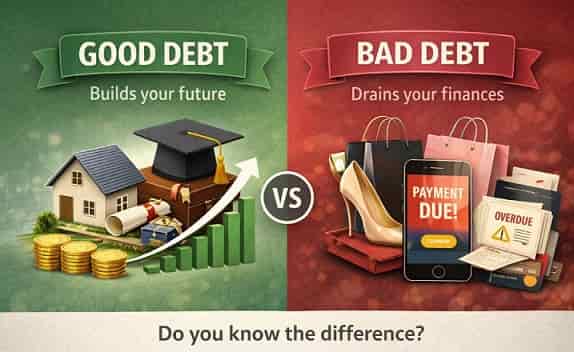
Good debt builds your future.
Bad debt borrows from it.
Questions to ask before taking a loan
Before accepting any loan offer, pause and ask yourself a few important questions:
• Can I comfortably afford the repayment?
If repayment will strain your budget, it’s a warning sign.
• Will this loan improve my financial future?
If it improves your income potential or builds an asset, it may be worth considering.
• Is the repayment timeline realistic?
Short repayment deadlines can trap you in repeated borrowing.
• What is the interest rate? Is it reasonable?
High interest can turn a small loan into a major burden.
• What happens if I miss a payment?
Understand penalties, fees, and credit score implications.
How to avoid falling into a debt trap
With the rise of digital lending platforms and increasing living costs, borrowing money has never been easier. Unfortunately, this convenience can also lead people into debt traps if borrowing is not handled carefully.
1. Avoid loan stacking: Taking one loan to pay another only increases the total debt and delays the problem.
2. Always read loan terms carefully: Always check interest rates, repayment schedules and deadlines, penalties, and hidden fees before accepting any loan.
3. Create a repayment plan first: Before borrowing, make sure your repayment fits comfortably into your monthly budget.
4. Borrow only what you need: Just because you qualify for a large loan doesn’t mean you should take it.
5. Monitor your credit score: Your credit history affects the types of loans and interest rates available to you.
6. Build an emergency fund: Saving even small amounts regularly can prevent you from needing loans for unexpected expenses.
A Grey Area: Debt that can go either way
Some debt sits somewhere between good and bad, in the middle.
For example:
• Car loans
• Buy Now, Pay Later (BNPL) plans
• Personal loans
These can be useful if they are affordable and purposeful, but harmful if they stretch your finances.
The difference always comes down to how and why the debt is used.
Final Thoughts
Debt is a normal part of modern financial life. What matters is how you use it.
The key is learning when debt is working for you, and when it’s working against you.
Used wisely, debt can help you build assets, grow a business, gain education, or invest in property.
Used carelessly, it can quietly limit your financial freedom.
The goal isn’t to avoid debt completely, it’s to use it strategically. Because the right kind of debt can move you forward, while the wrong kind quietly pulls you backward.
Keep reading
Related Topics



Conversation
Comments (0)
Sign in to join the conversation or like this post.