
How to Raise Funding for a Startup in Nigeria: Practical Strategies That Works
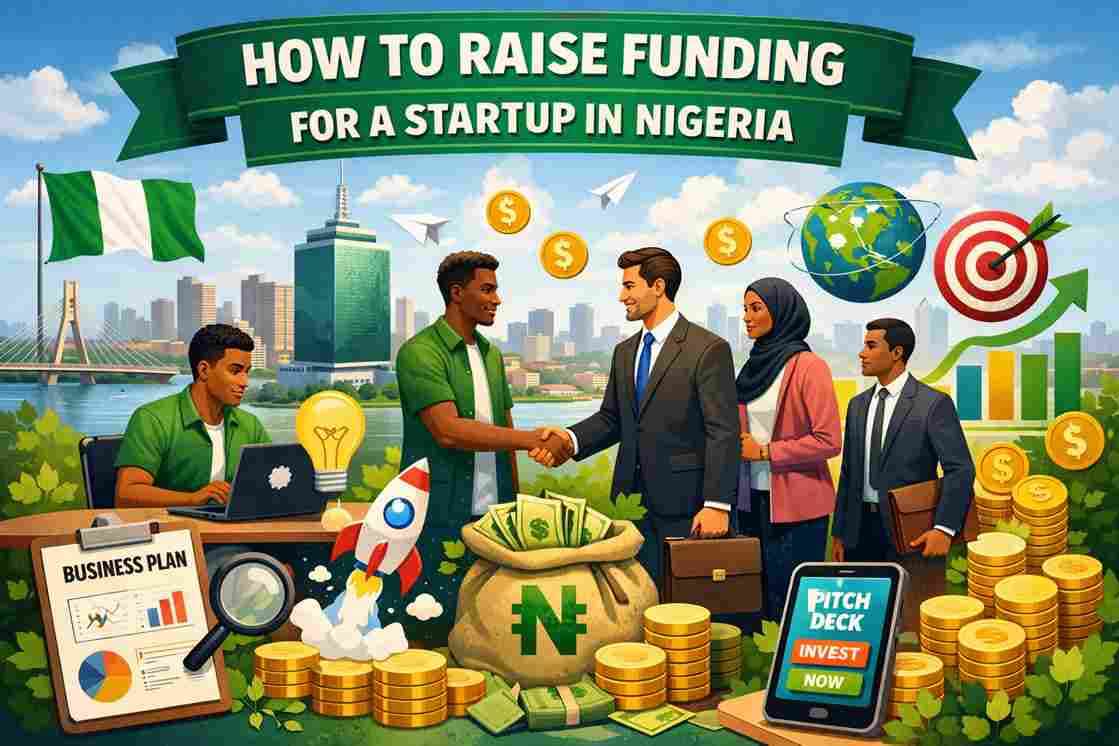
Raising funding for a startup in Nigeria is one of the biggest hurdles founders face,and if we’re being honest, it’s where many good ideas die. Not because the ideas are bad, but because the founders either don’t know where to look, what investors really want, or how to position themselves.
As of 2026, the funding landscape in Nigeria has changed. Investors are more cautious. “Easy money” is no longer flying around like it did a few years ago. But here’s the truth: funding is still available,just not for everyone, and definitely not without strategy.
Start With This Truth: Funding Is Not the First Step
A lot of founders get this wrong. They believe the first thing to do after getting an idea is to start looking for investors. That’s a mistake.
Investors in Nigeria today are not funding ideas,they’re funding proof. Before you even think about raising money, you need to answer one simple question:
“Can this business survive without external funding?” If the answer is no, you’re already in a weak position.
Most successful Nigerian startups started small. They tested their ideas, got their first customers, and proved demand before ever pitching to investors. Whether you’re running a food delivery brand, a fintech idea, or a service-based business, your first focus should be traction. Even if it’s small.
Bootstrapping: The Funding Strategy Most People Ignore
Bootstrapping simply means starting your business with your own money,or money from people close to you. It might not sound exciting, but in Nigeria today, it’s one of the smartest ways to start.
Why? Because it forces you to be disciplined. You spend wisely. You focus on what brings in money quickly. And most importantly, you build something real.
Let’s say you want to start a fashion brand. Instead of waiting for a ₦5 million investor, you can start with pre-orders. Post your designs, collect orders, and use that money to produce. That’s funding,just not the traditional type.
Many founders overlook this because they’re chasing “big funding,” but the reality is this: Investors take you more seriously when you’ve already invested in yourself.
Friends, Family, and Your Immediate Network
This is usually the next step after bootstrapping.
In Nigeria, your first investors are often people who already know you,friends, family, colleagues, or even mentors. These are people who trust you more than your idea.
But here’s where many people get it wrong: they treat it casually.
If someone is giving you money, even if it’s your uncle or your friend, treat it like a proper investment. Be clear about:
• How much you need
• What the money will be used for
• When they can expect returns (if any)
You don’t need complicated legal documents at this stage, but clarity builds trust. And trust opens more doors later.
Grants in Nigeria: Free Money, But Not Easy Money
Grants are one of the most attractive funding options because you don’t have to pay the money back.But they are competitive.
As of 2026, there are still several active grant opportunities for Nigerian startups, especially in sectors like tech, agriculture, climate, and social impact. Programs from organizations like the Tony Elumelu Foundation and government-backed initiatives like the Bank of Industry remain relevant.
However, applying for grants is not about luck,it’s about positioning.
Your application needs to clearly show:
• The problem you’re solving
• Why your solution matters
• Evidence that people actually need it
• How you plan to use the funds
Most people rush applications or copy generic answers. That rarely works. The founders who win grants usually take time to tell a clear, compelling story backed by real data.
Angel Investors: Funding From Individuals Who Believe Early
Angel investors are individuals who invest their personal money into startups, usually at an early stage.
In Nigeria, angel investing is growing, but it’s still relationship-driven. You don’t just “apply” to an angel investor,you often get introduced.
These investors are not just looking for ideas. They’re looking at you as a founder.
They ask questions like:
• Can this person execute?
• Are they consistent?
• Do they understand their market?
Communities like Lagos Angel Network and platforms like Future Africa have become key players in this space.
But here’s what many founders don’t realize:
Before angels invest money, they invest attention.
If you can get someone experienced to consistently advise you, guide you, or even check in on your progress, you’re already on the right path.
Venture Capital: The Big Money Everyone Talks About
This is where most founders want to get to,venture capital (VC).
Firms like Flutterwave and Paystack became successful partly because of VC funding, so it’s easy to think that’s the goal for every startup. But VC is not for everyone.
In 2026, VCs in Nigeria and across Africa have become more selective. They are focusing on startups that show:
• Strong growth
• Scalable business models
• Clear revenue potential
• Solid teams
If your business cannot grow rapidly or expand beyond one location, VC might not be the right path.And that’s okay.
One mistake many founders make is chasing VC funding when their business model doesn’t require it. Not every business needs millions of naira to succeed.
Accelerators and Incubators: Funding Plus Guidance
If you’re still early in your journey, accelerators can be a great option.
Programs like Y Combinator and local initiatives like CcHub offer a mix of funding, mentorship, and access to networks.
What makes accelerators powerful is not just the money,it’s the structure.
They help you refine your business model, improve your pitch, and connect with investors. For many Nigerian founders, this is the bridge between “idea stage” and “investable startup.”
But again, entry is competitive. You need to show potential, not perfection.
Crowdfunding: Still Growing in Nigeria
Crowdfunding which is raising small amounts of money from many people,is still developing in Nigeria, but it’s becoming more relevant.
This works especially well if:
• You have a strong personal brand
• Your product is easy to understand
• People can emotionally connect with your story
For example, creative projects, food brands, and social impact startups tend to perform better here.
Platforms may not be as widespread locally, but social media itself has become a form of crowdfunding. People raise money directly through their audience every day.
What Investors Actually Look For (This Is Where Most People Fail)
Let’s simplify this.Investors are not just looking for “good ideas.” They are looking for reduced risk.
That’s it.And you reduce risk by showing:
• People want what you’re building
• You can deliver it
• There’s a way to make money
If you say, “I have an app idea,” that’s not enough.
If you say, “I’ve tested this with 200 users, and 50 are already paying,” now you have attention.Numbers don’t have to be huge,but they must be real.
Common Mistakes Nigerian Founders Make When Raising Funds
1. One major mistake is focusing too much on the pitch and not enough on the business. A perfect pitch deck cannot save a weak business.
2. Another mistake is overvaluing the startup. Some founders ask for unrealistic amounts for very little traction. That immediately turns investors away.
3. There’s also the issue of impatience. Funding takes time. Rejections are normal. Many founders give up too early or jump from one idea to another without building anything solid.
And then there’s the mindset problem,thinking funding is the goal.It’s not.
Building a sustainable business is the goal. Funding is just a tool.
A More Realistic Way to Think About Funding in 2026
If you’re building a startup in Nigeria today, here’s a more grounded approach:
Start small. Test your idea. Make your first money. Reinvest it. Grow gradually. Then, when you have proof, look for external funding to scale,not to survive.
This approach may feel slower, but it’s more sustainable.
The Nigerian market rewards businesses that understand their customers, manage costs, and adapt quickly. Investors know this too, which is why they’re backing founders who show resilience, not just ambition.
Final Thoughts: Focus on Value First
If there’s one thing to take away from this, it’s this: Funding follows value.
When you build something people genuinely need, when you show consistency, and when you prove that your business can work,even at a small scale,funding becomes easier.Not automatic, but easier.
So instead of asking, “Where can I find investors?” a better question is: “What can I build that investors would want to fund?”
Answer that well, and you won’t just raise money,you’ll build something that lasts.
If you found this helpful, share it with someone building a startup in Nigeria. You never know who needs this clarity right now.
Keep reading
Related Topics


Conversation
Comments (0)
Sign in to join the conversation or like this post.