
Why Credit Culture in Nigeria Is Still Evolving: Key Barriers and Opportunities
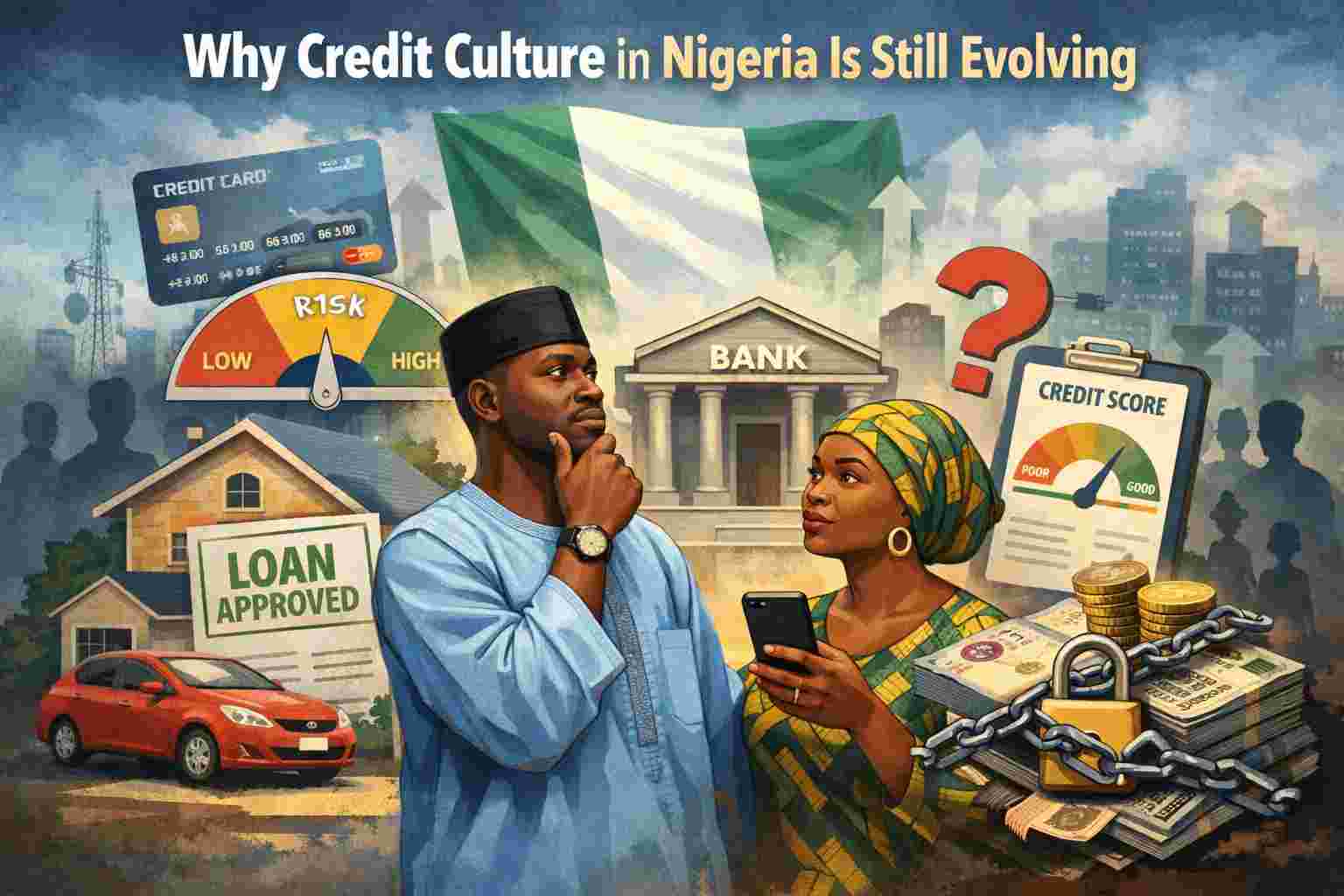
In many parts of the world, credit is a normal part of everyday life. People use it to buy homes, grow businesses, pay for education, and manage short-term financial needs. In Nigeria, however, credit is still not widely trusted or properly used. Many people avoid it completely, while others only interact with it through urgent, short-term loan apps.
So, why is credit culture in Nigeria still not growing?
The answer is not simple. It is a mix of history, trust issues, economic realities, and how Nigerians have learned to relate with money over time. To truly understand the situation, we need to look beyond just “people don’t like loans” and examine the deeper reasons.
What Credit Culture Really Means
Before going further, it’s important to understand what “credit culture” actually is.
Credit culture is not just about borrowing money. It is about how a society views, uses, and manages borrowed money. In a healthy credit culture:
• People can access loans easily when needed
• Borrowers understand how to repay responsibly
• Lenders trust that they will get their money back
• Credit is used as a tool for growth, not survival
In Nigeria, this system is still weak. Most people either avoid credit completely or misuse it due to lack of proper understanding.
The Trust Problem: Nigerians Don’t Trust the System
One of the biggest reasons credit culture is not growing is lack of trust.
Many Nigerians simply do not trust financial institutions. Over the years, there have been stories of hidden charges, unclear terms, and aggressive recovery methods. Some people have had bad experiences with loan apps that embarrassed them by messaging their contacts or adding unexpected fees.
Because of this, people prefer to stay away from anything that looks like debt.
On the other side, lenders also do not trust borrowers. Many financial institutions assume that if they give out loans, there is a high chance the borrower will default. This leads to:
• High interest rates
• Strict requirements
• Limited access to credit
So, both sides are operating from fear. And when trust is low, growth becomes difficult.
The “Debt Is Bad” Mindset
Another major issue is how Nigerians view debt.
For many people, borrowing money is seen as a sign of failure. You may have heard statements like:
• “Don’t owe anybody”
• “Cut your coat according to your size”
• “Debt will put you in trouble”
While these ideas come from a place of caution, they have also shaped a mindset where all debt is seen as bad.
The problem is that not all debt is harmful. There is a difference between:
• Borrowing to survive (e.g., feeding, paying bills)
• Borrowing to grow (e.g., starting or expanding a business)
In countries with strong credit systems, people understand this difference. In Nigeria, many do not. As a result, even useful credit opportunities are ignored.
Low and Unstable Income Levels
Let’s be realistic,many Nigerians are not earning enough to comfortably repay loans.
When income is unstable, taking a loan becomes risky. If someone is not sure what they will earn next month, how can they confidently commit to repayment?
This creates a cycle:
• People avoid loans because of income uncertainty
• Lenders increase interest rates to cover risk
• Higher interest rates discourage more people
In the end, credit becomes something only a small group of people can access safely.
Poor Financial Education
Another major factor is lack of financial literacy.
Many Nigerians were never taught how credit works. Things like:
• Interest rates
• Credit scores
• Loan terms
• Repayment structures
are not commonly understood.
Because of this, people make decisions based on fear or incomplete information.
For example, someone might take a loan without fully understanding the repayment terms, then struggle to pay back. After that experience, they conclude that “loans are bad” instead of realizing the issue was lack of knowledge.
Without proper education, credit becomes dangerous instead of helpful.
The Rise of Loan Apps (And Their Impact)
In recent years, loan apps have become very popular in Nigeria. They offer quick money with little or no documentation. For many people, this is their first experience with credit.
While this has increased access, it has also created problems.
Some loan apps:
• Charge very high interest rates
• Use aggressive recovery tactics
• Lack transparency
As a result, many Nigerians now associate credit with stress, embarrassment, and pressure.
Instead of building trust in the system, these experiences have damaged it further.
Weak Credit Infrastructure
In countries where credit culture is strong, there are systems that track and support borrowing behavior. One key example is a credit score.
A credit score helps lenders know:
• Who is trustworthy
• Who pays back on time
• Who is risky
In Nigeria, this system is still developing. While there are credit bureaus, many people are not aware of them, and their usage is not widespread.
Because of this:
• Good borrowers are not properly rewarded
• Bad borrowers are not easily identified
This makes lending more difficult and less efficient.
Cultural Preference for Cash
Nigeria is still largely a cash-driven society.
Many people prefer:
• Paying upfront
• Avoiding long-term financial commitments
• Staying within immediate means
This mindset is not entirely wrong. It promotes caution. However, it also limits opportunities.
Credit, when used properly, allows people to:
• Invest earlier
• Grow faster
• Handle emergencies better
But when people avoid it completely, they may miss out on these benefits.
Fear of Embarrassment and Social Pressure
In Nigeria, reputation matters a lot.
Stories of loan defaulters being embarrassed,especially by some digital lenders,have made people more cautious. Nobody wants:
• Their contacts to be called
• Their reputation damaged
• Their personal issues exposed
Even the fear of this happening is enough to stop many people from considering credit.
So, What Needs to Change?
For credit culture in Nigeria to grow, several things need to improve.
First, there needs to be more transparency from lenders. People need to clearly understand what they are signing up for. No hidden charges, no confusing terms.
Second, financial education must improve. Nigerians need to learn how credit works, not just avoid it completely.
Third, there must be better regulation of loan providers. When bad practices are reduced, trust can gradually return.
Finally, income stability plays a big role. As more people earn consistently, they will be more confident in using credit responsibly.
A Shift in Mindset
Perhaps the most important change is mindset.
Credit should not be seen as something to fear completely. Instead, it should be seen as a tool,one that can either help or harm, depending on how it is used.
When used wisely, credit can:
• Help businesses grow
• Support important life decisions
• Provide financial flexibility
But when misunderstood, it can lead to stress and debt traps.
Final Thoughts
Credit culture in Nigeria is not growing because of a combination of trust issues, low income levels, poor financial education, and negative experiences with lenders.
It is not just about access to loans,it is about how people understand and use them.
For things to improve, both individuals and institutions have a role to play. Nigerians need to become more financially informed, while lenders must become more transparent and trustworthy.
Until that balance is achieved, credit will remain underused, misunderstood, and, in many cases, avoided.
But with the right changes, it has the potential to become a powerful tool for growth,not just for individuals, but for the entire economy.
What do you think about credit in Nigeria? Would you consider using it, or do you prefer to avoid it completely?
Keep reading
Related Topics






Conversation
Comments (0)
Sign in to join the conversation or like this post.