
Nigeria’s Bond Market Boom: Why Investors Are Pouring Money into Government Debt
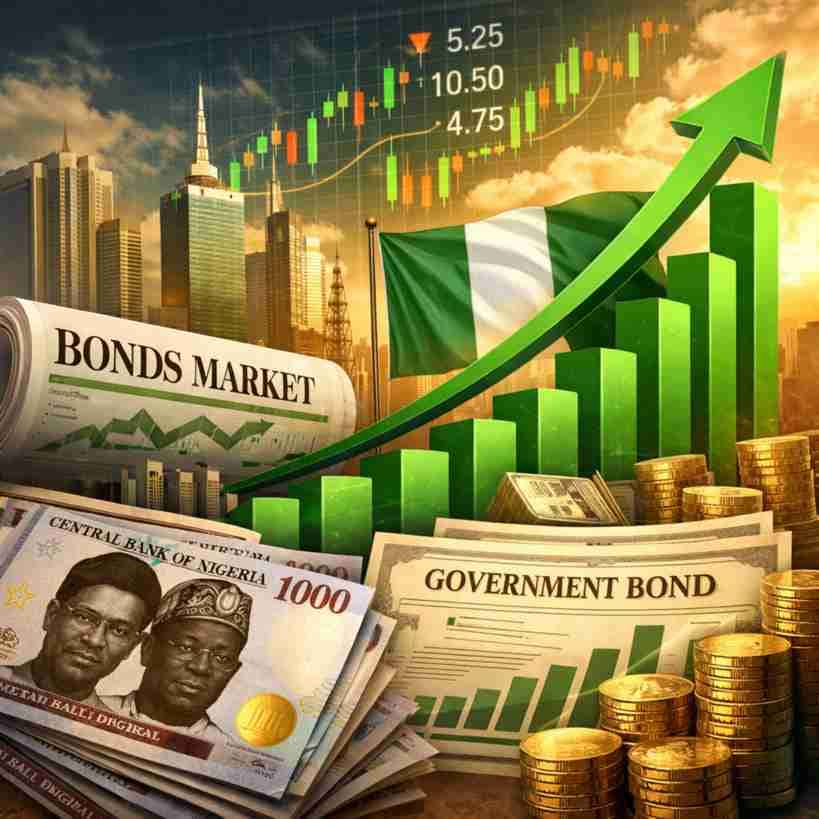
In 2026, Nigeria’s bond market has become a focal point for investors, reflecting broader changes in the country’s economic and financial environment. While many parts of the economy are still adjusting to reforms, one area has been attracting strong attention from investors government bonds.
Both local and foreign investors are increasingly putting money into Nigerian government debt. For many people, this raises an important question: why would investors choose to lend money to the government instead of investing in businesses or other assets?
The answer lies in a mix of high returns, policy changes, and a shift in how Nigeria’s financial system is being managed.
To understand what is happening, it helps to first understand what government bonds are and why they matter.
What Government Bonds Really Are
Government bonds are simply loans given to the government by investors.
When the Nigerian government needs money to fund projects such as infrastructure, healthcare, or education, it can raise funds by issuing bonds. Investors who buy these bonds are essentially lending money to the government for a fixed period of time.
In return, the government agrees to pay interest regularly and repay the full amount at the end of the bond’s term.
In Nigeria, these bonds are issued through the Debt Management Office Nigeria, which is responsible for managing the country’s public debt.
For investors, government bonds are often seen as one of the safer investment options because they are backed by the government. While no investment is completely risk-free, government debt is generally considered more stable than many private investments.
Why Nigeria’s Bond Market Is Getting Attention
In 2026, Nigeria’s bond market has been experiencing a surge in investor interest. One of the main reasons is the level of returns available.
Government bonds in Nigeria have been offering relatively high yields compared to many developed markets. In some cases, yields have approached or even exceeded 18 to 20 percent.
For global investors, this is significant. In countries like the United States or parts of Europe, government bond yields are much lower. This difference makes Nigeria attractive to investors looking for higher returns.
But high returns alone do not explain everything. Investors also pay attention to policy direction and economic signals.
Recent reforms in Nigeria’s financial system, especially in the foreign exchange market have improved investor confidence. When investors believe they can move their money in and out of a country more easily, they are more willing to invest.
The Role of Foreign Investors
Foreign investors play a major role in Nigeria’s bond market.
These investors include global asset managers, hedge funds, and institutional investors who allocate money across different countries in search of returns.
In the past, many of these investors were cautious about Nigeria because of concerns around foreign exchange access and currency stability. If an investor earns returns in naira but cannot easily convert that money back into dollars, it creates risk.
However, recent reforms aimed at improving transparency and liquidity in the foreign exchange market have started to change this perception.
As confidence improves, more foreign investors are returning to Nigeria’s financial markets, particularly the bond market where yields are attractive.
This inflow of foreign capital helps increase demand for government bonds, which can further strengthen the market.
Why Local Investors Are Also Participating
It is not only foreign investors who are interested in government bonds. Local investors are also increasing their participation.
Pension funds, insurance companies, and asset managers in Nigeria often invest heavily in government securities. These institutions are responsible for managing long-term funds, and they tend to prefer stable and predictable investments.
Government bonds provide regular interest payments and relatively lower risk compared to other assets, making them suitable for long-term portfolios.
For individual investors, bonds can also serve as a way to preserve capital while earning steady returns.
At a time when inflation and economic uncertainty are concerns, many investors see government bonds as a safer place to keep their money.
The Impact of Interest Rates
Another major factor driving the bond market boom is interest rates.
The Central Bank of Nigeria plays a key role in setting monetary policy, including interest rates. In recent times, Nigeria has experienced high interest rates as part of efforts to control inflation.
When interest rates are high, newly issued government bonds tend to offer higher yields. This makes them more attractive to investors.
Even when the central bank begins to adjust rates, the expectation of stable or gradually changing policy can still support investor confidence.
In simple terms, higher interest rates often mean better returns for bond investors, which increases demand.
What This Means for the Nigerian Government
The strong demand for government bonds has important implications for Nigeria’s economy.
On one hand, it allows the government to raise funds more easily. This can support spending on infrastructure, social programs, and economic development.
On the other hand, borrowing comes with responsibilities. The government must repay these loans with interest, which contributes to the country’s overall debt burden.
Managing this balance is important. While access to funding is beneficial, excessive borrowing can create long-term challenges if not handled carefully.
This is why institutions like the Debt Management Office play a crucial role in ensuring that borrowing remains sustainable.
How the Bond Market Affects the Economy
The bond market does not exist in isolation. It is closely connected to other parts of the economy.
When investors pour money into government bonds, it can influence interest rates across the financial system. Banks, businesses, and consumers may all feel the effects.
For example, if government bonds offer very high returns, banks and other lenders may also raise interest rates on loans. This can make borrowing more expensive for businesses and individuals.
At the same time, a strong bond market can attract foreign capital, which helps increase foreign exchange inflows into the country.
This can support the value of the naira and improve overall economic stability.
The Risks Investors Consider
Although government bonds are generally considered safer than many other investments, they are not without risk.
One key risk is inflation. If inflation rises faster than the interest earned on bonds, the real value of returns may decline.
Currency risk is another important factor, especially for foreign investors. If the naira weakens significantly, it can reduce the value of returns when converted to foreign currency.
There is also the broader issue of economic stability. Investors closely monitor government policies, fiscal discipline, and economic performance when deciding where to allocate their funds.
Despite these risks, many investors still view Nigerian bonds as attractive because of the balance between risk and return.
What This Means for Everyday Nigerians
For ordinary Nigerians, the bond market may seem distant, but its effects are felt in everyday life.
Government borrowing influences how much is available for public spending. It can affect infrastructure development, social services, and economic programs.
Interest rates influenced by bond market activity can also affect loans, mortgages, and savings.
In addition, some investment platforms now allow individuals to invest in government securities with relatively small amounts, making the bond market more accessible than before.
This means that everyday Nigerians can also participate in this part of the financial system if they choose to.
A Market Shaped by Reforms
Nigeria’s bond market boom is not happening by accident. It is the result of policy decisions, economic reforms, and changing investor perceptions.
Efforts to improve transparency in the financial system, stabilize the foreign exchange market, and manage monetary policy have all contributed to the current situation.
While challenges remain, the direction of these reforms is shaping how investors view Nigeria as an investment destination.
Final Thoughts
The growing interest in Nigeria’s bond market reflects a broader shift in the country’s financial landscape.
Investors, both local and international, are responding to a combination of high yields, policy changes, and improving confidence in the system.
For the government, this provides an opportunity to access funding for development. For investors, it offers a chance to earn returns in a market that is evolving.
Like any financial trend, the bond market boom comes with both opportunities and risks. But one thing is clear: government debt is becoming a central part of Nigeria’s investment story in 2026.
Understanding how it works can help investors, businesses, and even everyday Nigerians make better financial decisions in a rapidly changing economic environment.
Keep reading
Related Topics





Conversation
Comments (0)
Sign in to join the conversation or like this post.