
From Towers to Space: Airtel Africa and SpaceX’s Plan to End Mobile Dead Zones

Airtel Africa is officially taking mobile connectivity off the ground, literally.
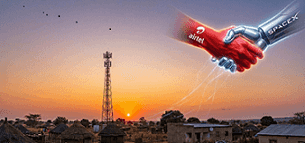
The telecom giant has signed a strategic partnership with SpaceX to roll out Starlink’s Direct-to-Cell satellite service across its 14 African markets, including Nigeria. The move positions Airtel Africa as the first mobile network operator on the continent to deploy the technology.
The service is expected to go live in 2026, subject to regulatory approvals in each operating country.
What’s Changing: How the Service Will Roll Out
Under the agreement, Airtel customers with compatible smartphones will be able to connect directly to Starlink satellites in areas with little or no terrestrial mobile coverage, no cell towers required.
Direct-to-Cell essentially turns satellites into space-based cell towers, allowing standard 4G LTE smartphones to send text messages, access limited data, and eventually support voice and broadband services, as long as there is a clear view of the sky.
The rollout will begin with text messaging and data services for select applications, before expanding to high-speed broadband powered by Starlink’s next-generation satellites. Airtel says the upgraded system could deliver up to 20 times faster data speeds than earlier satellite-to-mobile solutions, while working with existing 4G-enabled devices, no hardware changes required.
Why It Matters
For a continent where network coverage still drops off sharply outside urban centres, this is a big deal.
For Airtel Africa’s 174 million customers, particularly those in rural and hard-to-reach regions, the partnership could significantly improve access to mobile connectivity and essential digital services.
The initiative is designed to complement existing terrestrial networks, not replace them, extending coverage to locations where deploying traditional infrastructure is either too costly or physically challenging.
In short: fewer dead zones, wider coverage, and better access to essential digital services.
What Airtel and Starlink Are Saying
Airtel Africa’s Managing Director and CEO, Sunil Taldar, said the collaboration aligns with the company’s goal of delivering reliable and continuous connectivity across its markets.
“Starlink’s Direct-to-Cell technology complements terrestrial infrastructure and even reaches areas where deploying terrestrial network solutions is challenging. We are very excited about this collaboration, which will establish a new standard for service availability across all our 14 markets.”
On Starlink’s side, Stephanie Bednarek, Vice President of Sales, highlighted the potential impact on underserved communities.
“For the first time, people across Africa will stay connected in remote areas where terrestrial coverage cannot reach. Through this agreement with Airtel Africa, we’ll also deliver next-generation technology to offer high-speed broadband connectivity and improve access to essential services.”
First of Its Kind in Africa
This deal makes Airtel Africa the first mobile network operator in Africa to deploy Starlink Direct-to-Cell services at scale.
The service is powered by a constellation of more than 650 low-Earth-orbit satellites, currently the largest satellite-to-mobile network globally.
Globally, the technology is already live in select markets:
- In the United States, commercial service operates through T-Mobile, enabling text messaging and emergency alerts via satellite.
- In Ukraine, Kyivstar has launched the service with SMS, with plans to expand into voice and data, making it the first European country to offer satellite-to-phone connectivity for standard 4G users.
The Bigger Picture
Beyond faster speeds and wider coverage, the Airtel–Starlink partnership is ultimately about closing Africa’s digital divide, extending mobile access to communities that have long existed beyond the reach of traditional networks.
Airtel Africa already offers Starlink’s fixed broadband internet services in nine markets with regulatory approval, including Kenya, Zambia, Rwanda, Niger, Chad, and the Democratic Republic of Congo. This new agreement extends Direct-to-Cell mobile connectivity across all 14 Airtel Africa markets, with licences still pending in some countries.
As satellite-to-phone connectivity scales, Airtel and SpaceX are positioning themselves directly against rivals such as AST SpaceMobile, which has partnered with Vodafone and Vodacom across parts of the continent.
For Airtel, the objective is clear: push connectivity into places where towers are impractical, expensive, or simply impossible to deploy. And for Nigeria and the rest of Airtel Africa’s footprint, 2026 could mark the moment when “no network” quietly stops being an excuse.
Satellite-to-phone technology may not replace terrestrial networks anytime soon but one thing is increasingly obvious: Africa’s mobile future won’t stay firmly on the ground. Space is officially in the telecoms game, and Airtel just grabbed a front-row seat.
Keep reading
Related Topics






Conversation
Comments (0)
Sign in to join the conversation or like this post.