
CBN’s New Visa & Mastercard Policy: What It Means for Tourists, Nigerians Abroad, and Local Banks
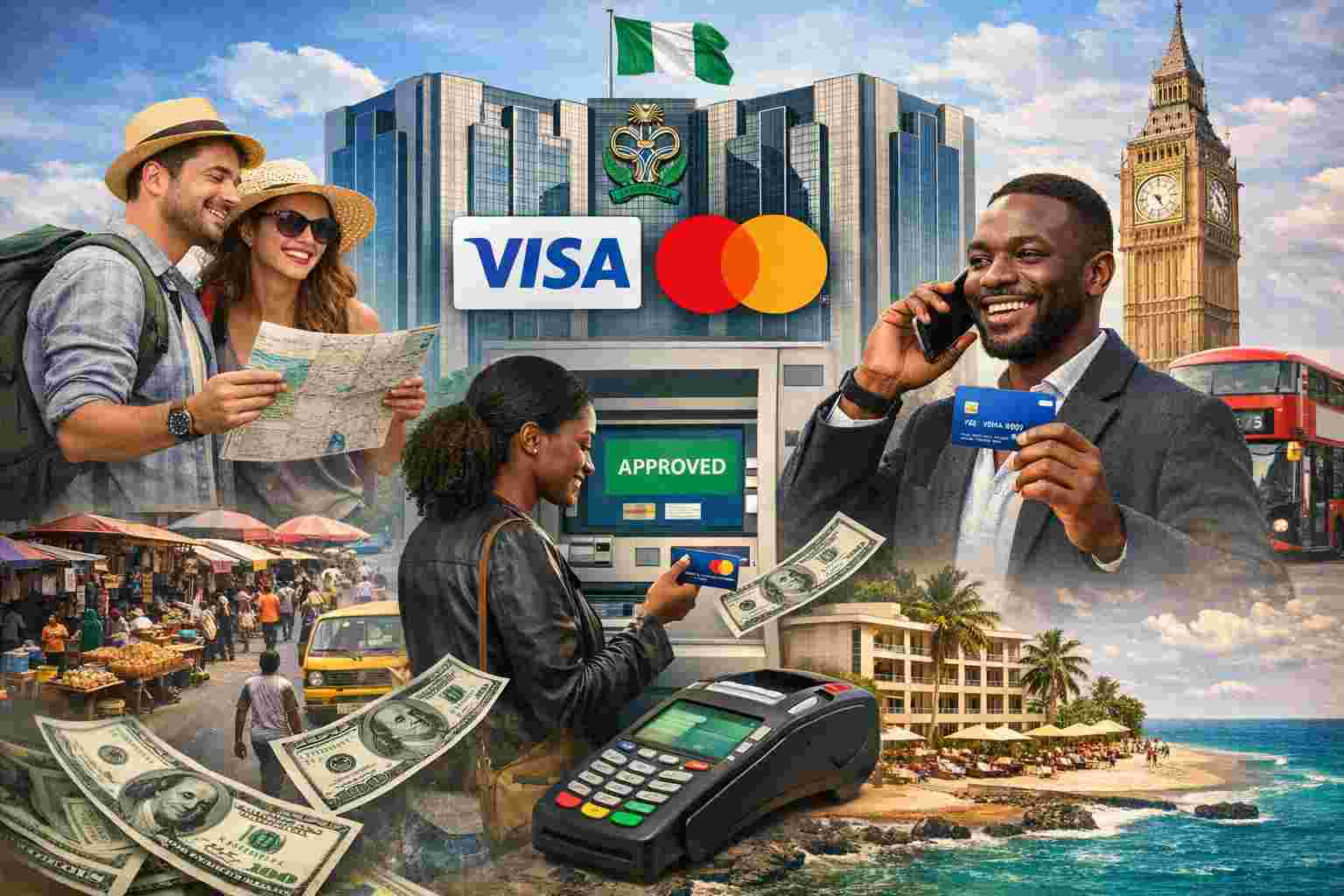
Nigeria’s banking scene just got a big update. The Central Bank of Nigeria (CBN) recently announced a policy change that allows Visa and Mastercard holders to use ATMs and point-of-sale (POS) machines without interruption. For tourists, Nigerians living abroad, and local banks, this is a game-changer. But what does it really mean for everyday life and the economy? Let’s break it down.
The Policy in Focus: What’s Changing?
For a while now, international cards haven’t always worked smoothly in Nigeria. Tourists and Nigerians abroad often struggled to withdraw cash or pay for goods using Visa or Mastercard. This meant relying on cash, third-party apps, or other workaround, which could be stressful and expensive.
The CBN’s new directive changes all that. Foreign cards can now work seamlessly at ATMs and POS terminals, just like local cards. This doesn’t remove normal banking fees, but it does make life a lot easier for anyone using a foreign card in Nigeria. It’s a small step with a big impact for convenience, trust, and confidence in the financial system.
A Boost for Tourism
Tourism in Nigeria has often been slowed down by simple practical issues,like not being able to pay with a card. For visitors, access to money is crucial. With the new policy, travelers can now pay for hotels, restaurants, and shopping trips without worrying about being blocked.
This convenience isn’t just about comfort; it’s also about spending. When tourists can pay easily, local businesses benefit. Shops, hotels, and eateries may see more spending, which is a welcome boost for Nigeria’s hospitality and retail sectors. Analysts predict this could encourage more international visitors and make Nigeria a more tourist-friendly destination.
A Lifeline for Nigerians Abroad
For Nigerians living outside the country, managing money back home has never been simple. Remittances are a key source of support for millions of families. Previously, sending money could be slow, costly, or risky.
Now, Nigerians abroad can use their Visa and Mastercard to withdraw cash or pay directly at POS terminals without interruption. This reduces dependence on informal channels and makes it safer and easier for families to access funds. It’s also a way to encourage more formal remittance channels, which benefits the entire banking system.
What This Means for Local Banks
Local banks have a lot to gain,but also some work to do. With foreign cards working smoothly, transaction volumes are likely to increase, meaning higher revenue from service fees.
However, banks will need to strengthen their security systems and ensure their ATMs and POS machines can handle more international transactions. Some banks may also use this as an opportunity to roll out new products for diaspora Nigerians and international customers, creating a more modern and competitive banking experience.
Opportunities for Retail and Hospitality Businesses
Restaurants, hotels, shops, and other businesses will likely notice an immediate difference. Tourists and Nigerians abroad can now spend without worrying about cash or card failures.
For smaller businesses, this could reduce the risks associated with cash transactions,like theft or counting errors,and create a smoother experience for customers. Over time, this may also encourage wider adoption of POS systems, pushing Nigeria further toward a digital payment culture.
Strengthening Nigeria’s Financial Image
This policy is about more than convenience,it also sends a strong message internationally. By allowing foreign cards to work reliably, Nigeria signals that it is modernizing and ready to play on the global stage.
Countries that are easy to do business in financially tend to attract more visitors and investors. This move shows that Nigeria is serious about creating a trustworthy and predictable financial environment, which can only help its reputation abroad.
Remaining Challenges
Of course, not everything is perfect. Some rural or semi-urban areas still have limited ATM and POS infrastructure. Connectivity issues or power outages can disrupt services.
Banks and businesses will also need to educate users about fees, transaction limits, and security. Visitors may still need guidance on using their cards safely and efficiently. And for the policy to truly succeed, it must be enforced consistently,any sudden changes could harm confidence.
Technology: The Key to Smooth Adoption
Technology will play a huge role in making this policy work well. Banks and fintechs need to ensure POS machines and ATM networks are secure, fast, and reliable.
Mobile banking apps, contactless payments, and digital wallets can make the experience even smoother, especially for tourists or diaspora Nigerians. The better the technology, the more seamless the experience,and the happier the users.
What This Means for Nigeria’s Economy
In the bigger picture, the policy is a step toward integrating Nigeria more fully into the global financial system. Tourism, remittances, retail, and banking all stand to benefit.
Banks may see more revenue and new opportunities for innovation. Businesses could attract more customers and enjoy more reliable cash flow. For Nigerians abroad and tourists, it means convenience, security, and peace of mind.
This move is not just about Visa or Mastercard,it’s about building trust, modernizing infrastructure, and creating a financial environment where everyone can transact confidently.
Looking Ahead: A Step Toward Seamless Financial Integration
The CBN’s new policy may seem small, but it carries big implications. Tourists, Nigerians abroad, local banks, and businesses all stand to gain.
If implemented consistently, with upgraded infrastructure and proper user education, this policy could make daily transactions much easier, strengthen the economy, and improve Nigeria’s global image.
At the end of the day, uninterrupted access to Visa and Mastercard is more than convenience,it’s a sign that Nigeria is ready to modernize, grow, and make financial life easier for everyone, at home and abroad.
Keep reading
Related Topics






Conversation
Comments (0)
Sign in to join the conversation or like this post.