
CBN’s Banking Reforms: What Recapitalisation Means for Nigeria’s Economy and Ordinary Citizens
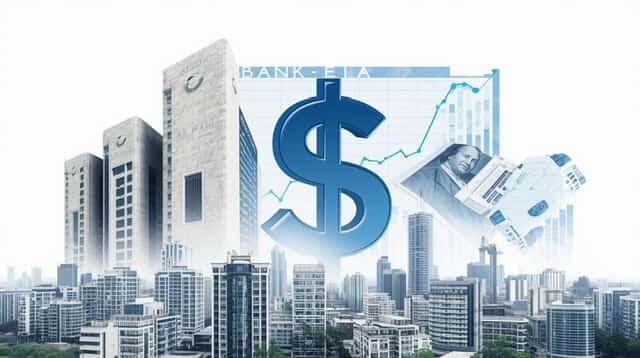
Nigeria’s banking sector is once again at a major turning point. In recent months, the Central Bank of Nigeria (CBN) announced a fresh bank recapitalisation exercise, asking banks to significantly increase their capital base. This decision has sparked intense conversations across financial circles, business communities, and even among everyday Nigerians who may not fully understand what recapitalisation means,but will definitely feel its effects.
From big banks rushing to raise funds, to smaller banks struggling to survive, and customers wondering how this will affect their savings, loans, and businesses, one question keeps coming up: who really benefits from this recapitalisation drive, and who stands to lose?
What Is Bank Recapitalisation?
Bank recapitalisation simply means forcing banks to have more money of their own before they are allowed to operate fully. This money is called capital. It acts as a cushion that protects customers’ deposits and helps banks absorb losses during tough economic times.
When the CBN asks banks to recapitalise, it is saying, “You must be financially stronger before you continue doing business.” Banks can raise this money by getting new investors, selling shares, merging with other banks, or retaining profits instead of paying dividends.
Nigeria has gone through this process before, most notably in 2004 - 2005, when the number of banks reduced drastically after many weak banks failed or merged. The current recapitalisation push feels familiar, but the economic situation today is very different.
Why the CBN Is Pushing Recapitalisation Now
The timing of this recapitalisation is not accidental. Nigeria’s economy has been under serious pressure. Inflation remains high, the naira has gone through heavy devaluation, interest rates are elevated, and businesses are struggling with rising costs.
Banks are directly affected by all these issues. When businesses fail or individuals can’t repay loans, banks carry the risk. The CBN believes that many banks are not strong enough to absorb future economic shocks if conditions get worse.
Another major reason is Nigeria’s ambition to attract foreign investors. International investors want to deal with strong, stable banks. Weak banks scare away capital. By forcing banks to recapitalise, the CBN hopes to restore confidence in Nigeria’s financial system.
There is also the issue of global banking standards. Nigerian banks are being encouraged to compete internationally, finance big infrastructure projects, and support economic growth. Without enough capital, they simply cannot do this safely.
Who Benefits the Most from Bank Recapitalisation?
At first glance, recapitalisation sounds like bad news, but some groups stand to benefit significantly from it.
1.Big Banks Are the Clear Winners
Large banks with strong balance sheets are the biggest winners. These banks already have access to investors, both locally and internationally. Raising fresh capital is easier for them because investors trust their management and business models.
In fact, recapitalisation often helps big banks increase their dominance. As smaller banks struggle or merge, large banks gain more customers, bigger market share, and stronger influence in the financial system.
2.Foreign Investors and Institutional Investors Benefit
Recapitalisation creates opportunities for foreign investors to buy into Nigerian banks at strategic moments. For investors with long-term vision, this is a chance to enter Nigeria’s banking sector at relatively attractive valuations.
Institutional investors like pension funds also benefit because stronger banks mean safer investments and reduced systemic risk.
3.The Financial System Gains Stability
A stronger banking system benefits the entire economy in the long run. When banks are well-capitalised, they are more resilient during crises. This reduces the chances of bank failures, panic withdrawals, and government bailouts funded by taxpayers’ money.
4.Large Corporations and Government Projects Benefit
Well-capitalised banks can finance big projects such as infrastructure, oil and gas operations, manufacturing plants, and telecom expansions. This supports economic growth and job creation at scale.
Who Loses in the Recapitalisation Process?
While recapitalisation brings stability, it also creates clear losers.
1.Small and Weak Banks Face the Biggest Risk
Smaller banks with weak finances may struggle to meet new capital requirements. Some may be forced to merge, be acquired, or shut down entirely. For these banks, recapitalisation is not an opportunity,it is a survival test.
In many cases, these banks serve niche markets, SMEs, and informal businesses. If they disappear, access to credit for small businesses may reduce in the short term.
2.Shareholders May Feel the Pressure
Existing shareholders can also lose. When banks raise new capital by issuing more shares, it often leads to dilution. This means existing shareholders own a smaller percentage of the bank than before. Share prices can also fluctuate due to uncertainty.
3.SMEs and Retail Borrowers May Suffer Temporarily
During recapitalisation, banks often become cautious. Lending may slow down as banks focus on strengthening their balance sheets. This can make it harder for small businesses and individuals to get loans in the short term.
Higher interest rates may also persist as banks try to protect their profits and manage risk.
4.Bank Workers Are Not Immune
In past recapitalisation exercises, job losses followed. Mergers and restructuring often lead to staff redundancies as banks try to cut costs and streamline operations. This is one of the hidden human costs of recapitalisation.
What This Means for Everyday Nigerians
For the average Nigerian, recapitalisation may sound like something that only concerns bankers and investors, but its effects will trickle down.
On the positive side, stronger banks mean safer deposits. Nigerians are less likely to wake up to news of banks collapsing or accounts being frozen. Confidence in the banking system improves over time.
However, in the short term, loans may become harder to access, especially for small businesses and individuals without strong credit history. Banks may tighten their requirements and become more selective about who they lend to.
Customers may also notice changes in bank fees, service charges, or digital banking offerings as banks try to improve profitability and efficiency.
Impact on Nigeria’s Economy
Bank recapitalisation is closely linked to economic growth. Strong banks are essential for a healthy economy. They fund businesses, support trade, manage savings, and enable investments.
If done properly, this recapitalisation drive can position Nigerian banks to support key sectors like manufacturing, agriculture, energy, and technology. It can also help Nigeria better absorb external shocks such as global financial crises or oil price fluctuations.
However, if the process is rushed or poorly managed, it could reduce credit availability and slow down economic activity in the short term. This is why transparency and proper regulation are crucial.
Lessons from Nigeria’s Past Recapitalisation
Nigeria has been here before. The 2004 - 2005 recapitalisation exercise reduced the number of banks significantly but also created stronger institutions that dominated the sector for years.
While the process improved stability, it also showed that consolidation alone is not enough. Strong governance, good risk management, and effective regulation are equally important. Without these, even well-capitalised banks can fail.
The current exercise offers another chance to get things right,learning from past mistakes while adapting to today’s economic realities.
What to Watch Going Forward
As the recapitalisation process continues, Nigerians should pay attention to a few key developments. Bank mergers and acquisitions will increase. Some familiar bank names may disappear or combine.
Capital market activities will also rise, with banks issuing new shares or seeking foreign investments. This could impact the stock market positively or negatively, depending on investor confidence.
Most importantly, regulators must ensure that banks do not pass all the costs of recapitalisation to customers through excessive charges or reduced services.
Finally!
Nigeria’s bank recapitalisation drive is not just a financial policy,it is a major economic event that will shape the country’s banking sector for years to come. While big banks and investors may benefit the most, smaller banks, SMEs, and workers face real challenges.
For everyday Nigerians, the promise is a safer and more stable banking system, even if the short-term effects include tighter credit conditions. The real success of this recapitalisation will depend on how well it is managed, how transparent the process remains, and whether it truly strengthens the financial system without hurting economic growth.
One thing is clear: recapitalisation is not just about numbers on balance sheets. It is about trust, confidence, and the future of Nigeria’s economy.
Keep reading
Related Topics





Conversation
Comments (0)
Sign in to join the conversation or like this post.