
CBN Interest Rate Cut in 2026: What It Means for Borrowing, Inflation, and Investment
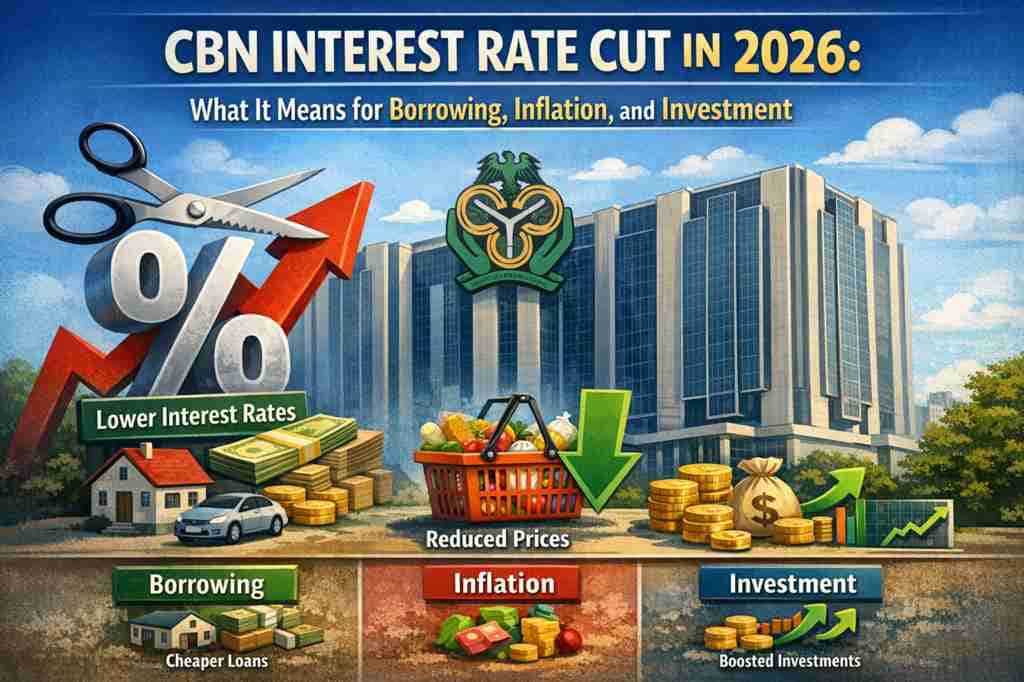
The Central Bank of Nigeria (CBN) has just reduced the monetary policy rate to 26.5% in 2026, a move that could have a big impact on everyday life.
For most Nigerians, numbers like this can feel abstract, almost like something happening in a financial textbook rather than in our daily lives. But the truth is, this move touches everything,from how much you pay on a loan to the way businesses make decisions, and even how your savings grow.
Understanding the Interest Rate Cut
When the CBN cuts interest rates, what it’s essentially doing is lowering the cost of borrowing money. Think of interest rates as the price of money. If rates are high, borrowing is expensive; if they’re low, borrowing becomes cheaper.
In this case, the CBN’s decision to lower rates to 26.5% signals a deliberate shift in monetary policy. The bank is trying to encourage spending and investment in the economy by making loans more accessible. This is especially relevant in a country like Nigeria, where access to affordable credit has often been a challenge.
But why now? Usually, central banks cut rates when they want to stimulate growth. It’s their way of saying: “Businesses, now’s a good time to expand. Consumers, now’s a good time to spend.”
Essentially, the CBN is nudging the economy to pick up speed.
How It Affects Borrowing
For anyone who has ever taken a personal loan, bought a car on credit, or even considered a mortgage, this interest rate cut has a direct impact. Cheaper loans mean lower monthly repayments. Imagine you wanted to borrow money to start a small business or renovate your home. With a high interest rate, a significant portion of your repayment goes just to paying interest, leaving less for your actual project. With lower rates, more of your money can go to the real purpose of the loan.
Businesses also benefit. Small and medium-sized enterprises (SMEs) often struggle to access affordable financing. With borrowing costs coming down, these businesses can invest in new equipment, hire more staff, or expand operations. Over time, this can help drive job creation and economic growth, which touches everyone indirectly whether through more job opportunities or better access to goods and services.
However, it’s important to remember that the rates are still relatively high by global standards. Even at 26.5%, borrowing is not “cheap” in the way it might be in countries with single-digit rates. So while this cut is positive, it doesn’t make loans free of risk or burden.
Impact on Inflation
One of the biggest questions on people’s minds is how this interest rate cut affects inflation. Inflation, in simple terms, is the rate at which prices for goods and services rise. When rates go down, people and businesses tend to borrow and spend more, which can increase demand for goods. If supply doesn’t match demand, prices rise.
So, in theory, cutting interest rates could make inflation worse. But in practice, it’s more nuanced. Nigeria’s economy has a mix of supply-side issues,things like fuel prices, agricultural output, and foreign exchange availability,that also drive inflation. A lower interest rate encourages economic activity, but the effect on prices depends on whether local production can keep up with increased demand.
For consumers, this means that while loans may be slightly easier to get, the prices of everyday items,like food, transport, and utilities,may not necessarily drop immediately. Inflation could continue to be a concern, which is why the CBN must balance encouraging growth with keeping prices stable.
Influence on Investment
Lower interest rates are generally good news for investors. When borrowing costs decrease, businesses are more likely to take on new projects, buy equipment, or expand operations,all of which can lead to higher profits over time. This can make stocks and other investment assets more attractive.
For individual investors, this could be a signal to pay closer attention to the stock market, real estate, and other opportunities. Cheaper financing makes it easier to fund investments that were previously out of reach. For instance, buying property or starting a small business might now require a smaller monthly payment, making the venture more feasible.
At the same time, savers face a different scenario. Lower interest rates often mean lower returns on savings accounts and fixed deposits. So while borrowers benefit, those who rely on interest income from savings could see smaller growth. It’s a trade-off, but it’s also a nudge for people to consider other investment vehicles that might yield better returns in this changing environment.
What This Means for Everyday Nigerians
So far, we’ve discussed the macro-level impacts, but how does this actually play out for someone living in Lagos, Abuja, or any other city in Nigeria?
1. Consumers: Loans for personal projects, education, or buying a car may become slightly more affordable. However, you should still consider your own budget carefully. A rate cut doesn’t eliminate financial risk.
2. Entrepreneurs: For small business owners, this is a potential lifeline. Lower borrowing costs can free up cash for expansion, hiring, and innovation.
3. Investors and Savers: Savers might earn less on fixed deposits, but investors have more options. Stocks, real estate, and mutual funds could benefit from increased business activity.
4. Job Seekers: As businesses expand, job creation may increase, though this is usually gradual.
Ultimately, the rate cut is designed to create an environment where money flows more freely, encouraging economic activity. But the real effects will depend on how households, businesses, and investors respond.
Understanding the Broader Economic Context
It’s important to remember that interest rate cuts don’t happen in isolation. They are part of a broader strategy by the CBN to manage economic growth, inflation, and employment. In 2026, Nigeria is navigating a complex mix of challenges: global economic uncertainties, exchange rate pressures, and local inflationary trends.
By reducing the monetary policy rate, the CBN is signaling confidence in the economy’s ability to handle increased liquidity. It’s a vote of optimism: the bank believes that businesses and consumers can use cheaper money responsibly to drive growth.
But this optimism comes with caution. Central banks must carefully monitor the economy because a sudden surge in spending without a matching increase in supply could stoke inflation. It’s a balancing act,one that has real-life consequences for every Nigerian who borrows, invests, or spends money.
How to Take Advantage of This Change
For individuals, the interest rate cut is an opportunity, but it’s not a free pass. Here are some ways to make the most of it:
• Strategic Borrowing: If you’ve been delaying a business expansion, education loan, or home renovation due to high interest rates, this could be the right moment to act. But ensure that repayments fit your budget.
• Invest Wisely: Explore investments that could benefit from increased economic activity. Real estate, stocks, and certain small business ventures may yield better returns when borrowing costs are lower.
• Reevaluate Savings: With lower returns on fixed deposits, consider diversifying your savings into avenues that offer higher yields, while keeping risk in check.
• Plan Ahead: Lower interest rates may eventually lead to higher demand and possible inflationary pressures. Budget for potential price increases in the coming months to avoid being caught off guard.
The key is to think long-term rather than chase short-term gains. A measured approach will allow you to benefit from this monetary policy shift without overextending yourself financially.
Final Thoughts
The CBN’s decision to cut interest rates to 26.5% in 2026 is more than just a number,it’s a signal of economic strategy, optimism, and opportunity. For borrowers, it means slightly cheaper access to funds. For investors, it opens doors to potential growth. For savers, it may require a reevaluation of strategies.
The reality is that these changes don’t happen in a vacuum. Global markets, local production capacity, and consumer behavior all interact to shape the ultimate impact. While we may not see instant results, the direction is clear: the CBN wants to stimulate spending, investment, and growth while carefully balancing inflation risks.
For everyday Nigerians, the lesson is simple. Understand your financial position, plan carefully, and use opportunities wisely. Whether it’s starting a business, investing in stocks, or taking a strategic loan, this rate cut is a chance to participate actively in the country’s economic journey.
Keep reading
Related Topics






Conversation
Comments (0)
Sign in to join the conversation or like this post.