
Africa’s Billionaires Grow Richer as Combined Wealth Hits $126.7 Billion
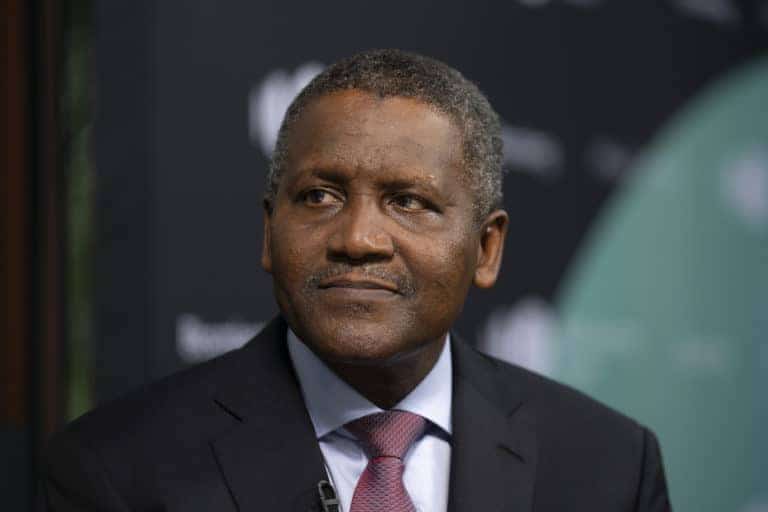
Africa’s billionaire class is experiencing another year of significant wealth expansion as strong equity market performance and stabilizing currencies across the continent push fortunes to new heights.
According to the latest ranking from Forbes, Africa’s 23 billionaires now hold a combined net worth of $126.7 billion, marking a 21% increase from 2025. The continent’s ultra-wealthy added $20.3 billion to their fortunes over the past year, pushing the total wealth of the “three-comma club” above $100 billion for the second consecutive year.
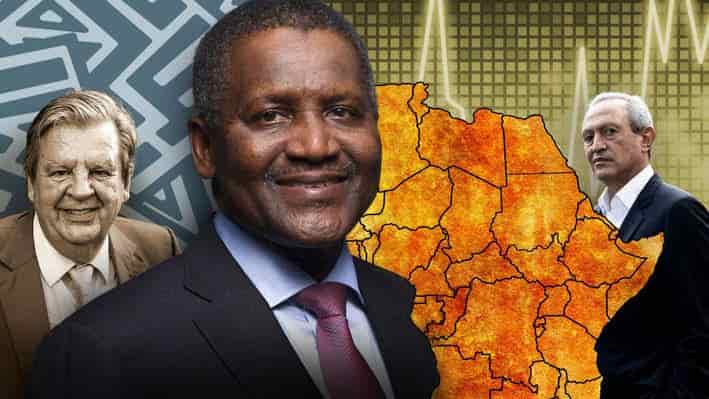
Africa Richest
Dangote Retains Africa’s Richest Man Title
At the top of the list once again is Nigerian industrialist Aliko Dangote, whose net worth climbed to $28.5 billion, an increase of $4.6 billion from last year.
The surge in his wealth was largely driven by the performance of Dangote Cement, whose shares jumped nearly 69% on the Nigerian Exchange Group (NGX) since March of last year. The cement giant also recorded a record profit of one trillion naira in 2025, doubling its earnings.
Dangote is also preparing to expand his industrial footprint further. His oil refining venture, the Dangote Refinery, recently signed a $400 million agreement with a Chinese machinery manufacturer aimed at doubling its refining capacity by 2029. The refinery is also expected to go public later this year, potentially boosting Dangote’s wealth even further.
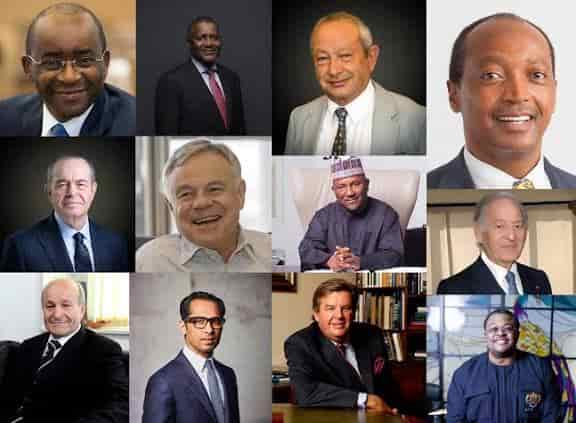
Richest
Abdulsamad Rabiu Emerges as Biggest Gainer
The most dramatic increase in wealth this year belongs to Nigerian entrepreneur Abdulsamad Rabiu. His fortune surged by 120%, rising by $6.1 billion to reach $11.2 billion.
The gain propelled Rabiu from sixth place to third place among Africa’s richest individuals, just behind South African luxury goods tycoon Johann Rupert, who is worth $16.1 billion.
Rabiu’s wealth jump was fueled by the performance of BUA Cement, whose shares rose 135% over the past year, outperforming the broader NGX rally of 81%. The market surge has been partly attributed to strong corporate earnings and a government directive encouraging pension fund administrators to increase equity investments.
Gains Across Banking, Mining and Telecom
South Africa’s financial sector also produced big winners. Michiel Le Roux, founder of Capitec Bank, saw his wealth grow to $3.8 billion after the bank’s share price jumped 57%.
The rally outperformed the broader Johannesburg Stock Exchange, which gained about 45% over the past year, supported by rising commodity prices such as gold and platinum.
Other prominent billionaires on the list include telecom magnate Mike Adenuga, mining entrepreneur Patrice Motsepe, and Zimbabwean telecom pioneer Strive Masiyiwa.
Few Billionaires Lost Wealth
While most fortunes grew, a handful of billionaires experienced declines.
Moroccan real estate developer Anas Sefrioui lost approximately $300 million after shares of his company Group Addoha dropped more than 30%.
Nigerian energy investor Femi Otedola also saw his net worth fall by about $200 million following the sale of a large portion of his stake in Geregu Power at a discount.
Both billionaires now sit at the bottom of the list with estimated fortunes of $1.3 billion each.
South Africa Leads the Billionaire Count
In terms of geographic distribution, South Africa remains the continent’s billionaire hub, with seven individuals on the list. It is followed by Egypt with five billionaires, Nigeria with four, and Morocco with three.
Interestingly, 14 of the 23 billionaires are self-made, having built their wealth from scratch rather than inheriting family fortunes.
However, the list also highlights a notable gap in representation. There are currently no female billionaires in Africa, and nearly all the individuals listed are over 60 years old, with Tanzania’s Mohammed Dewji being the only billionaire under that threshold.
Billionaires Born in Africa but Excluded
The ranking only tracks billionaires who reside in Africa or run their primary businesses on the continent. As a result, several Africa-born billionaires are excluded.
These include Sudan-born telecom investor Mo Ibrahim and South African businessman Nathan Kirsh, who operate primarily outside the continent. Also absent are global billionaires born in Africa but now based elsewhere, including the world’s richest man, Elon Musk.
Keep reading
Related Topics

Conversation
Comments (0)
Sign in to join the conversation or like this post.